
Simple, compound, complex or compound-complex: which one is it?
Before you draw anything, count the clauses and sort them. A clause is any group of words with its own subject and verb. An independent clause could stand alone as a sentence; a dependent clause starts with a word like because, although, when, who, which or that and cannot stand alone.
| Sentence type | Clauses | What the diagram looks like |
|---|---|---|
| Simple | 1 independent | One baseline |
| Compound | 2+ independent | Stacked baselines joined at the verbs by a dashed step |
| Complex | 1 independent + 1+ dependent | Main baseline on top, each dependent clause on a baseline below it |
| Compound-complex | 2+ independent + 1+ dependent | Both: a dashed step between the main clauses, and dependent clauses hanging below the word they modify |
The sort matters because the joining line is different. Coordinate clauses (compound) are equals, so their connector runs verb to verb. A dependent clause works as one word inside another clause (an adverb, an adjective or a noun), so it connects to exactly the word it modifies or stands in for.
If the sentence has only one subject–verb pair, it is simple, even when it is long or has and in it. A simple sentence like Dogs bark is one baseline with the subject and verb split by a vertical line; everything on this page builds on that. Pairs like Jake and Emma laughed are a compound subject, not a compound sentence; the main sentence diagramming guide shows how those forked baselines work.
How do you diagram a compound sentence?
A compound sentence diagram is two complete Reed–Kellogg diagrams stacked one above the other, with a dashed step from the first verb to the second verb and the coordinating conjunction written on the step.
Work through it in four moves:
- Split the sentence at the coordinating conjunction (for, and, nor, but, or, yet, so, the FANBOYS list) and check that each half has its own subject and verb.
- Diagram the first independent clause on a baseline, exactly as if it were a sentence on its own.
- Diagram the second clause on a new baseline underneath.
- Draw a dashed line down from the first verb, step it sideways, and drop it to the second verb. Write the conjunction on the flat part of the step.
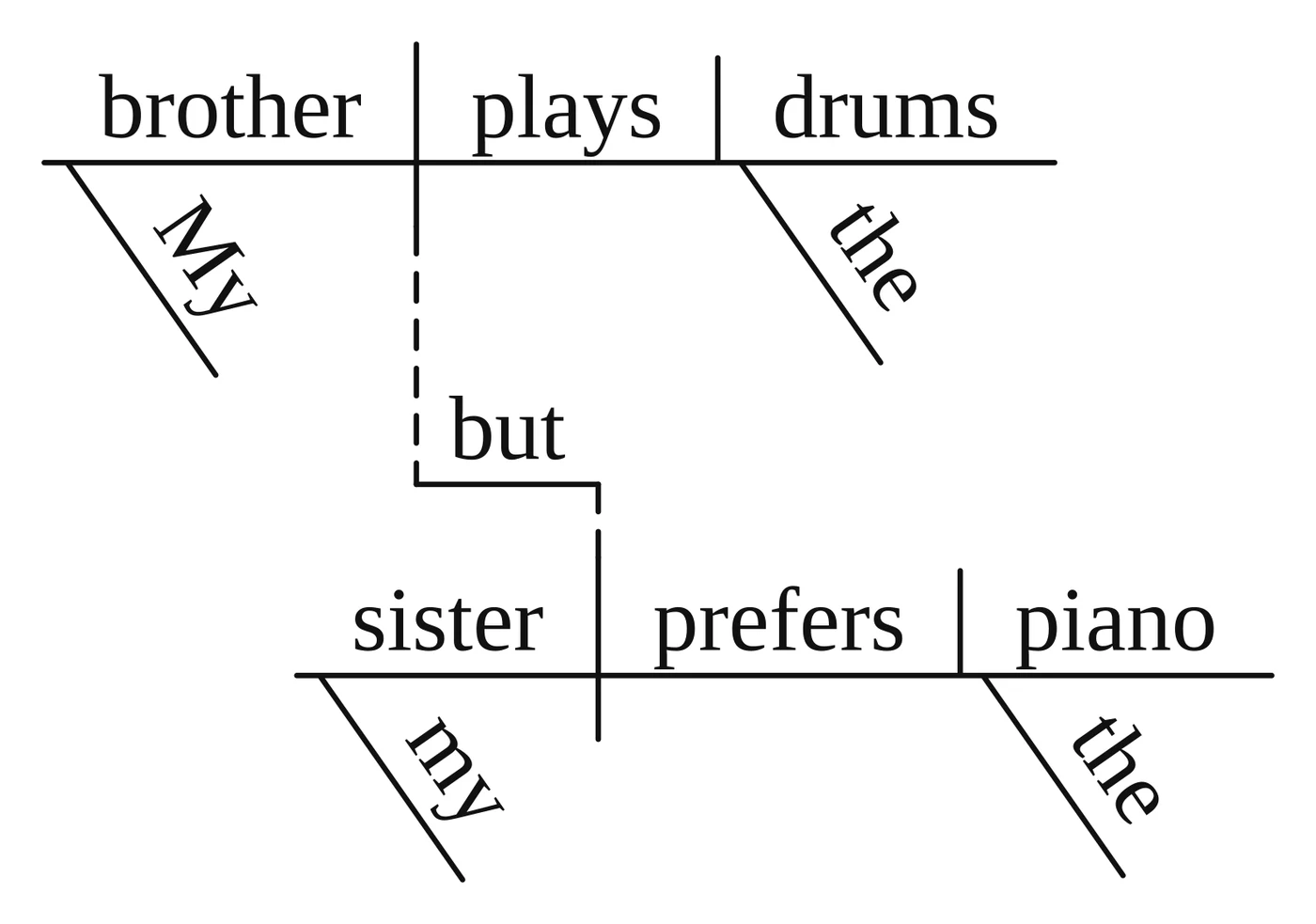
My brother plays the drums, but my sister prefers the piano. · Open this sentence in the sentence diagram generator
The comma before but does not appear anywhere; punctuation is not diagrammed. My and the hang under their own nouns inside each clause, because each clause is a complete diagram of its own.
5 compound sentence examples
Each of these is two independent clauses joined by a different conjunction. All five diagram the same way as the example above; only the word on the step changes.
- The dog barked, and the cat ran under the bed. (adds an idea)
- I studied all night, but the test was still hard. (contrast)
- We can eat now, or we can wait for Grandpa. (choice)
- It was getting late, so we went home. (result)
- She was tired, yet she finished the race. (unexpected contrast)
Three or more independent clauses
With three clauses (Mom cooked dinner, Dad washed the dishes, and I fed the dog), stack three baselines and connect each verb to the next with its own dashed step. The conjunction goes on the last step, between the second and third clause, because that is where the sentence puts it; the first step stays empty and stands in for the comma. When you check a generated diagram of a long list like this, look at which step carries the and; if it landed on an earlier step, move it to the last one by hand.
How do you diagram a compound sentence with a semicolon or "however"?
A semicolon joins two independent clauses with no conjunction at all, so the dashed step between the verbs has no word to carry. Some textbooks leave that step empty; others write the semicolon on it, as the generator does here. Both mean the same thing: two equal clauses, nothing between them.
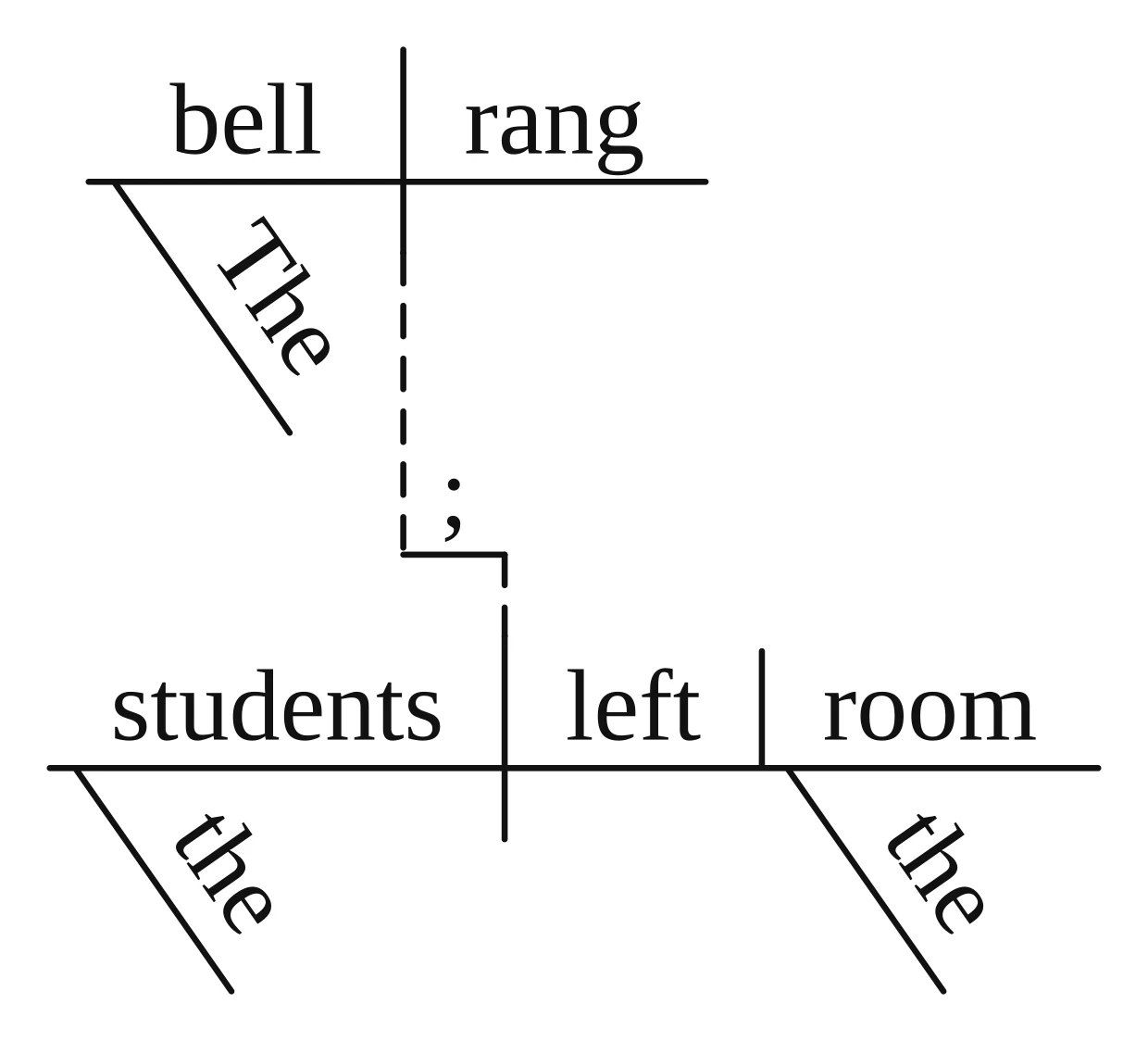
The bell rang; the students left the room. · Open this sentence in the sentence diagram generator
Words like however, therefore, moreover and nevertheless look like conjunctions, but they are conjunctive adverbs. The semicolon does the joining, and the adverb modifies the verb of the second clause, so it hangs on a slanted line under that verb.
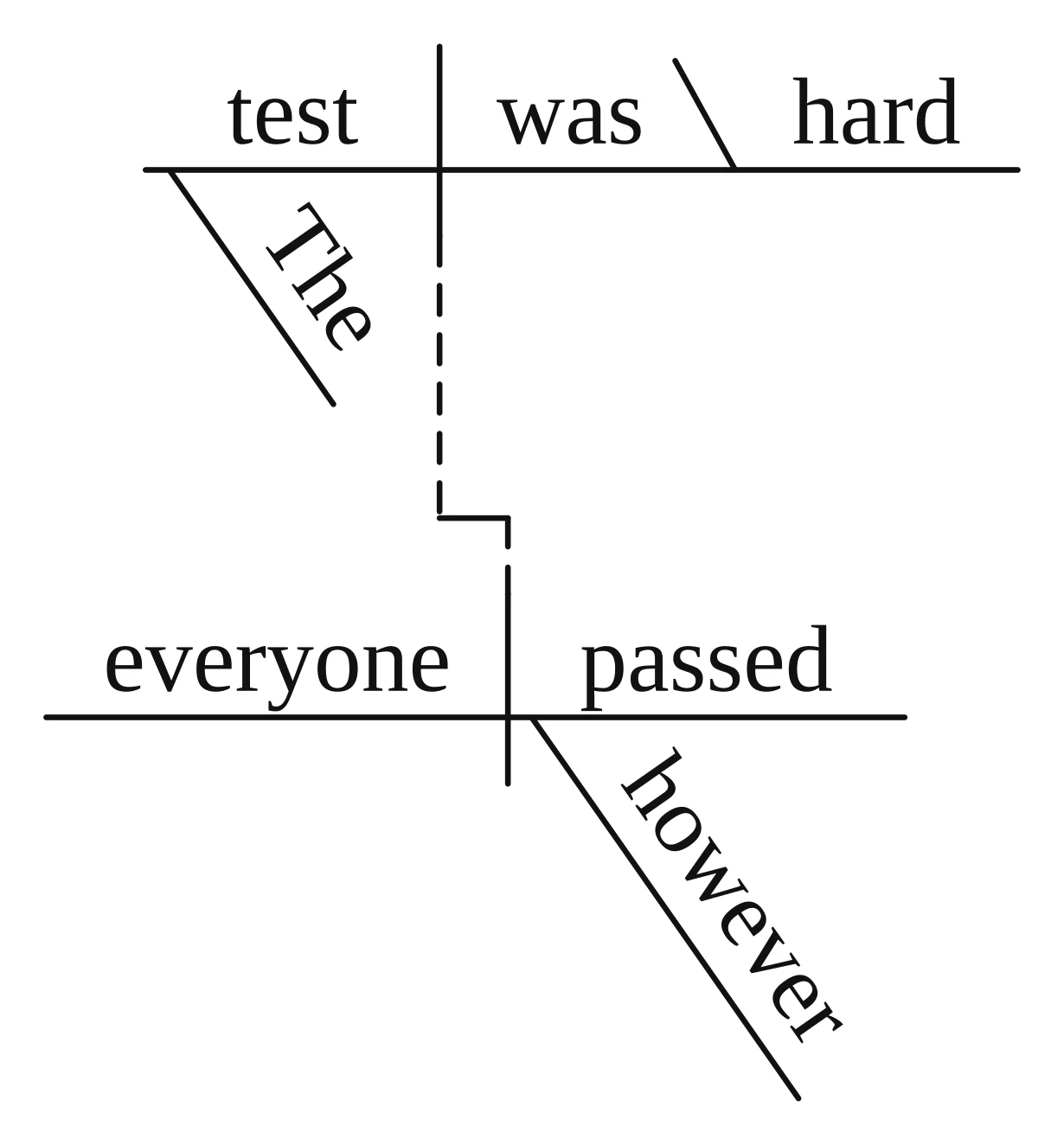
The test was hard; however, everyone passed. · Open this sentence in the sentence diagram generator
Grammar books are split on this one. Many hang however under the second verb as shown; a few write it on the dashed step as if it were a conjunction. The generator drew this one with the second step left empty and the semicolon example above with the semicolon written on it; both conventions are accepted, so follow the one your class uses.
How do you diagram a complex sentence?
A complex sentence has one independent clause and at least one dependent clause. Diagram the independent clause first, on the top baseline. Then ask what job the dependent clause does for that main clause: does it act as an adverb, an adjective, or a noun? The answer decides where its baseline attaches.
| Clause type | Starts with | Attaches to | Connector |
|---|---|---|---|
| Adverb clause | because, although, when, if, since, until, while | The verb (or adjective, adverb) it modifies | Dashed line, with the subordinating conjunction written along it |
| Adjective clause | who, whom, whose, which, that | The noun it describes | Dashed line from that noun to the relative pronoun |
| Noun clause | that, what, whether, how, whoever | The noun slot it fills (subject, object) | A pedestal rising from that slot |
The three diagrams below show one of each. Each clause has a full subject and verb on its own baseline; only the connector changes.
Adverb clause: where does "although" or "because" go?
An adverb clause tells when, why, how, or under what condition. The subordinating conjunction is not part of either baseline: it rides on the dashed line that runs from the main verb down to the clause's verb.
Position in the sentence makes no difference. Although it was cold comes first when you read the sentence aloud, but it modifies played, so its baseline still sits below and its dashed line still starts at played.
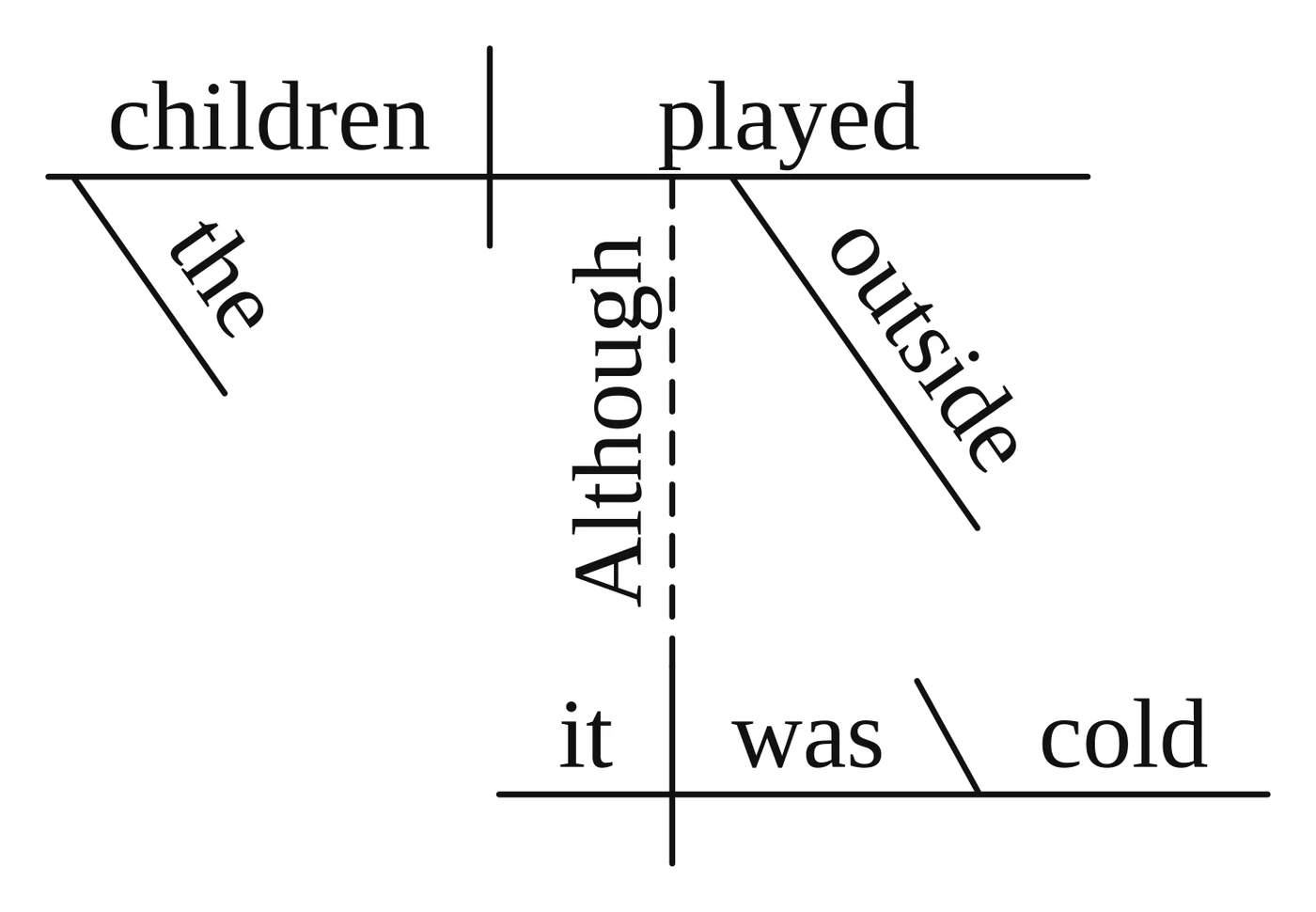
Although it was cold, the children played outside. · Open this sentence in the sentence diagram generator
Inside the clause, was is a linking verb, so cold sits after a backslash, the same as it would in a simple sentence. Every rule you already know applies within each clause.
Adjective clause: where does "who" or "which" go?
An adjective (relative) clause describes a noun. The relative pronoun does double duty: it links the clause to the noun, and it also has a job inside its own clause. So you write it in the slot it fills (subject, object, or after a preposition), then draw a dashed line from it up to the noun it refers to.
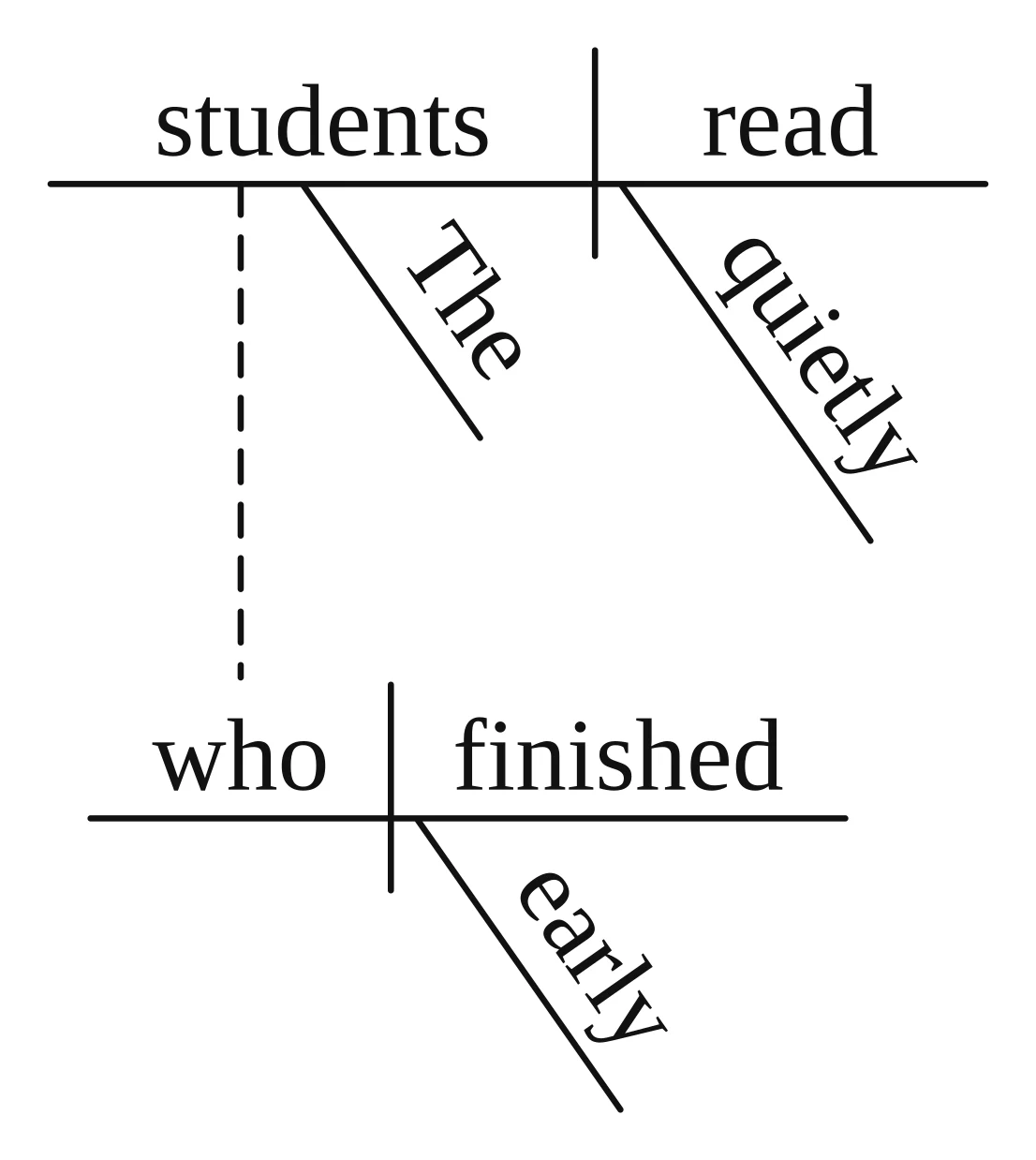
The students who finished early read quietly. · Open this sentence in the sentence diagram generator
Here who is the subject of finished, so it sits in the subject spot on the lower baseline. Early modifies finished and quietly modifies read, each in its own clause. When the relative pronoun is the object of the clause, it moves to the object slot after the short vertical line, and the dashed line still runs up to the noun it refers to:
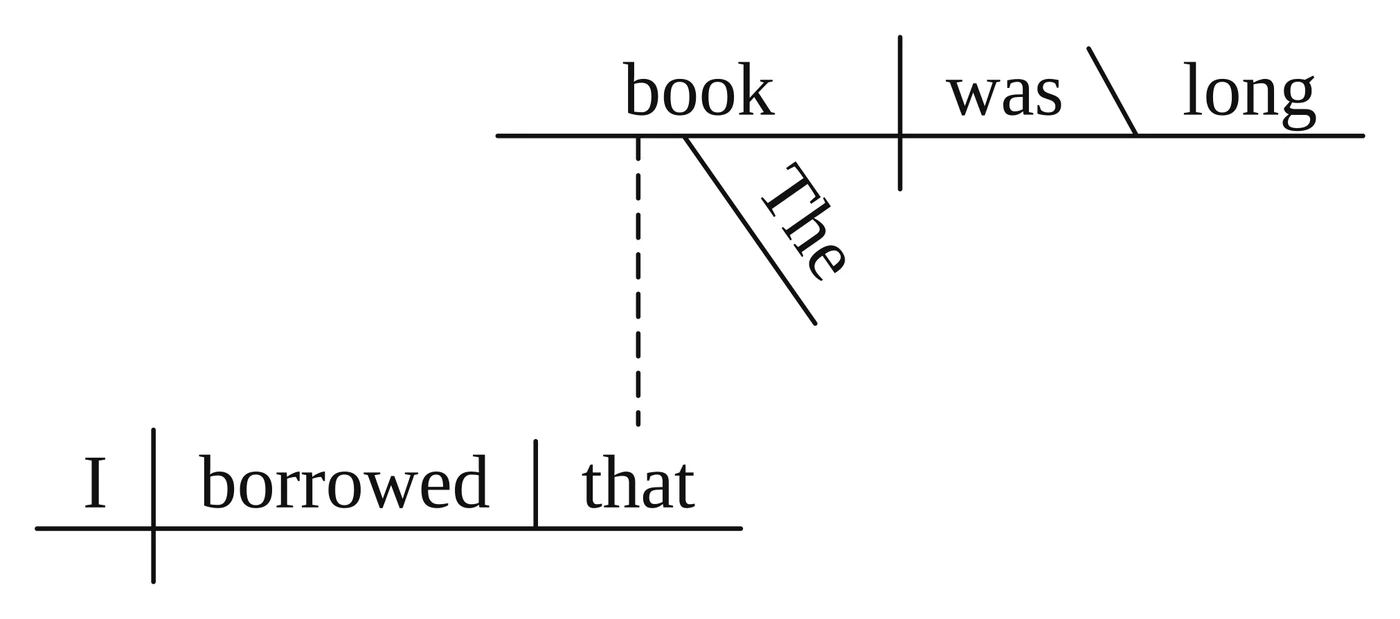
The book that I borrowed was long. · Open this sentence in the sentence diagram generator
A quick test: replace the relative pronoun with the noun (the students finished early, I borrowed the book); whatever job the noun does in that sentence is the job the pronoun does in the diagram.
Noun clause: how do you diagram a clause used as the subject?
A noun clause takes the place of a single noun, so it gets lifted onto a pedestal that stands in that noun's position. In this sentence the whole clause What you said is the subject of surprised: the pedestal rises from the subject side of the main baseline, and the clause sits on its own baseline on top.
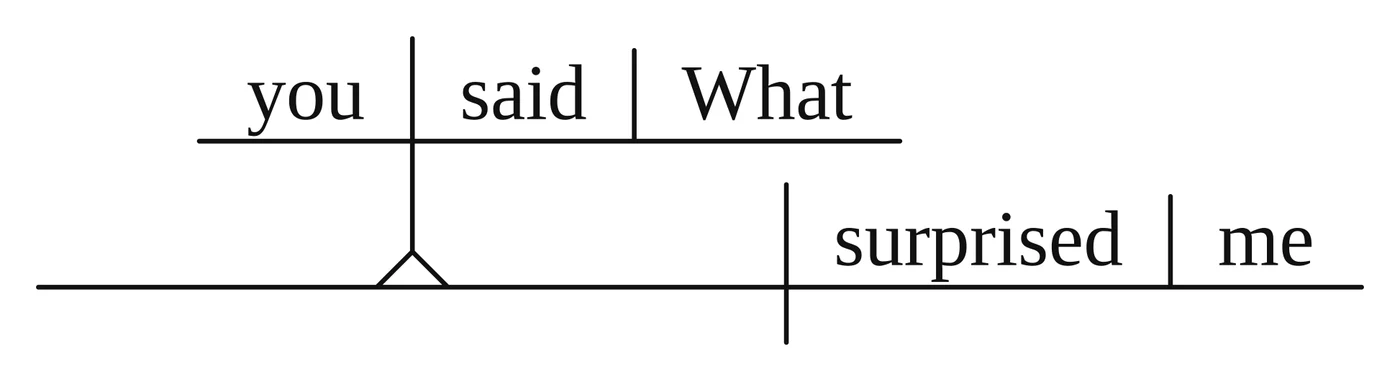
What you said surprised me. · Open this sentence in the sentence diagram generator
Inside the clause, What is the direct object of said (you said what), which is why it appears after the short vertical line. Noun clauses are just as common as objects (I hope that you can come); the main guide's noun clause example shows one in the direct-object slot.
How do you diagram a compound-complex sentence?
A compound-complex sentence is a compound sentence where at least one clause has a dependent clause attached. Diagram it from the outside in:
- Find the coordinating conjunction that joins the independent clauses and split there.
- Draw the independent clauses as a compound sentence: stacked baselines, dashed step, conjunction on the step.
- For each dependent clause, decide which word in which independent clause it modifies, and hang it from that word.
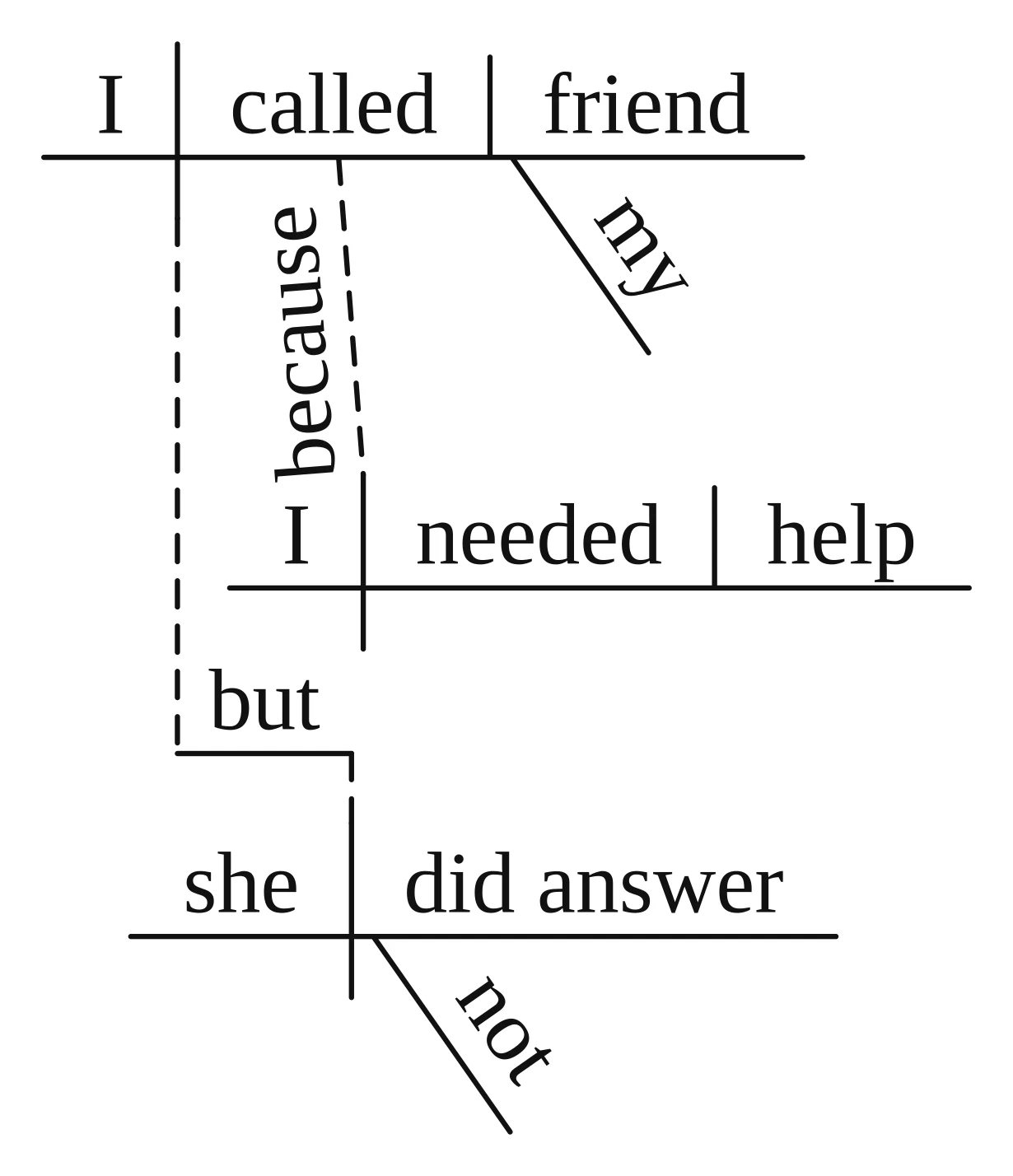
I called my friend because I needed help, but she did not answer. · Open this sentence in the sentence diagram generator
The because clause belongs to the first independent clause (why did I call?), so its dashed line starts at called, not at the step. The but step joins called to did answer, the two verbs of equal rank. Not is an adverb under did answer.
The most common mistake here is attaching the dependent clause to the conjunction step. The step only ever links independent clauses; a dependent clause always hangs from a word.
Common mistakes when diagramming clauses
- Calling a compound verb a compound sentence. She sang and danced has one subject, so it is one baseline with a forked predicate, not two baselines.
- Putting the subordinating conjunction inside the clause. Because, although, when and if belong on the dashed connector, not on the clause's baseline.
- Leaving the relative pronoun off the clause's baseline. Who, which and that always have a job inside their own clause; find it before you draw.
- Hanging a dependent clause from the wrong word. Ask the question the clause answers (when? why? which one?) and attach it to the word that question is about.
- Treating a comma splice as compound. The bell rang, the students left is two sentences joined only by a comma. Most teachers want it fixed with a conjunction or semicolon before it is diagrammed.
- Drawing punctuation. Commas and periods never appear in a Reed–Kellogg diagram; the semicolon on the step is the one convention some books allow.
Compound and complex sentences to practice
Try these eight sentences on paper first, then compare with the answer key below or open a sentence in the generator to check it. They are sorted from easiest to hardest.
| # | Type | Sentence |
|---|---|---|
| 1 | Compound | The dog barked, and the cat ran under the bed. |
| 2 | Compound | We can eat now, or we can wait for Grandpa. |
| 3 | Compound | The road was icy; we drove slowly. |
| 4 | Complex | If it rains tomorrow, the picnic will move indoors. |
| 5 | Complex | The girl who sits next to me plays the violin. |
| 6 | Complex | I hope that you can come. |
| 7 | Compound-complex | The movie was long, but we stayed until it ended. |
| 8 | Compound-complex | We were tired, so we went home after the game ended. |
Answer key
Each answer below is the generator's diagram for that sentence, with a note on where the connecting line attaches.
1.
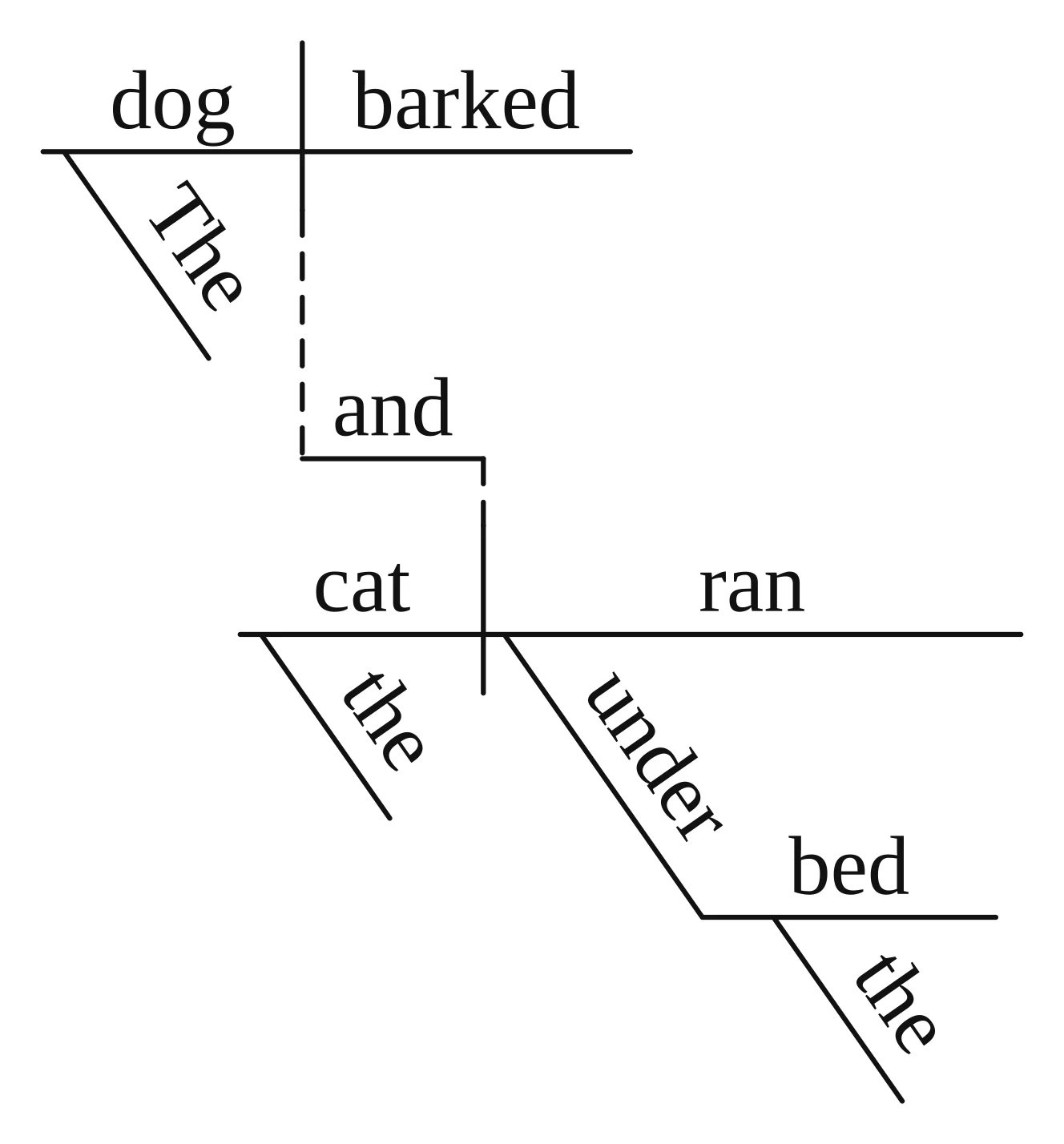
One baseline per clause, joined at barked and ran by a step carrying and; under the bed hangs from ran.
2.
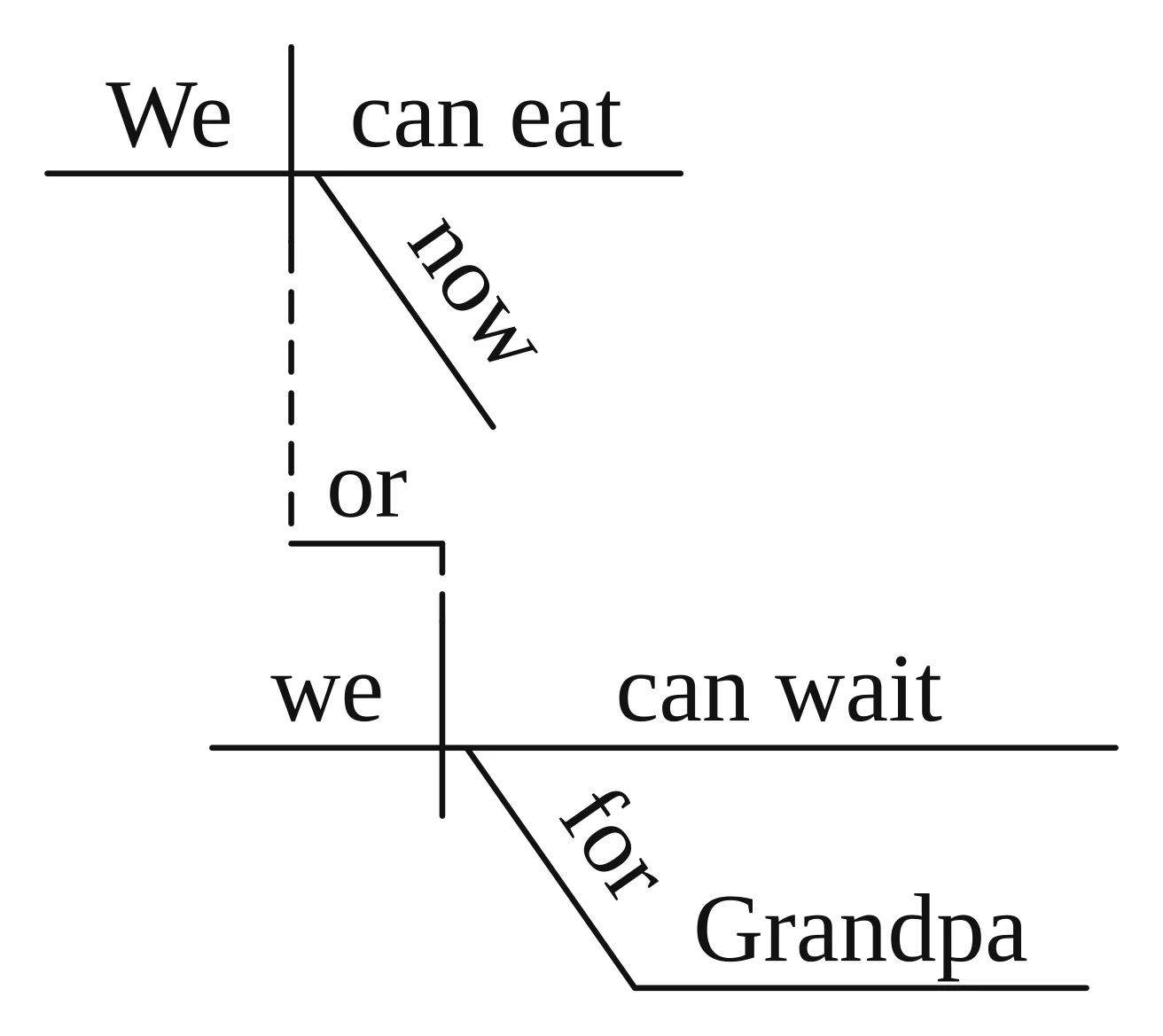
Can eat and can wait each stay together on the verb side; or sits on the step, for Grandpa hangs from wait.
3.
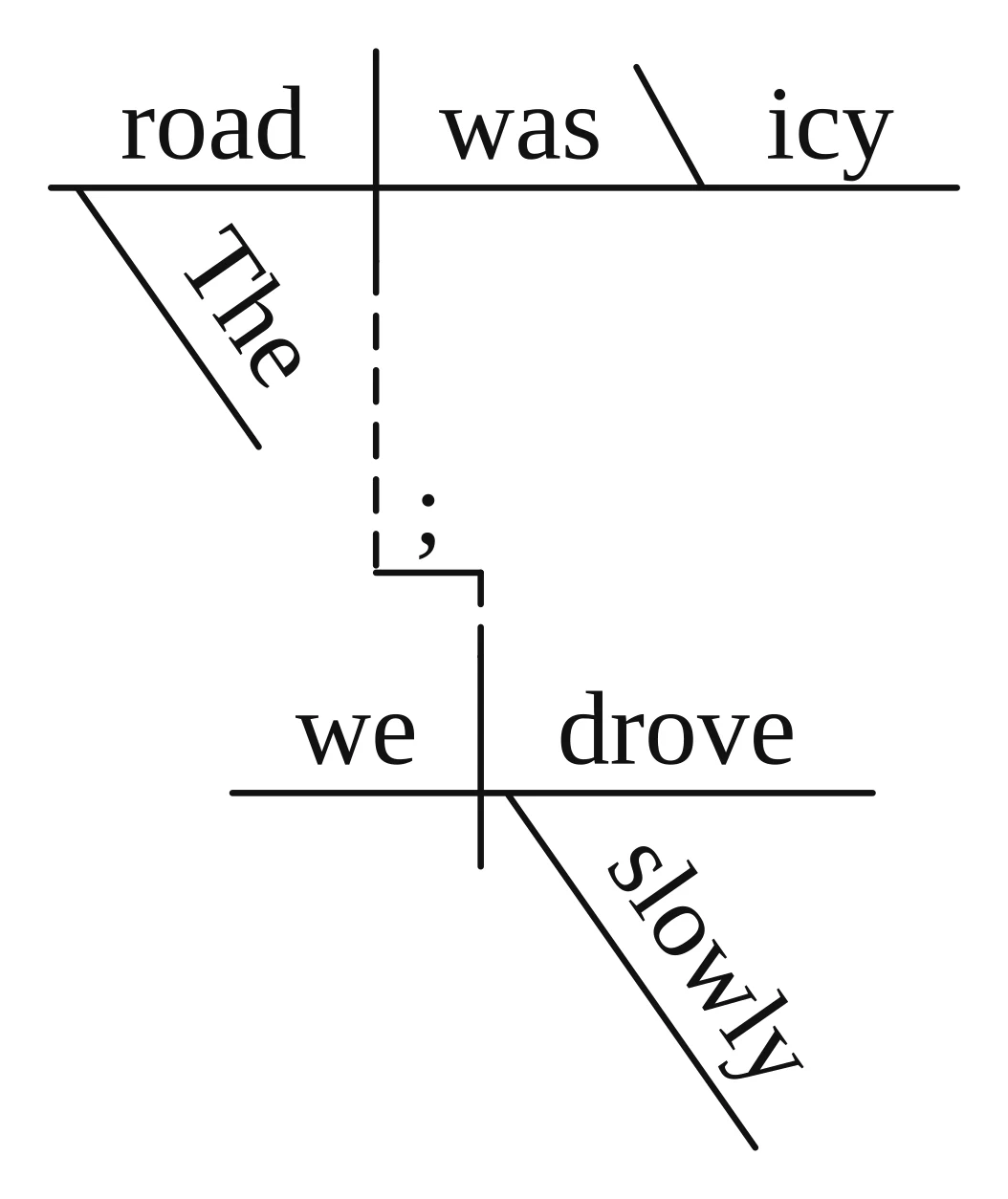
No conjunction: the step between was and drove carries only the semicolon. Icy follows a backslash because was is linking.
4.
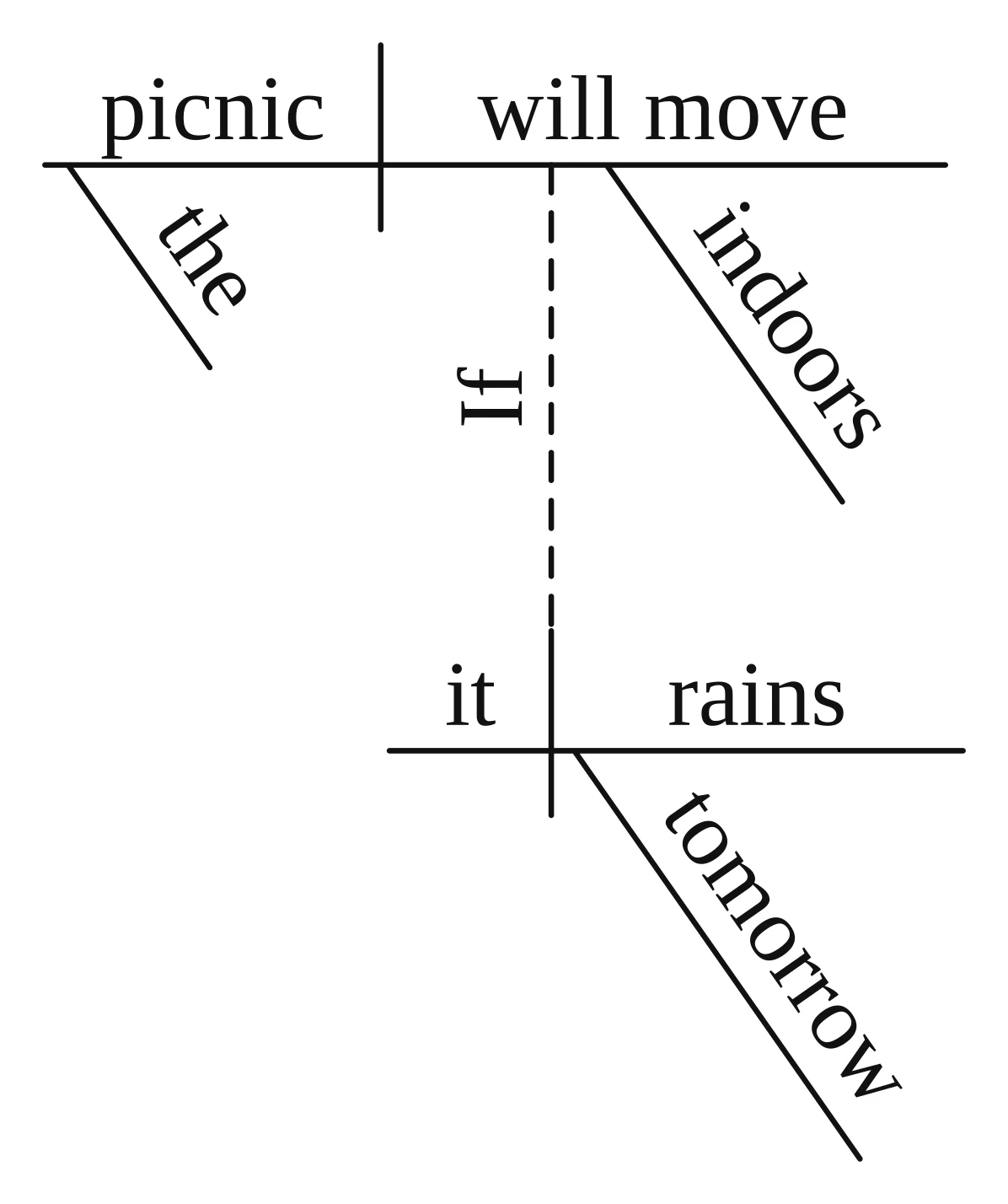
If it rains tomorrow hangs from will move, with If on the dashed line, even though the clause comes first.
5.
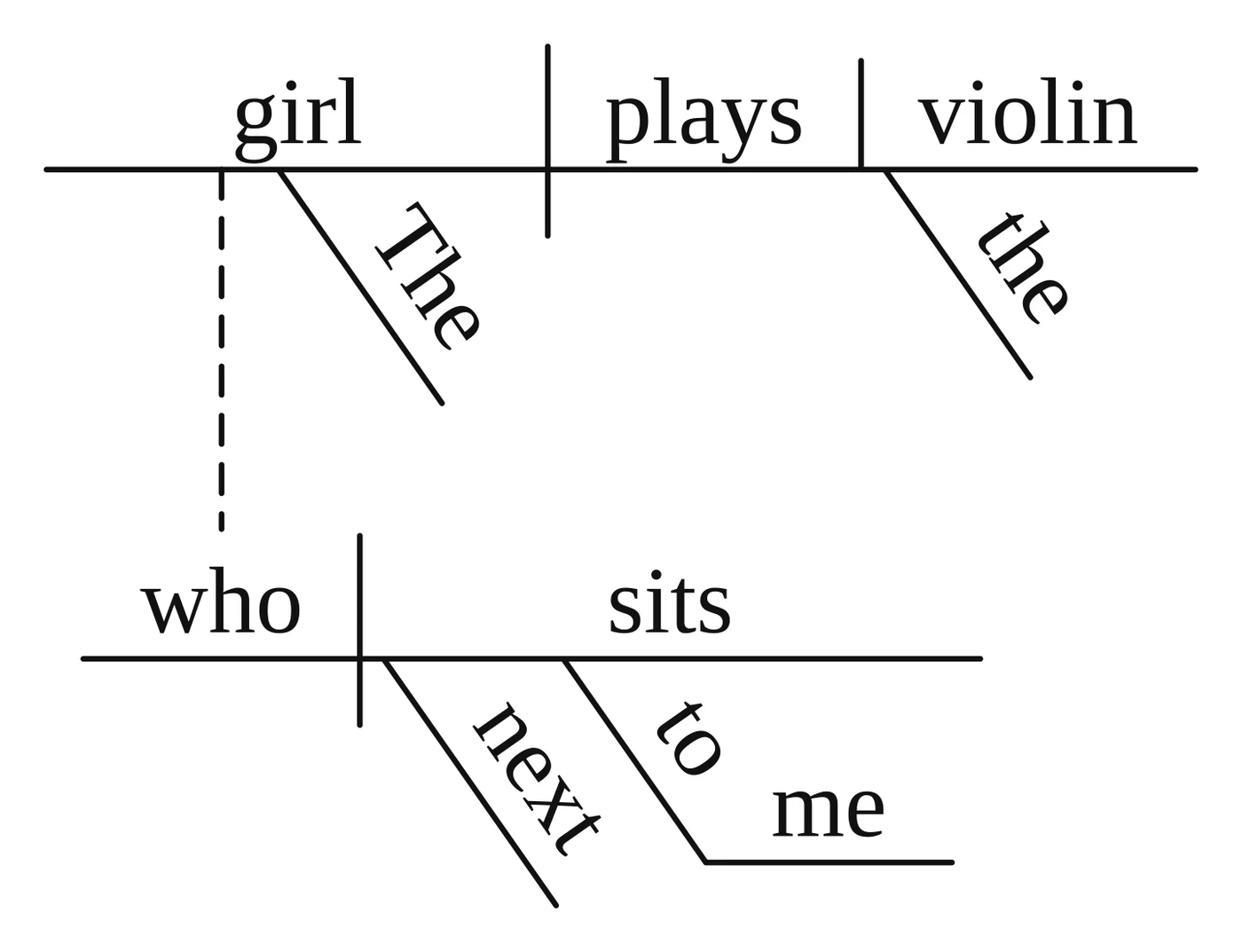
Who is the subject of sits; the dashed line runs from girl to who. Next and to me hang from sits.
6.
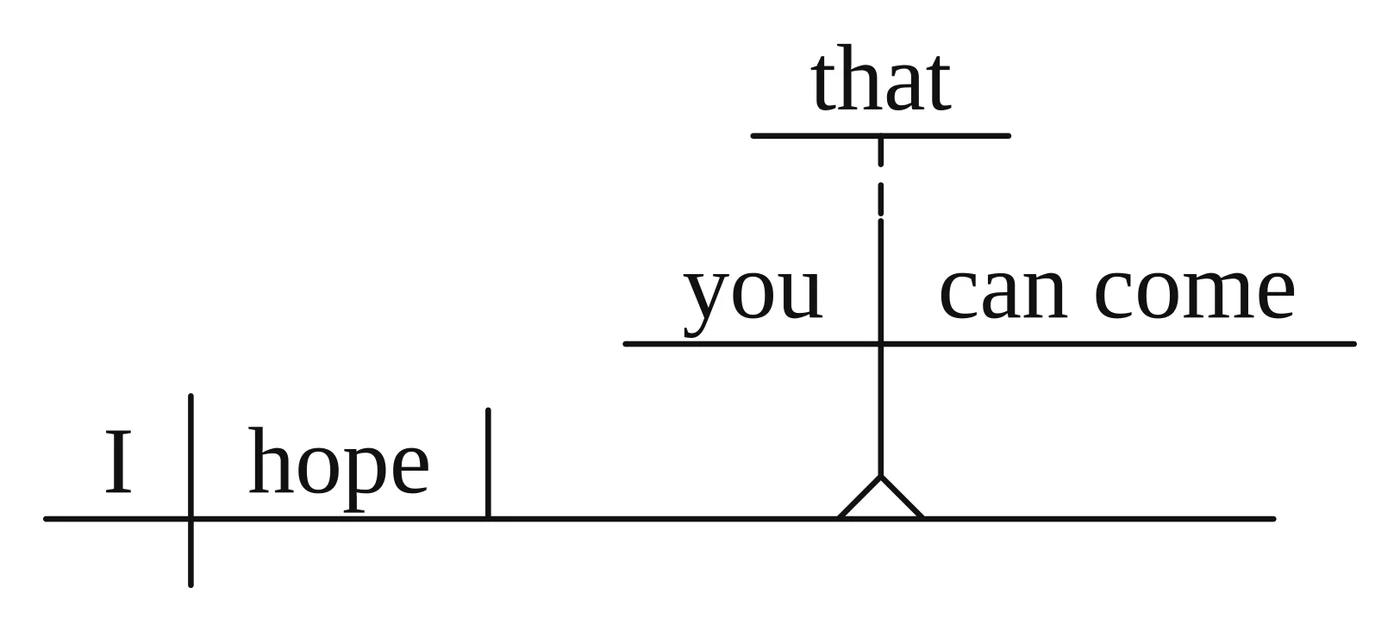
The noun clause is the direct object of hope, so it stands on a pedestal in the object slot with that on a line above.
7.
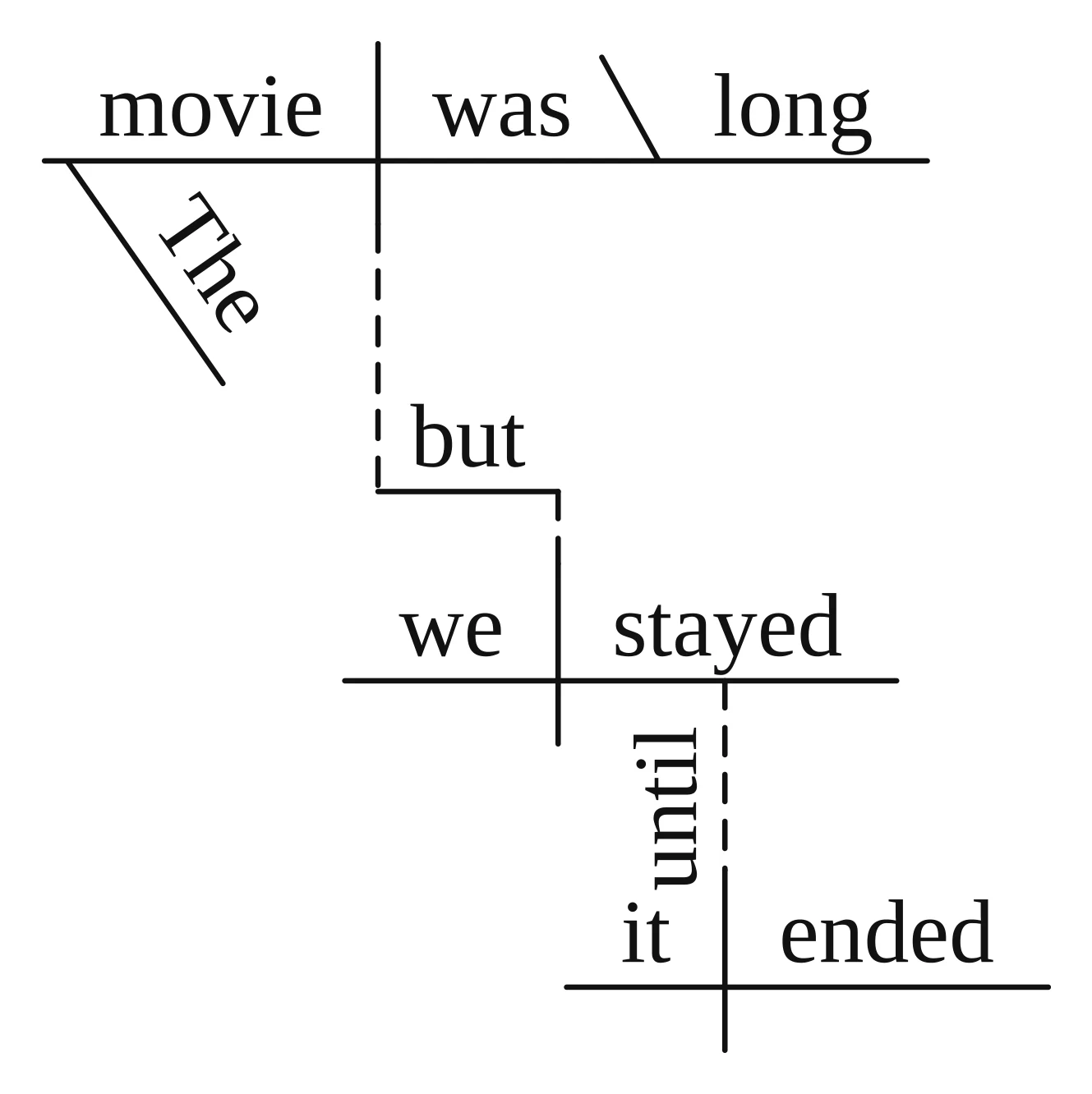
But joins was and stayed; the until clause hangs from stayed, the verb it tells about.
8.
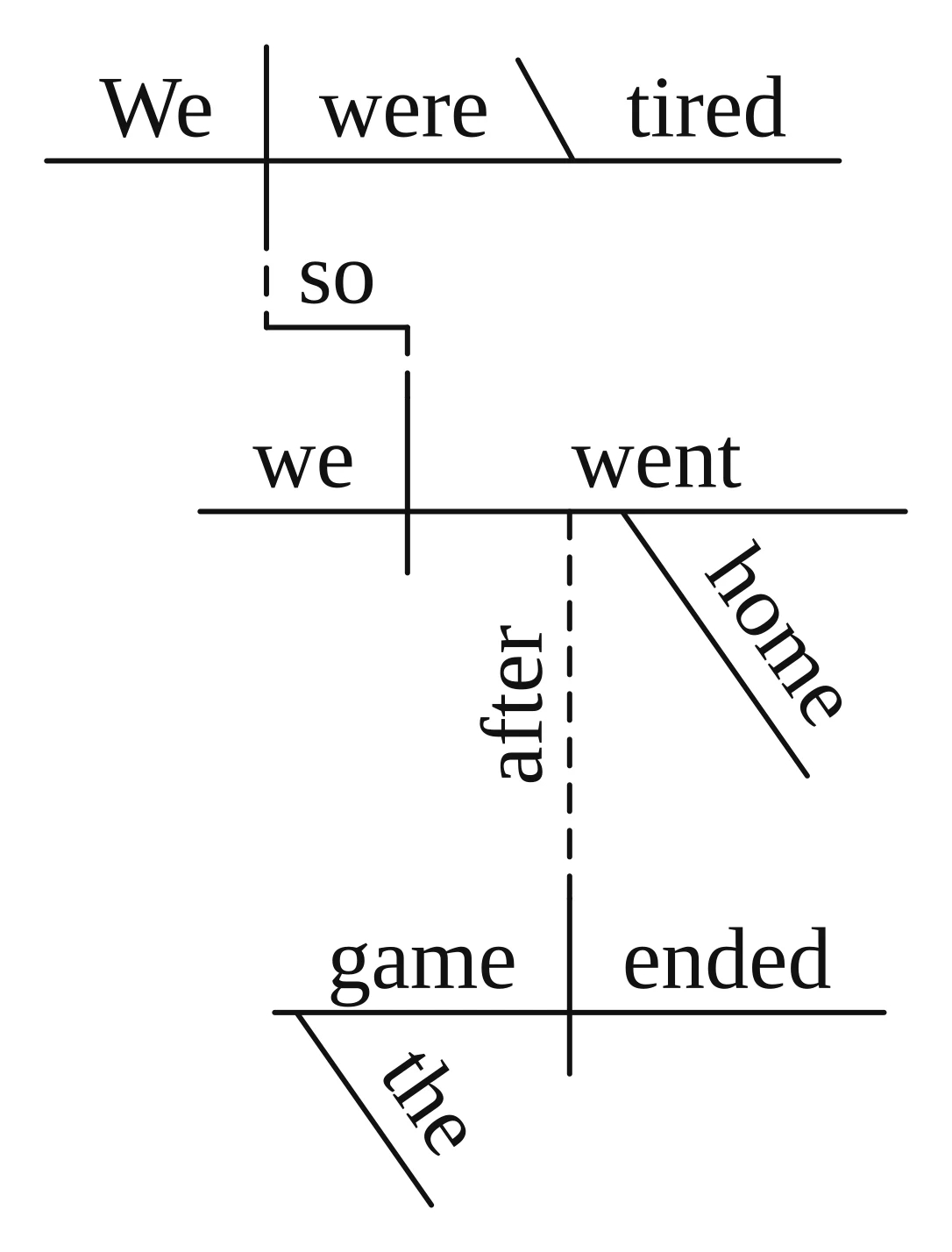
So joins were and went; the after clause hangs from went, and home is an adverb under went.
Turn the list into a worksheet
To turn a list like this into a printed handout, paste up to 20 sentences into the generator's Worksheet mode: it returns a blank practice sheet and a matching answer key as PDFs. The sentence diagramming worksheets page shows sample sheets and how the answer key lines up with the blanks.
The generator reads the grammar with a language model and draws the lines with code. A single dropped word can still slip through, and a clause can still land under the wrong word when the model misreads a long sentence, so look over a generated key before you hand it to students.
Frequently asked questions
What is the difference between diagramming a compound and a complex sentence?
In a compound sentence the clauses are equals, so their baselines are joined verb to verb by a dashed step carrying the conjunction. In a complex sentence the dependent clause works as an adverb, adjective or noun, so its baseline hangs below the main clause and connects to the one word it modifies or replaces.
Where does the conjunction go in a compound sentence diagram?
On the flat part of the dashed step that joins the verbs of the two independent clauses. With three or more clauses, it goes on the step between the last two.
How do you diagram a complex sentence that starts with "when" or "although"?
The same way as if the clause came last. Diagram the main clause on top, put the dependent clause on its own baseline below, and run a dashed line from the main verb to the clause's verb with "when" or "although" written on it.
Is "and" always a sign of a compound sentence?
No. "And" also joins compound subjects, compound verbs and pairs of modifiers inside a single clause. It makes a compound sentence only when each side has its own subject and verb.
How do you diagram a semicolon?
Join the two clauses' verbs with a dashed step and leave it empty, or write the semicolon on it if your textbook does. A conjunctive adverb like "however" after the semicolon usually hangs under the second clause's verb.
Can I check my compound and complex sentence diagrams online?
Yes. Type the sentence into the sentence diagram generator and it draws the Reed–Kellogg diagram. Downloads are free as watermarked PNGs; a watermark-free file and an editable SVG come with a plan or credit pack. Check long sentences against the rules here, since the grammar reading can be wrong.
Diagram your own compound or complex sentence
Type a sentence from your worksheet and get a Reed–Kellogg diagram, or switch to Worksheet mode for up to 20 sentences with an answer key.
