
What is a sentence diagram?
A sentence diagram shows how the words of a sentence fit together. Instead of reading left to right, you see the grammar: which word is the subject, what the verb is doing, and which words describe which.
The layout taught in most American classrooms is the Reed–Kellogg diagram, named after Alonzo Reed and Brainerd Kellogg, two Brooklyn teachers who set it out in Higher Lessons in English (1877). It uses a handful of line types, and each one means something:
| Line | What goes on it |
|---|---|
| Horizontal baseline | The main parts: subject, verb, and the verb's complement |
| Vertical line crossing the baseline | Splits the subject from the predicate |
| Short vertical line stopping at the baseline | Comes before a direct object |
| Backslash leaning toward the subject | Comes before a predicate noun or predicate adjective |
| Slanted line under a word | A modifier: article, adjective, adverb, or a preposition |
| Dashed line | Links a clause to the word it depends on, or marks and / or / but |
| Pedestal (a stand rising off the baseline) | Holds a noun clause, gerund, or infinitive used as a noun |
Here is the smallest possible diagram: one subject, one verb.
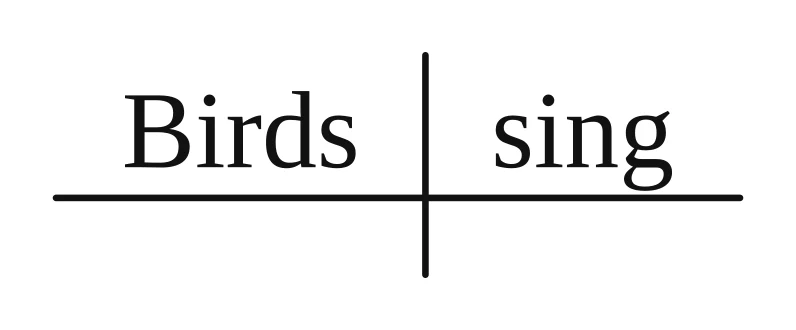
Birds sing. · Open this sentence in the sentence diagram generator
How do you diagram a sentence step by step?
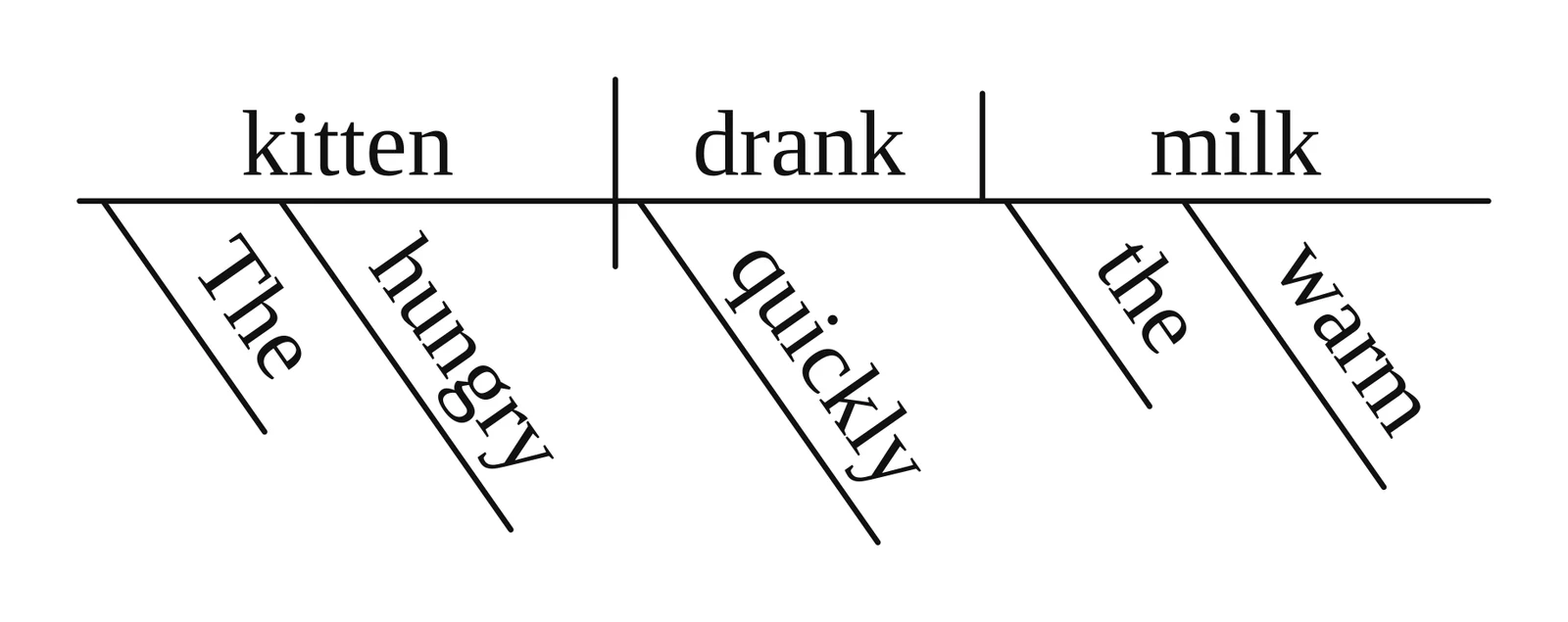
To diagram a sentence, find the verb and its subject first, put them on a baseline split by a vertical line, then add the words that complete the verb, then everything that describes something. Here is The hungry kitten quickly drank the warm milk in the kitchen. built up in four passes.
- Find the verb and its subject; write them on a baseline split by a vertical line.
- Add what completes the verb: a direct object, or a predicate noun or adjective.
- Hang one-word modifiers on slanted lines.
- Attach prepositional phrases and clauses.
Step 1: Find the verb, then ask "who or what?"
Start with the verb, because every sentence is built around it: drank. Ask who or what drank. The answer, kitten, is the simple subject. Draw a baseline, write the subject on the left and the verb on the right, and cross the baseline with a vertical line between them.

Step 2: Add what completes the verb
Ask "drank what?" The answer, milk, is the direct object. It goes on the baseline after the verb, behind a short vertical line that stops at the baseline. (A linking verb takes a backslash instead; see below.)

Step 3: Hang the one-word modifiers
Articles, adjectives and possessives go on slanted lines under the noun they describe: The and hungry under kitten, the and warm under milk. Adverbs go under the verb, adjective or adverb they modify: quickly under drank.
Step 4: Attach phrases and clauses
A prepositional phrase goes on a slanted line (the preposition) with a horizontal line at the bottom (its object). In the kitchen says where the kitten drank, so it hangs from drank. Clauses get their own baselines, joined by dashed lines; the sections below show each kind.
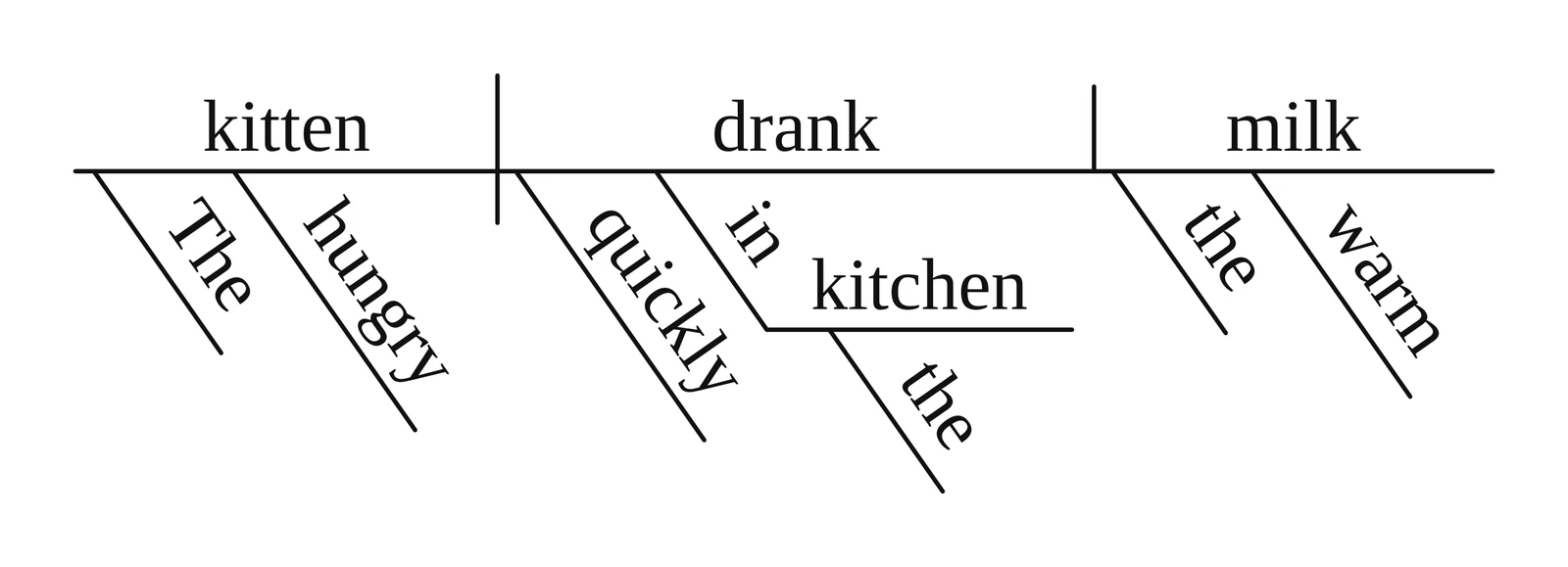
The hungry kitten quickly drank the warm milk in the kitchen. · Open this sentence in the sentence diagram generator
A quick check before you call a diagram finished: read the words along the baseline. They should make a short sentence on their own (kitten drank milk). If they don't, something is on the wrong line.
How do you diagram a sentence with direct and indirect objects?
A direct object answers "what?" or "whom?" after an action verb. It sits on the baseline after the verb, behind a short vertical line.
An indirect object answers "to whom?" or "for whom?". It is not on the baseline at all: it goes on a horizontal line under the verb, joined by a slanted line with nothing written on it. The empty slant stands for the to or for the sentence leaves out (bought a bike for my sister).
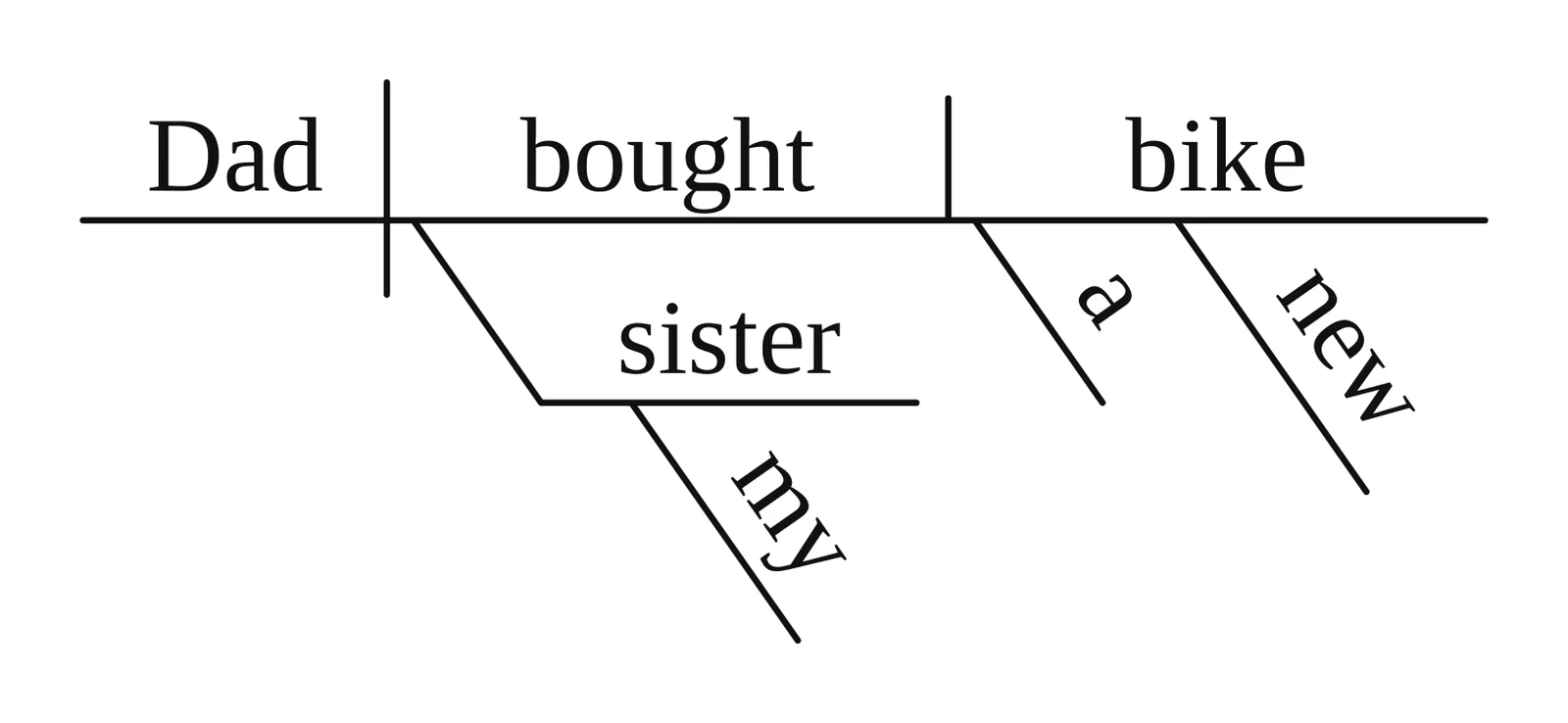
Dad bought my sister a new bike. · Open this sentence in the sentence diagram generator
An objective complement renames or describes the direct object (elected Maya president, painted the fence white). It follows the direct object on the baseline, after a backslash that leans toward the object.
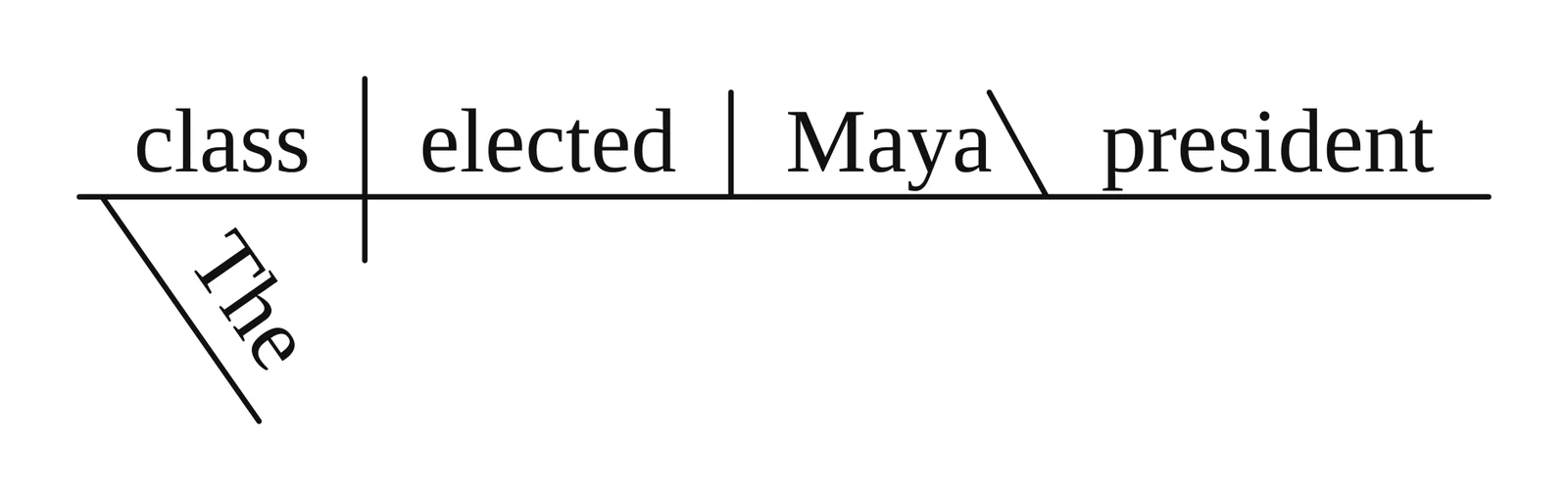
The class elected Maya president. · Open this sentence in the sentence diagram generator
How do you diagram a linking verb (predicate nominative and predicate adjective)?
Linking verbs (is, are, was, seem, become, taste, smell, look, feel) don't pass an action to an object. They connect the subject to a word that renames it or describes it, called the subject complement.
Both kinds of subject complement go on the baseline after the verb, behind a backslash that leans back toward the subject. That slant is the whole difference from a direct object, and it is the most common mistake on student diagrams.
- Predicate nominative: a noun or pronoun that renames the subject (aunt = nurse).
- Predicate adjective: an adjective that describes the subject (lemonade → sour).
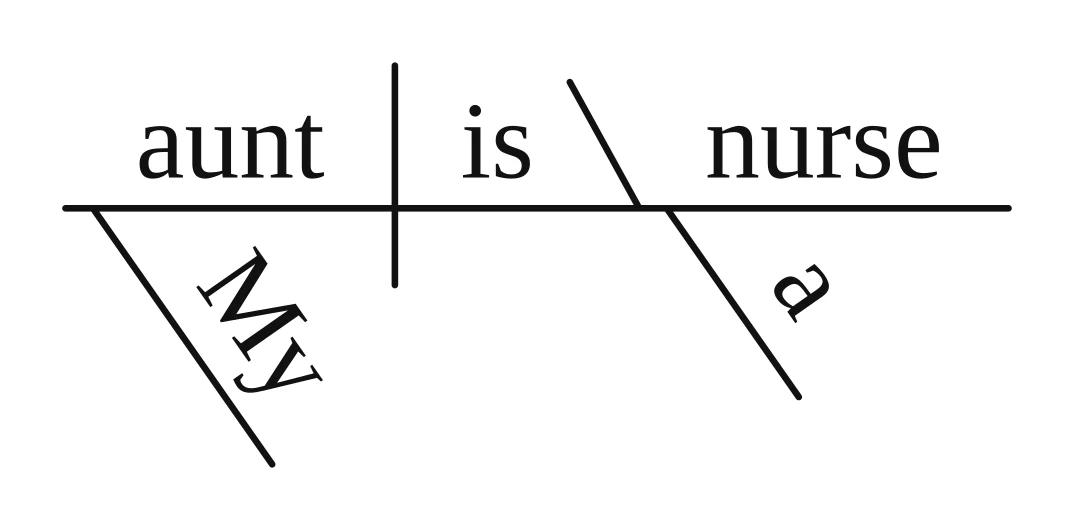
My aunt is a nurse. · Open this sentence in the sentence diagram generator
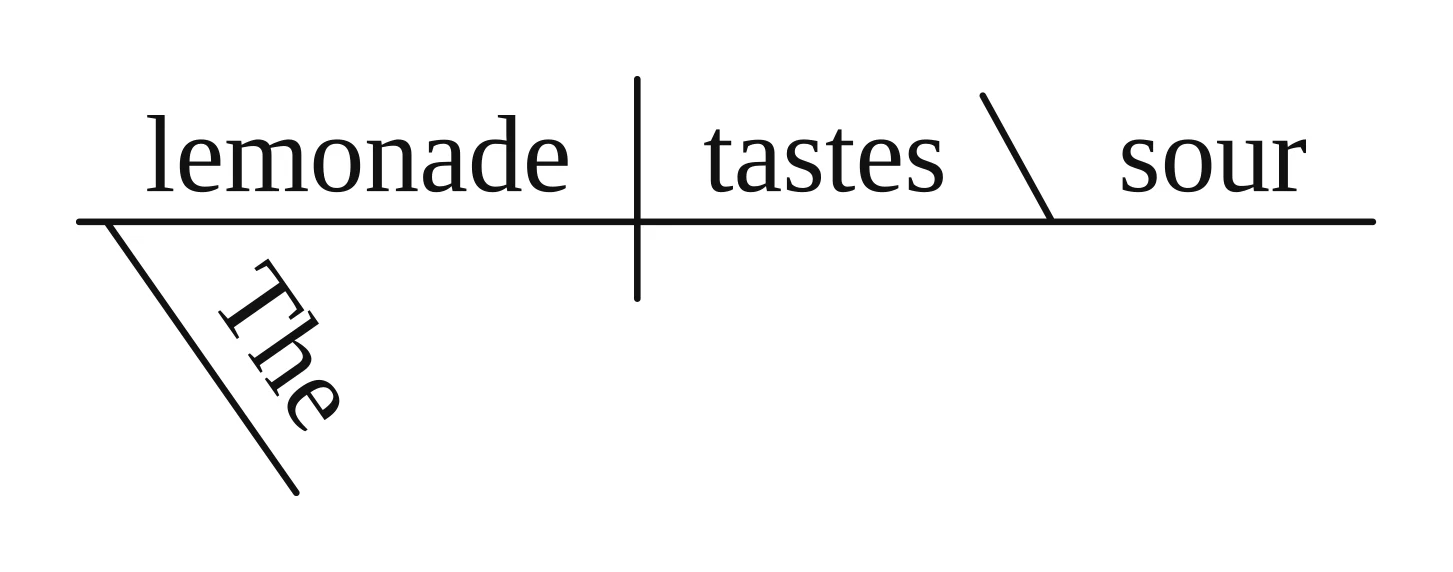
The lemonade tastes sour. · Open this sentence in the sentence diagram generator
A test for the verb: if you can swap it for is and the sentence still makes sense (The lemonade is sour), it is working as a linking verb.
Passive voice is not a linking verb. In The cake was eaten by the dog, the whole verb phrase was eaten goes on the verb side of the baseline, there is no object, and by the dog hangs under the verb as a prepositional phrase.
What are the 5 basic sentence patterns?
Most grammar books teach five basic patterns, and some add a sixth. Each has a fixed shape on the baseline, and every one has a diagram on this page:
| Pattern | Example | Baseline shape |
|---|---|---|
| Subject + verb | Birds sing. | Subject and verb only (see it) |
| Subject + verb + direct object | The kitten drank milk. | Object after a short vertical line (see it) |
| Subject + verb + indirect object + direct object | Dad bought my sister a new bike. | Indirect object on a line below the verb (see it) |
| Subject + linking verb + predicate noun | My aunt is a nurse. | Backslash before the noun (see it) |
| Subject + linking verb + predicate adjective | The lemonade tastes sour. | Backslash before the adjective (see it) |
| Subject + verb + direct object + objective complement | The class elected Maya president. | Backslash after the object (see it) |
Longer sentences are one of these patterns with modifiers, phrases and clauses added, so find the pattern first.
How do you diagram a sentence with prepositional phrases?
Write the preposition on a slanted line under the word the phrase modifies, then its object on a horizontal line at the foot of the slant. Articles and adjectives inside the phrase hang under its object as usual.
The hard part is deciding which word the phrase modifies:
- If it tells which one or what kind, it modifies a noun: the boy in the red jacket (which boy?).
- If it tells where, when, how, or why, it modifies the verb: ran across the field (ran where?).
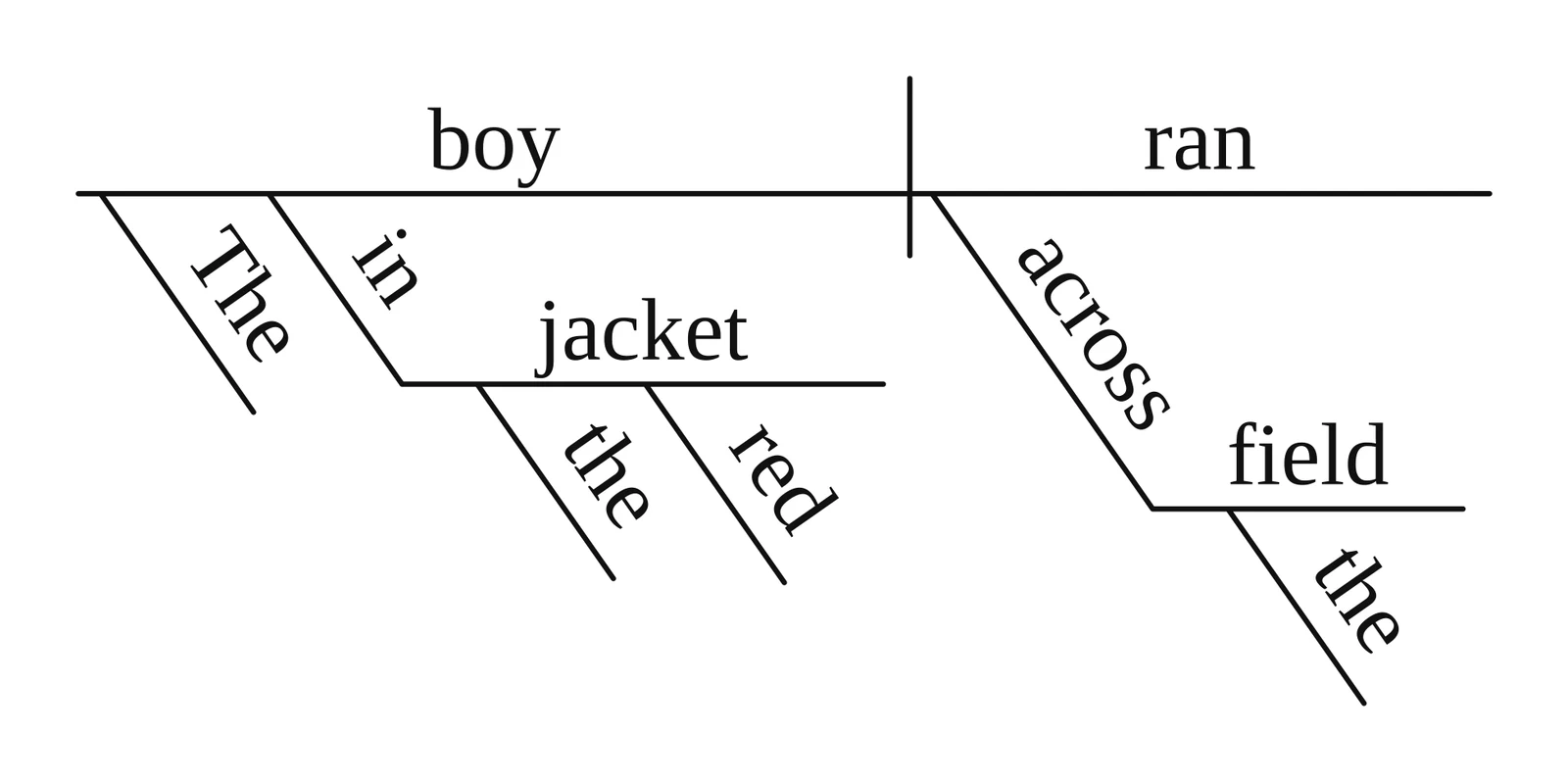
The boy in the red jacket ran across the field. · Open this sentence in the sentence diagram generator
When a phrase could honestly go either way (She saw the man with the telescope), the sentence is ambiguous, and each diagram shows one reading. That makes a good class discussion.
How do you diagram a compound sentence (and compound subjects and verbs)?
Compound subjects and compound verbs split the baseline into a fork. Each item gets its own branch, and the conjunction sits on a dashed line joining the branches.
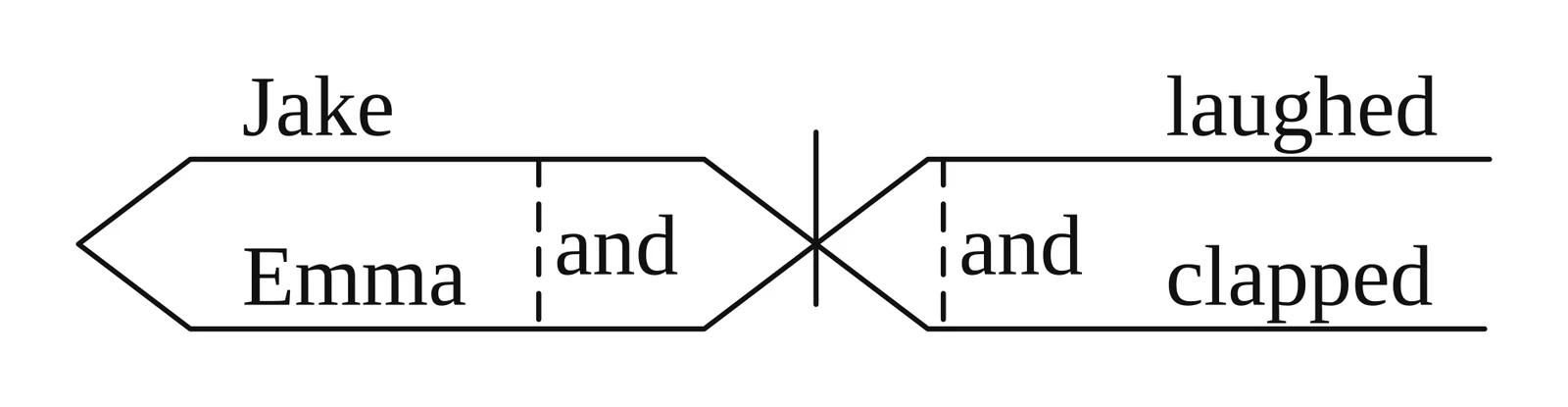
Jake and Emma laughed and clapped. · Open this sentence in the sentence diagram generator
A compound sentence has two independent clauses, so it gets two complete baselines, one above the other. A dashed line with a step joins the two verbs, and the coordinating conjunction (and, but, or, so) is written on it.
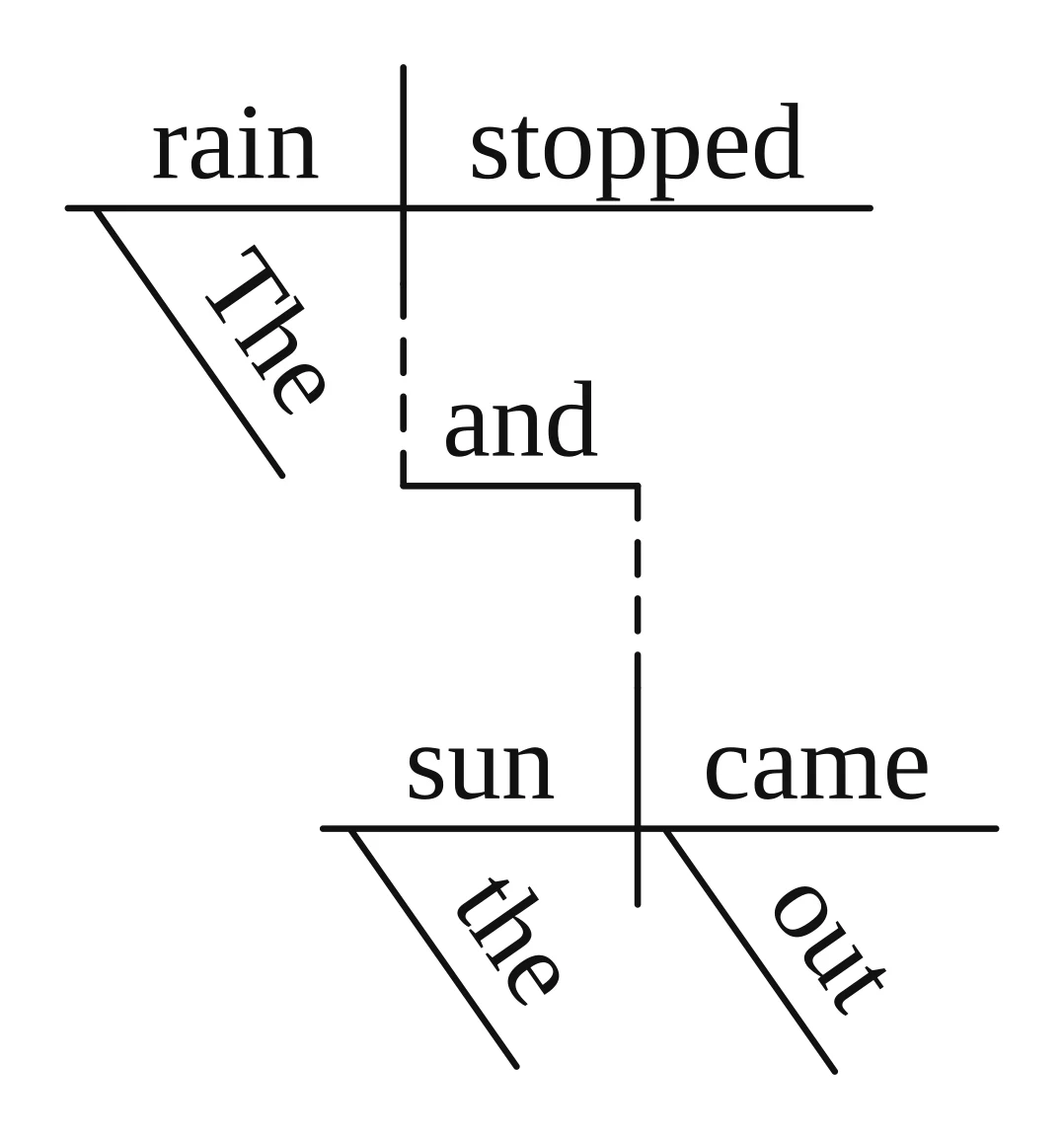
The rain stopped, and the sun came out. · Open this sentence in the sentence diagram generator
Three or more items, and pairs of modifiers
With three items (Jake, Emma and Leo laughed), draw three branches and write the conjunction on the dashed line between the last two. Two modifiers joined by a conjunction (slowly and steadily, tired but happy) are drawn the same way on a small scale: each word on its own slanted line under the word they modify, with a dashed line between the slants carrying the and or but. The generator does not draw that dashed line yet, so add it by hand if your class requires it.
How do you diagram adjective, adverb and noun clauses?
A dependent clause has its own subject and verb, so it always gets its own baseline. What changes is how that baseline connects to the main one.
Adjective (relative) clauses
The clause sits on a baseline below the main one. A dashed line runs from the noun it describes down to the relative pronoun (who, whom, whose, which, that), and the relative pronoun is diagrammed in whatever job it does inside the clause. In this example that is the direct object of lent.
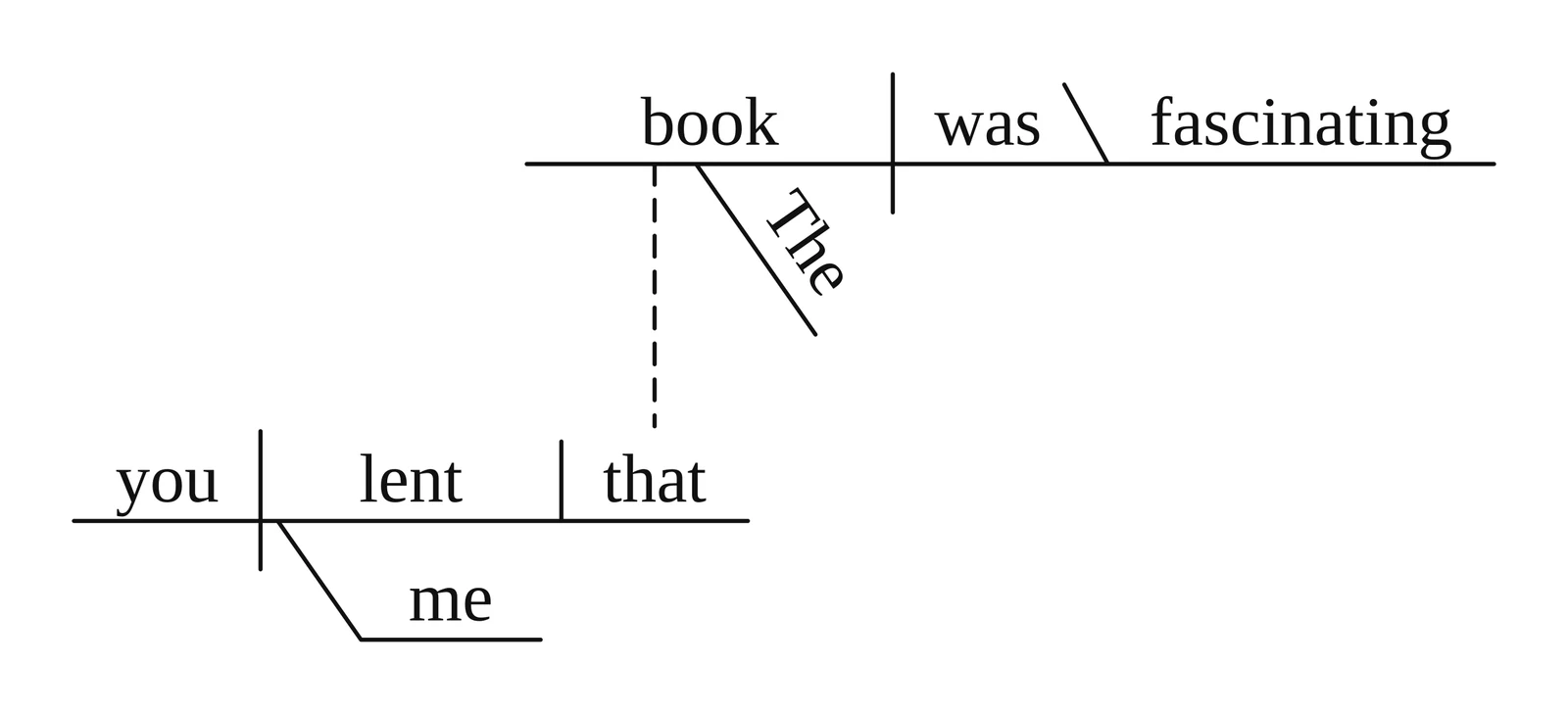
The book that you lent me was fascinating. · Open this sentence in the sentence diagram generator
Adverb clauses
The clause goes below the main baseline, and a dashed line runs from the verb (or adjective, or adverb) it modifies down to the clause's verb. The subordinating conjunction (because, when, although, if) is written along the dashed line, not inside the clause.
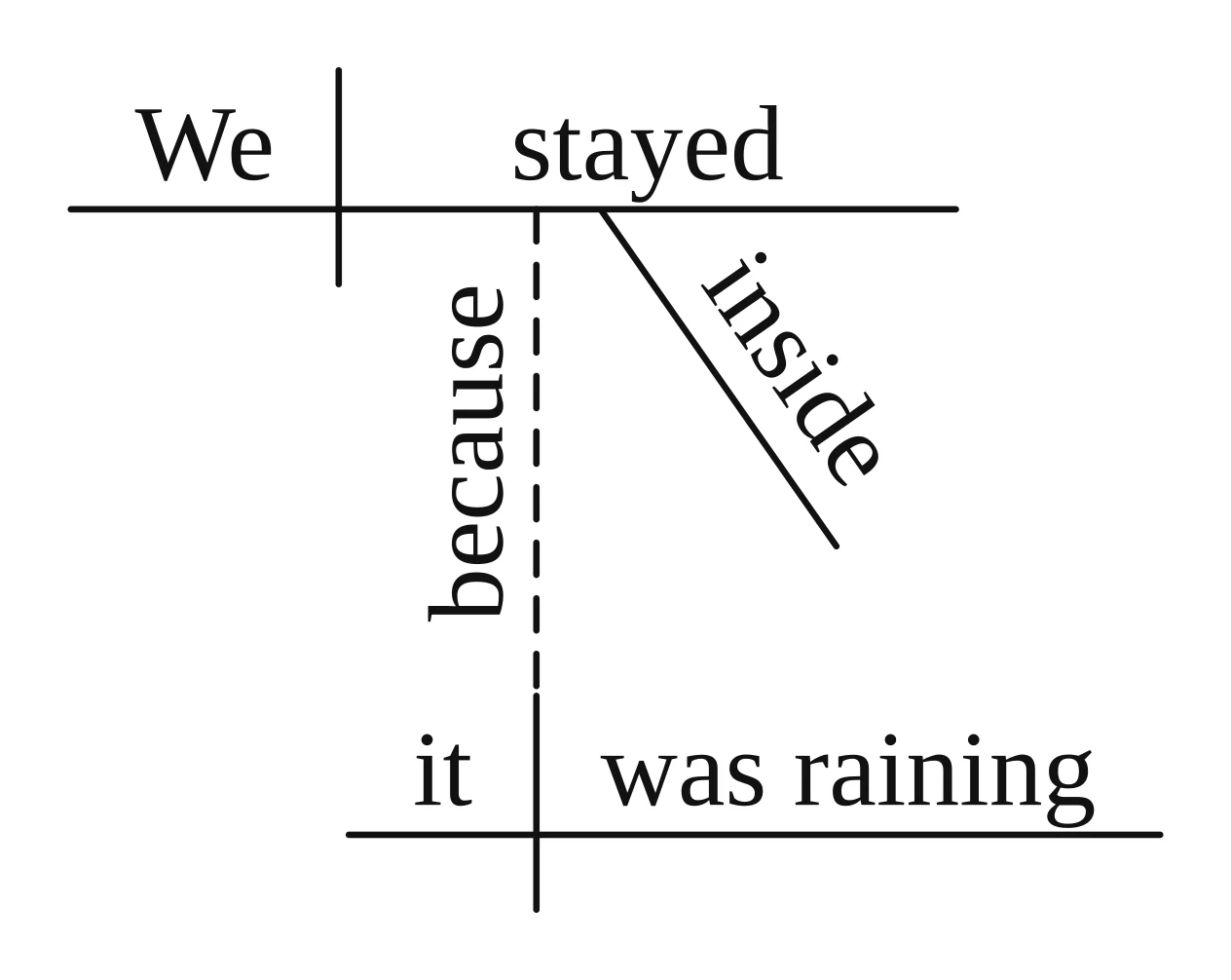
We stayed inside because it was raining. · Open this sentence in the sentence diagram generator
Noun clauses
A noun clause fills a noun's slot (subject, object, predicate noun), so it stands on a pedestal rising from that slot. When the introductory word (that, whether, if) has no job inside the clause, it sits on a short line above, connected by a dashed line.
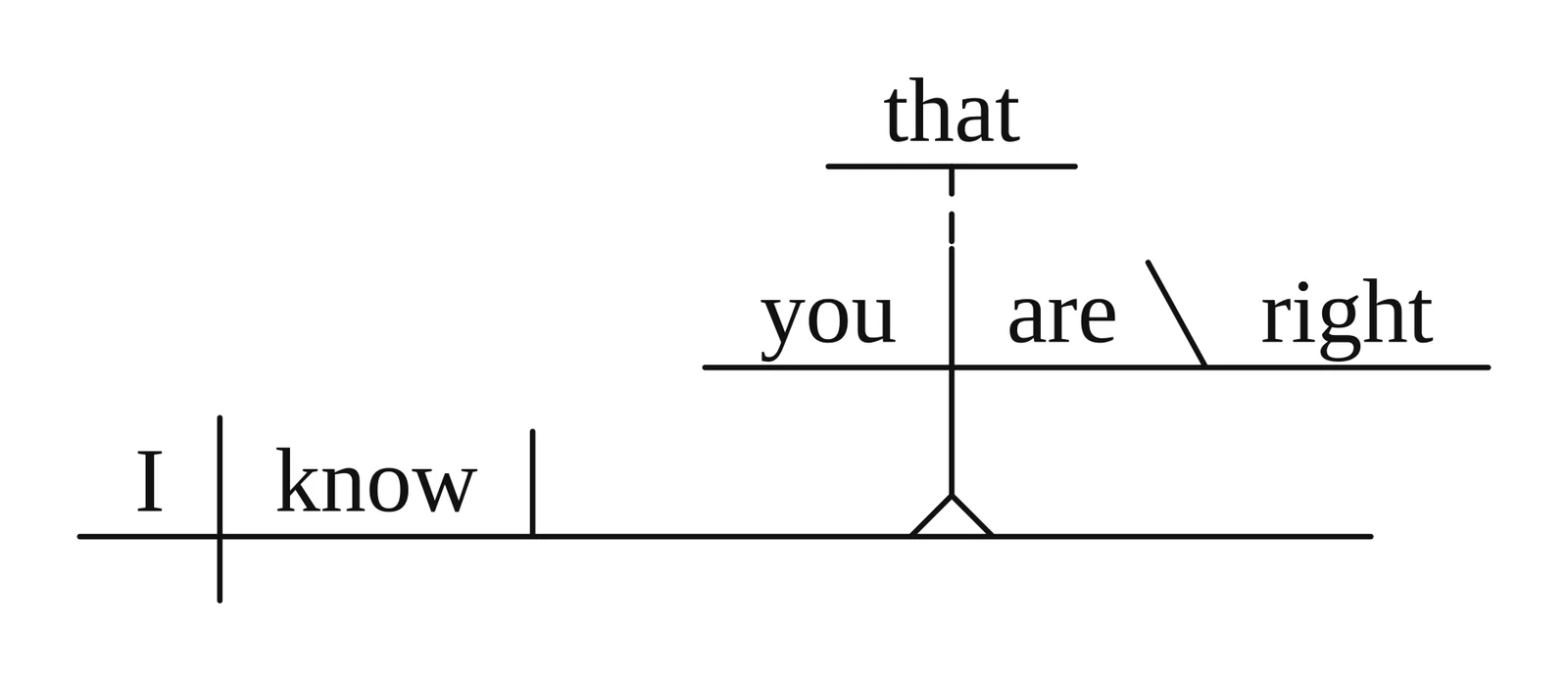
I know that you are right. · Open this sentence in the sentence diagram generator
How do you diagram questions and commands?
Questions: turn the question into statement order first, then diagram it normally. Did the students finish their projects? becomes The students did finish their projects, so Did finish goes together on the verb side. Keep the capital letter where it was.
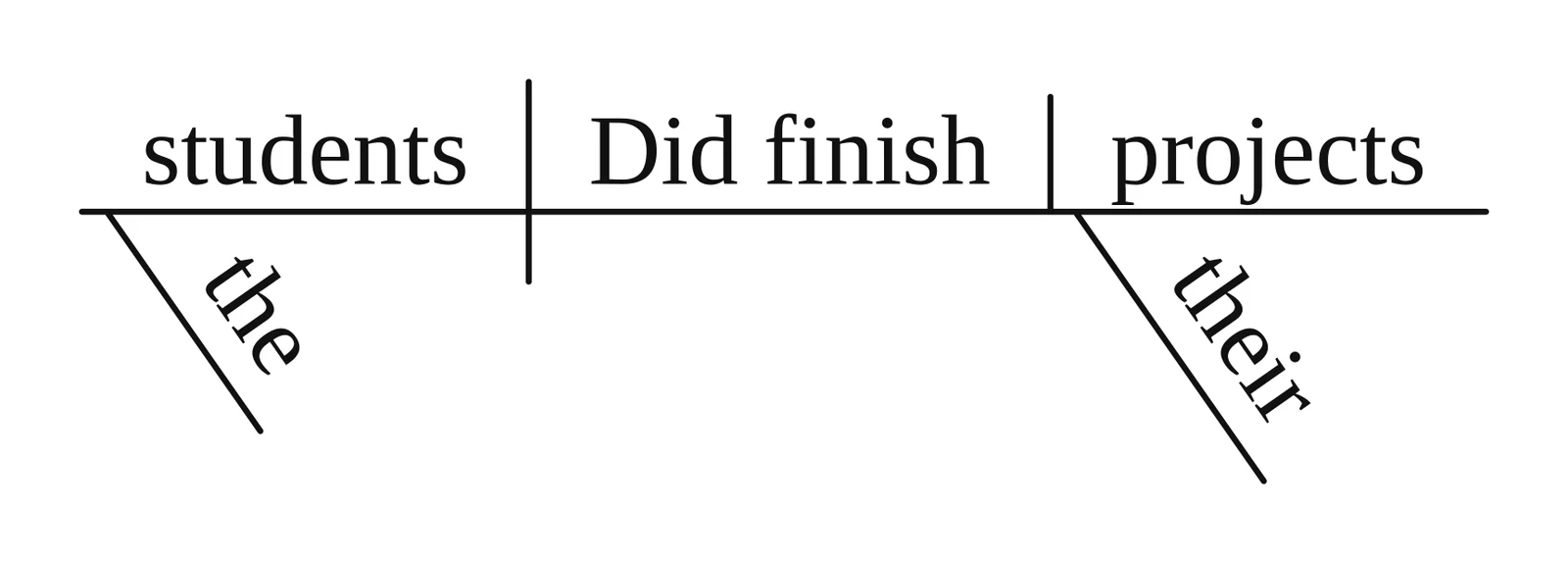
Did the students finish their projects? · Open this sentence in the sentence diagram generator
Commands (imperative sentences): the subject is an understood you. Write (you) in parentheses in the subject position. Here Please is treated as an adverb under the verb; some textbooks set it apart as an independent word on its own line, so follow the one your class uses.
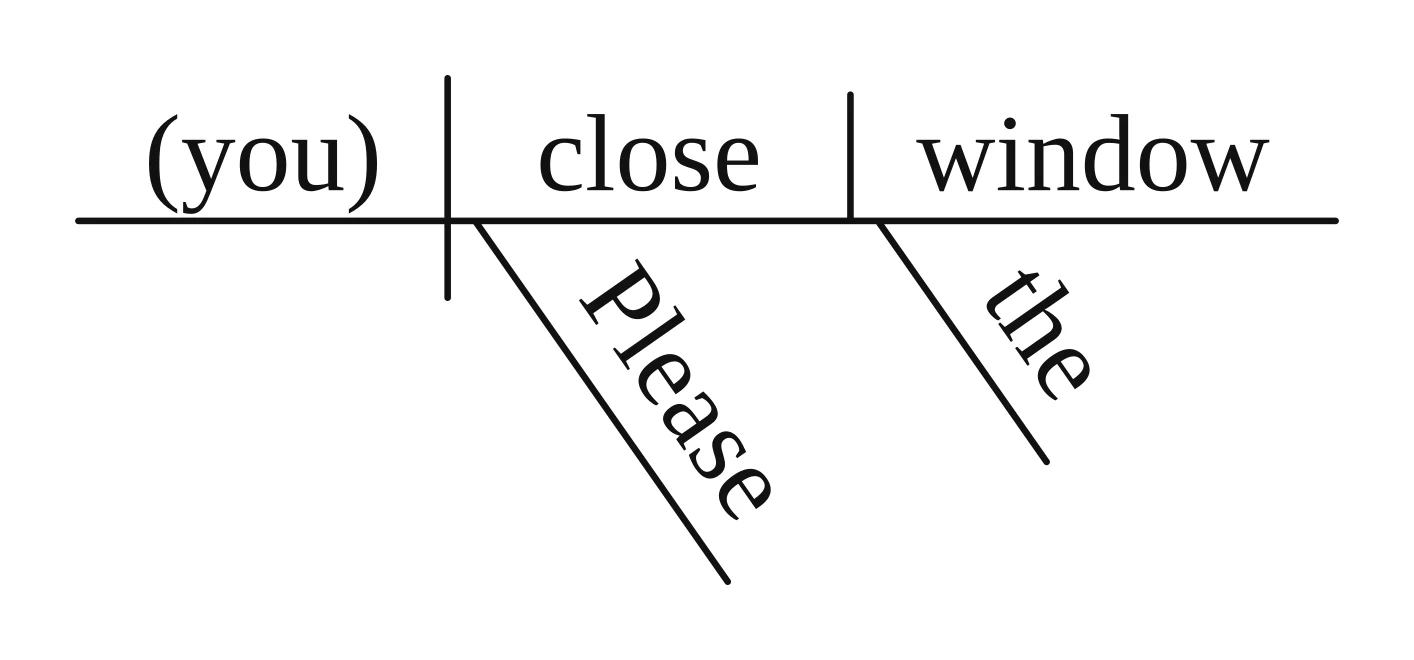
Please close the window. · Open this sentence in the sentence diagram generator
Expletive "there" and words of direct address (There is a problem. / Maria, sit down.) have no grammatical job in the sentence. They go on a separate short line above the subject, not connected to the baseline.
How do you diagram infinitives, gerunds and participles?
Verbals are verb forms doing another part of speech's job. Each has its own picture.
Infinitive used as a noun (to win the race = what Sam wants): it stands on a pedestal in the noun slot. To goes on the slanted part, the verb on the horizontal part, and the infinitive's own object after a short vertical line, just like a mini-sentence.
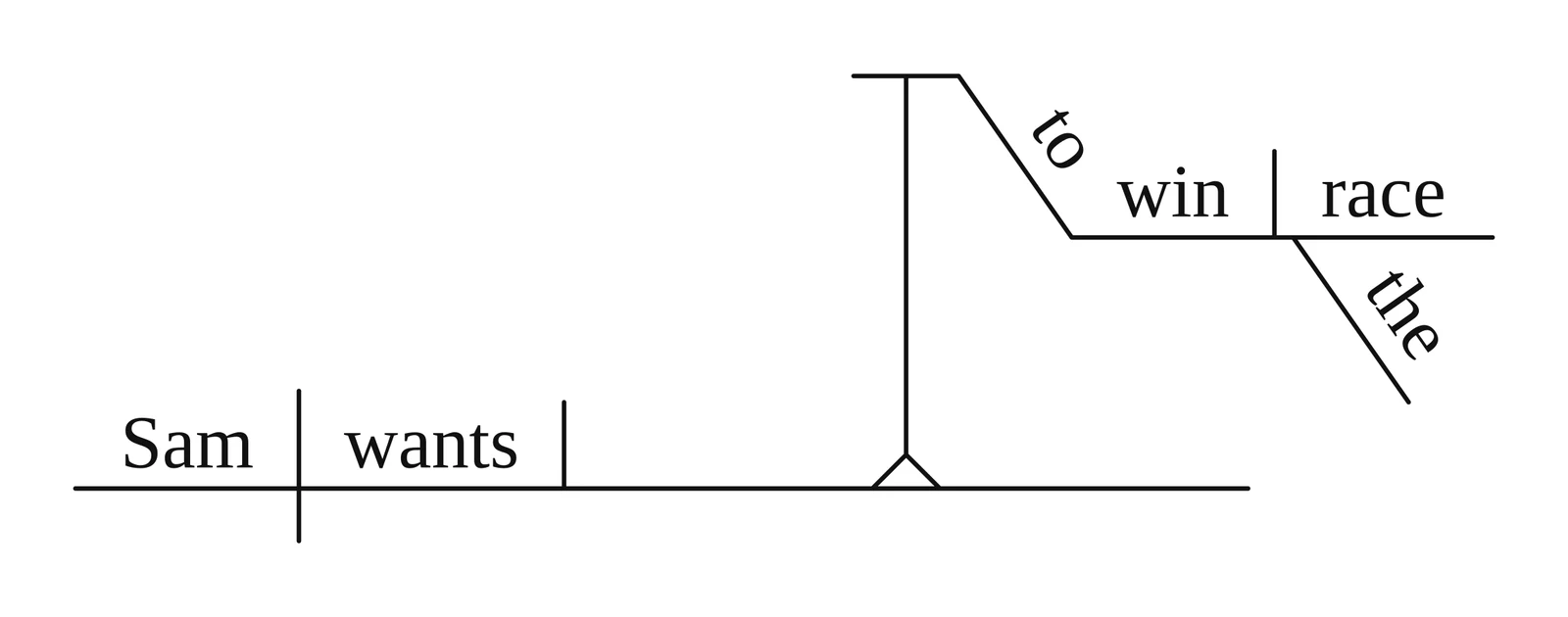
Sam wants to win the race. · Open this sentence in the sentence diagram generator
Gerund (an -ing word used as a noun): it sits on a stepped line on top of a pedestal. Here Swimming is the subject.
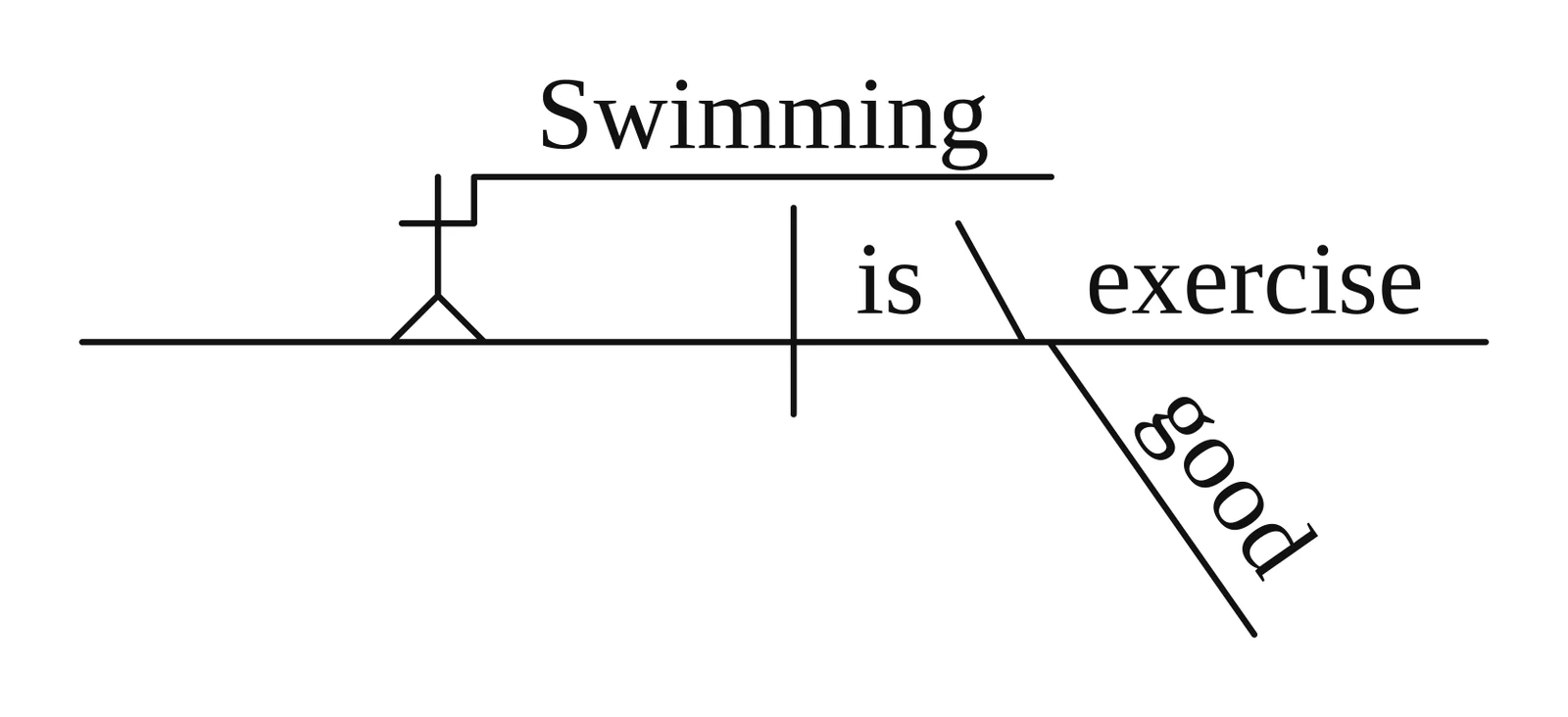
Swimming is good exercise. · Open this sentence in the sentence diagram generator
Participle (a verb form used as an adjective): it hangs under the noun it describes on a line that bends, so the word sits half on the slant and half on the flat part.
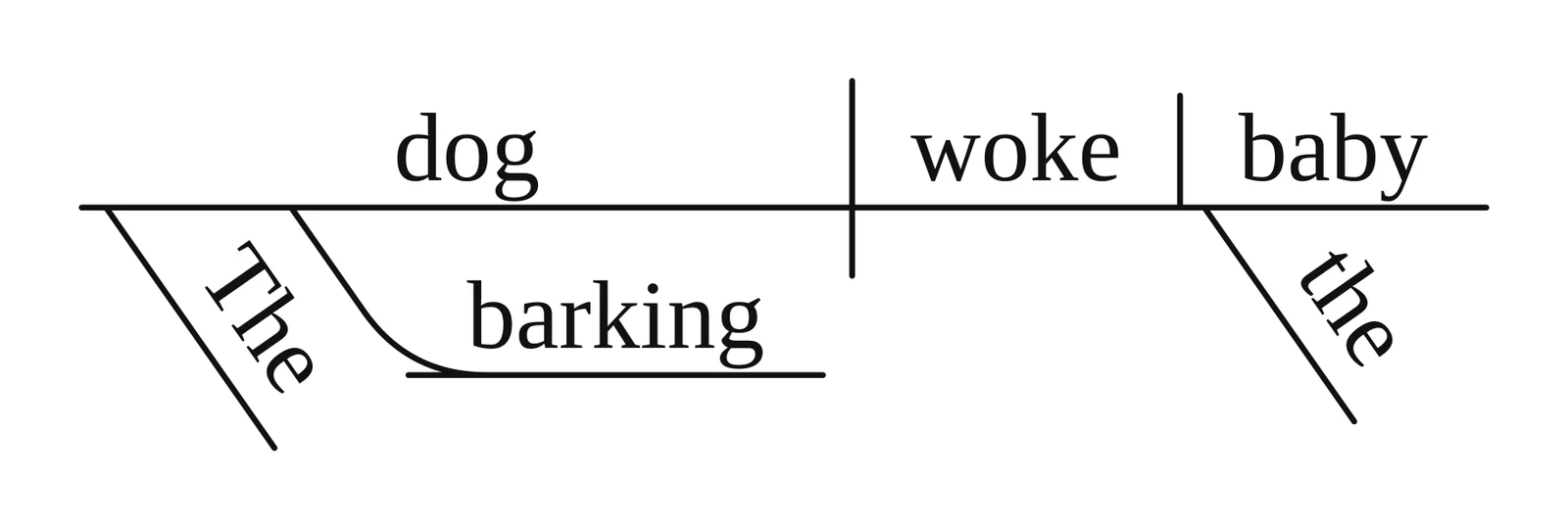
The barking dog woke the baby. · Open this sentence in the sentence diagram generator
How do you diagram an appositive?
An appositive is a noun or noun phrase that renames the noun right before it, usually set off by commas. In a Reed–Kellogg diagram it goes in parentheses right after the noun it renames, on the same line, and its own modifiers hang below it.
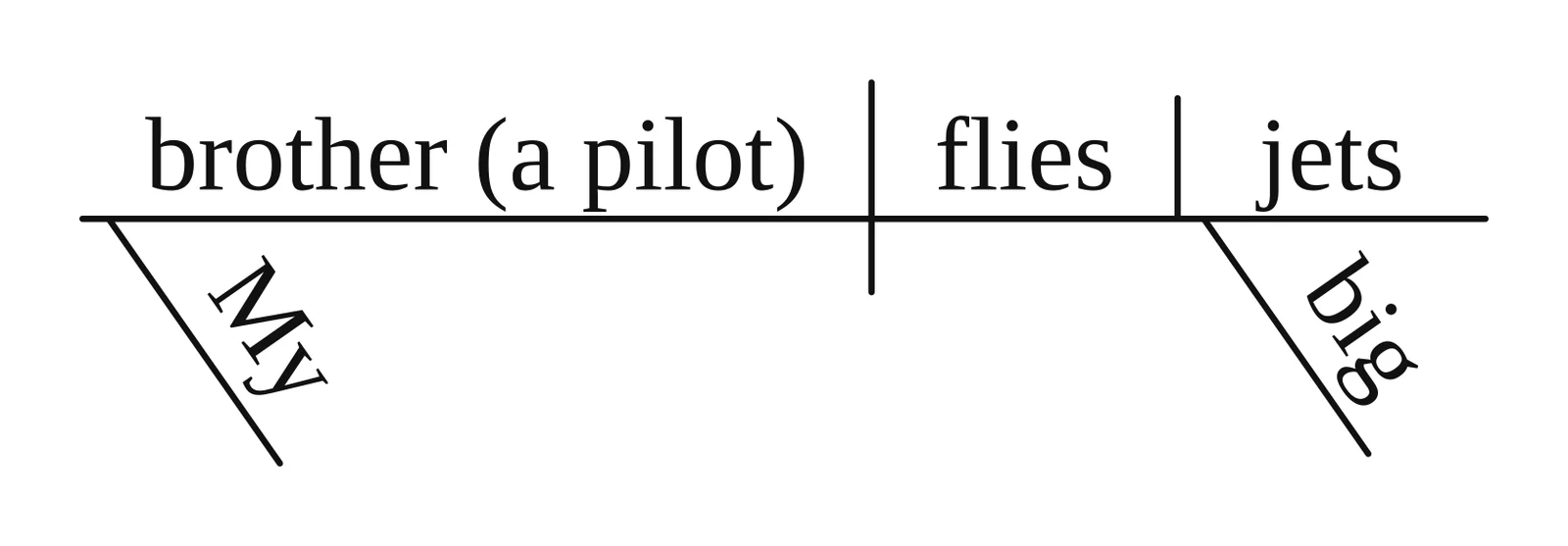
My brother, a pilot, flies big jets. · Open this sentence in the sentence diagram generator
Is there a sentence diagramming cheat sheet?
Yes. The table below puts every rule on this page in one place: what each part of the sentence is, where it goes, and which line it sits on. Keep it next to a worksheet; links to the worked examples are under the table.
| Sentence part | Where it goes | Line |
|---|---|---|
| Subject | Baseline, left | Vertical line crosses the baseline after it |
| Verb (with helping verbs) | Baseline, right of the divider | — |
| Direct object | Baseline, after the verb | Short vertical line, stops at baseline |
| Predicate noun / adjective | Baseline, after a linking verb | Backslash leaning toward the subject |
| Objective complement | Baseline, after the direct object | Backslash leaning toward the object |
| Indirect object | Horizontal line under the verb | Empty slant up to the verb |
| Adjective, article, possessive | Under the noun | Slanted line |
| Adverb (incl. not, never) | Under the verb, adjective or adverb | Slanted line |
| Prepositional phrase | Under the word it modifies | Slant (preposition) + horizontal (object) |
| Compound parts | Forked baselines | Dashed line with the conjunction |
| Compound sentence | Two baselines | Dashed step between verbs, conjunction on it |
| Adjective clause | Own baseline below | Dashed line from noun to relative pronoun |
| Adverb clause | Own baseline below | Dashed line from verb, conjunction on it |
| Noun clause, gerund, infinitive as noun | On a pedestal in the noun slot | Pedestal (stand) |
| Participle | Under the noun | Bent line |
| Understood subject | Subject slot | Write (you) |
| Appositive | After the noun | In parentheses |
See the examples: objects, linking verbs, prepositional phrases, compounds, clauses, questions and commands, verbals.
Can you diagram Bible verses?
Yes, and many homeschool grammar programs do, often from the King James Version. Old-style wording is still ordinary English grammar. Genesis 1:1 in the KJV has a prepositional phrase that tells when, a subject, a verb, and a compound direct object:
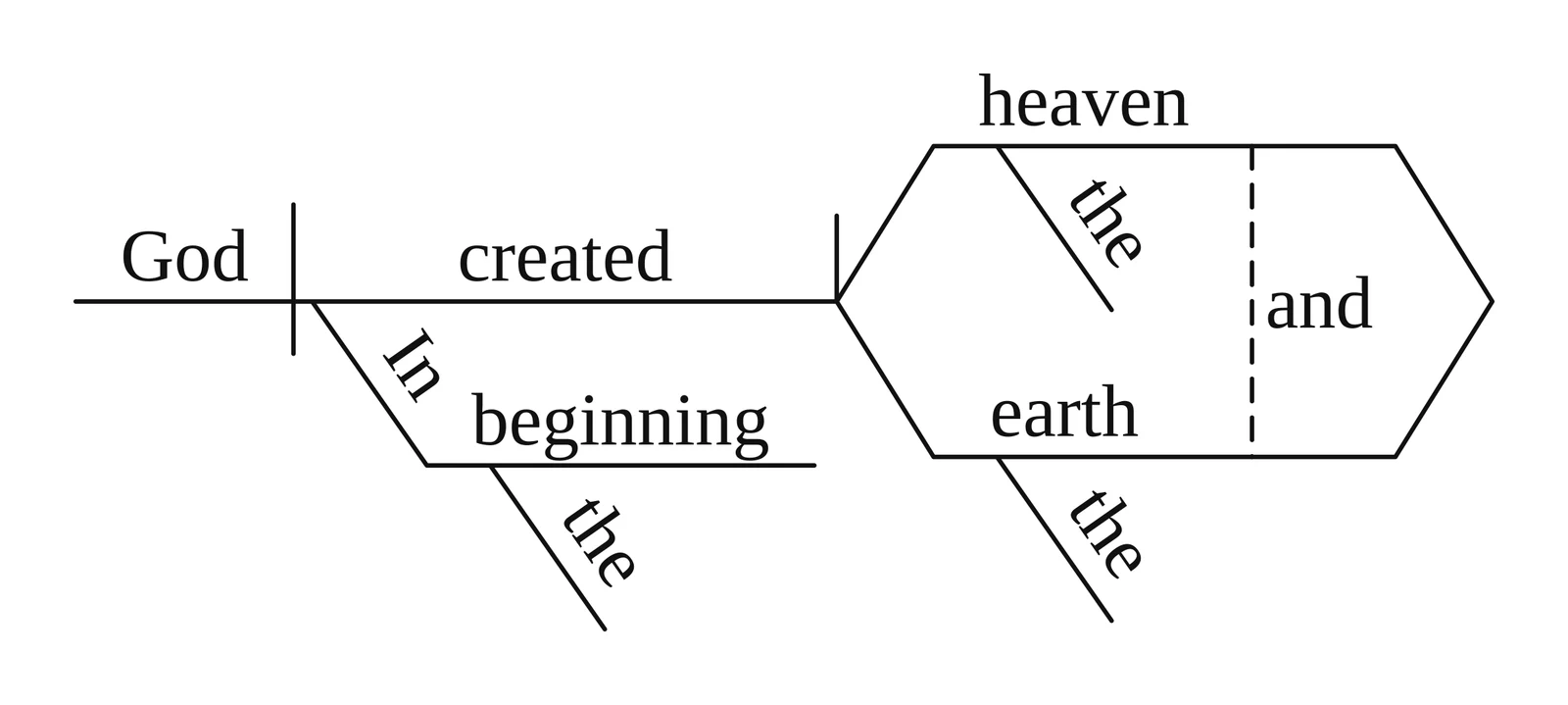
In the beginning God created the heaven and the earth. · Open this sentence in the sentence diagram generator
Long verses with thee, thou and several and-clauses are where diagrams get wide. Split them at the coordinating conjunctions and diagram each clause, then join the baselines with a dashed step as in a compound sentence.
How do you make a sentence diagramming worksheet and answer key?
The simplest practice format is the same diagram twice: once with every line and no words for students to fill in, once with the words as the answer key.
In the sentence diagram generator you type the sentence for the answer key, then type blank worksheet: before the same sentence to get the empty version with the sentence printed on top:
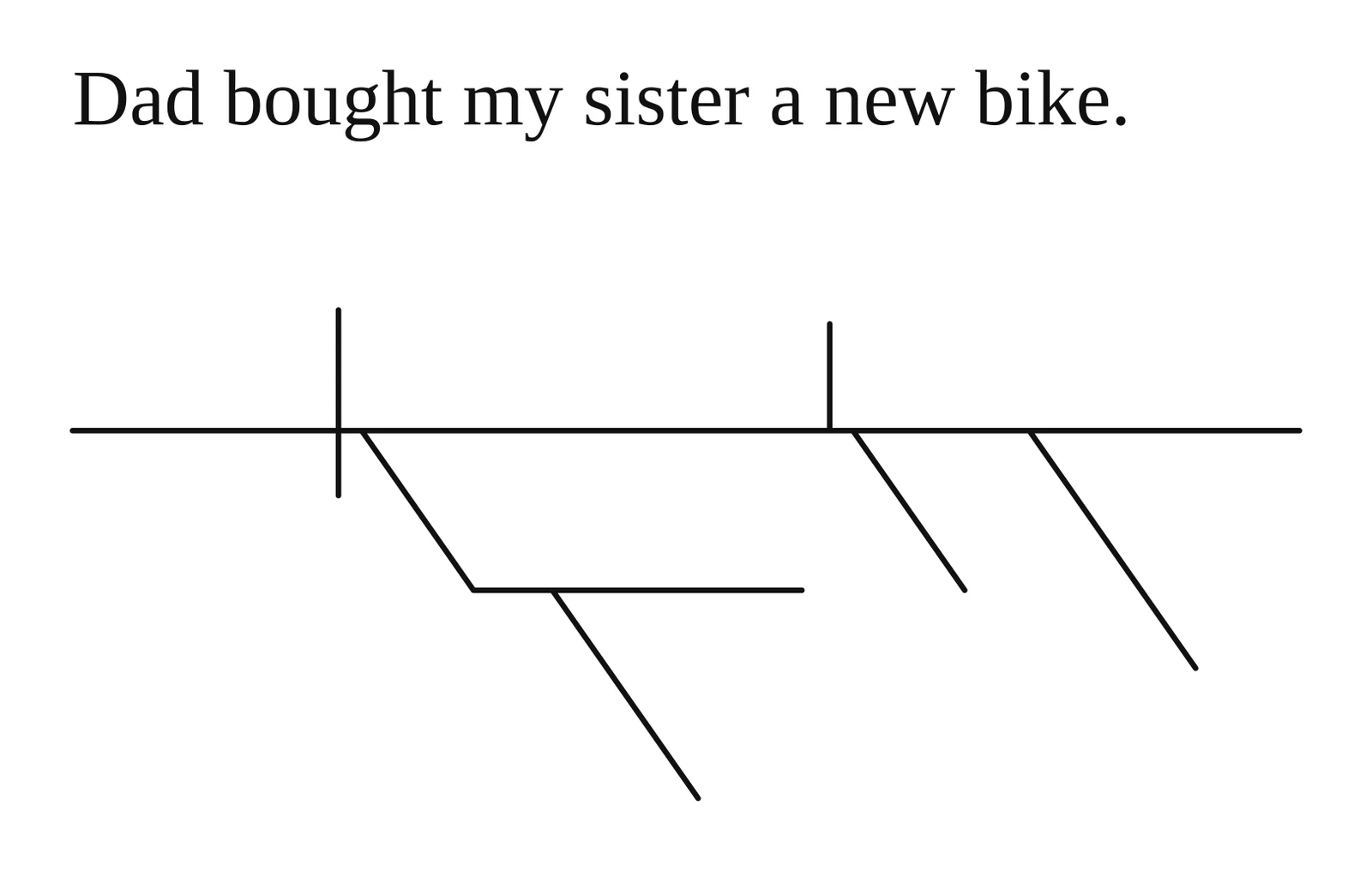
Dad bought my sister a new bike. · Open this sentence in the sentence diagram generator
The answer key for that blank is the indirect object example above. One run makes one diagram, so a worksheet of ten sentences takes ten runs; pasting a whole exercise at once is not supported yet.
Can a tool diagram a sentence for me?
Yes. A sentence diagram generator draws the diagram from a typed sentence. Every diagram on this page came out of ours: a language model reads the grammar, then code draws the lines by the rules above, so the lettering is always clean and the lines follow the Reed–Kellogg conventions.
What code cannot guarantee is the grammar reading itself. The model can put a phrase under the wrong word or drop a word from a long sentence, and it has no place for the and in pairs like slowly and steadily. Check the diagram against the rules on this page before you hand it out as an answer key, especially for long sentences with several clauses. Our accuracy page explains which kinds of diagrams are drawn by code and what to double-check.
You can try one diagram free without an account. Free downloads are PNGs with a small watermark; the watermark-free file and the editable SVG come with a paid plan or credit pack.
Frequently asked questions
What are the basic rules of sentence diagramming?
Subject and verb go on a horizontal baseline split by a vertical line. A direct object follows the verb after a short vertical line; a predicate noun or adjective follows a linking verb after a backslash. Modifiers go on slanted lines under the words they describe, and clauses get their own baselines joined by dashed lines.
Where does "not" go in a sentence diagram?
"Not" (and "never") is an adverb, so it goes on a slanted line under the verb. In "She did not call," the verb is "did call" on the baseline and "not" hangs below it.
How do you diagram a sentence with "there is"?
In "There is a problem," the subject is "problem" and the verb is "is". The word "there" is an expletive with no grammatical job, so it sits on a separate short line above the subject.
Why do teachers still teach sentence diagramming?
A diagram makes students decide what each word is doing, which is hard to fake. It shows at a glance whether a student can tell a direct object from a predicate noun, or which word a phrase modifies.
What is the difference between a sentence diagram and a syntax tree?
A Reed–Kellogg diagram is a school-grammar picture organized around the subject–verb baseline. A syntax tree is a linguistics tool that groups words into labeled phrases (NP, VP) branching from a single root. American grammar classes use diagrams; university linguistics courses use trees.
Is there an app or website that will diagram a sentence for me?
Yes. Web tools like the sentence diagram generator draw a Reed–Kellogg diagram from a typed sentence in the browser, with nothing to install. Check the result before using it as an answer key, since the grammar reading can be wrong on long sentences.
Diagram your own sentence
Type a sentence or phrase and get a Reed–Kellogg diagram, plus a blank version for practice.

