
What is a prepositional phrase?
A prepositional phrase is a preposition, its object, and any words that describe the object: in the park, after lunch, under the old wooden bridge. The object is a noun or pronoun (with her, between him and me), sometimes a gerund (before leaving).
A prepositional phrase has no subject and verb of its own. After lunch is a phrase; after we ate lunch is a clause, and it is diagrammed differently (see diagramming compound and complex sentences).
The whole phrase does one job in the sentence, and only two jobs are possible:
| Job | Answers | Example | Hangs from |
|---|---|---|---|
| Adjective phrase | Which one? What kind? | the book on the table | The noun or pronoun it describes |
| Adverb phrase | Where? When? How? Why? To what extent? | played in the park | The verb, adjective or adverb it modifies |
That job decides where the phrase goes in a Reed–Kellogg diagram. The shape itself never changes: a slanted line for the preposition, a flat line for its object.
How do you diagram a prepositional phrase?
In a Reed–Kellogg sentence diagram, a prepositional phrase goes under the word it modifies: the preposition sits on a slanted line dropping from that word, and its object sits on a flat line attached to the bottom of the slant. Words that describe the object hang under the object.
- Find the preposition and its object. Ask "in what?", "after what?", "with whom?" The answer is the object: in the park.
- Decide which word the phrase modifies. Ask the question the phrase answers. Where did the children play? In the park, so the phrase modifies played.
- Draw a slanted line under that word and write the preposition along it.
- Draw a flat line from the bottom of the slant and write the object on it. Put the object's modifiers (the, old, wooden) on their own small slants under the object.
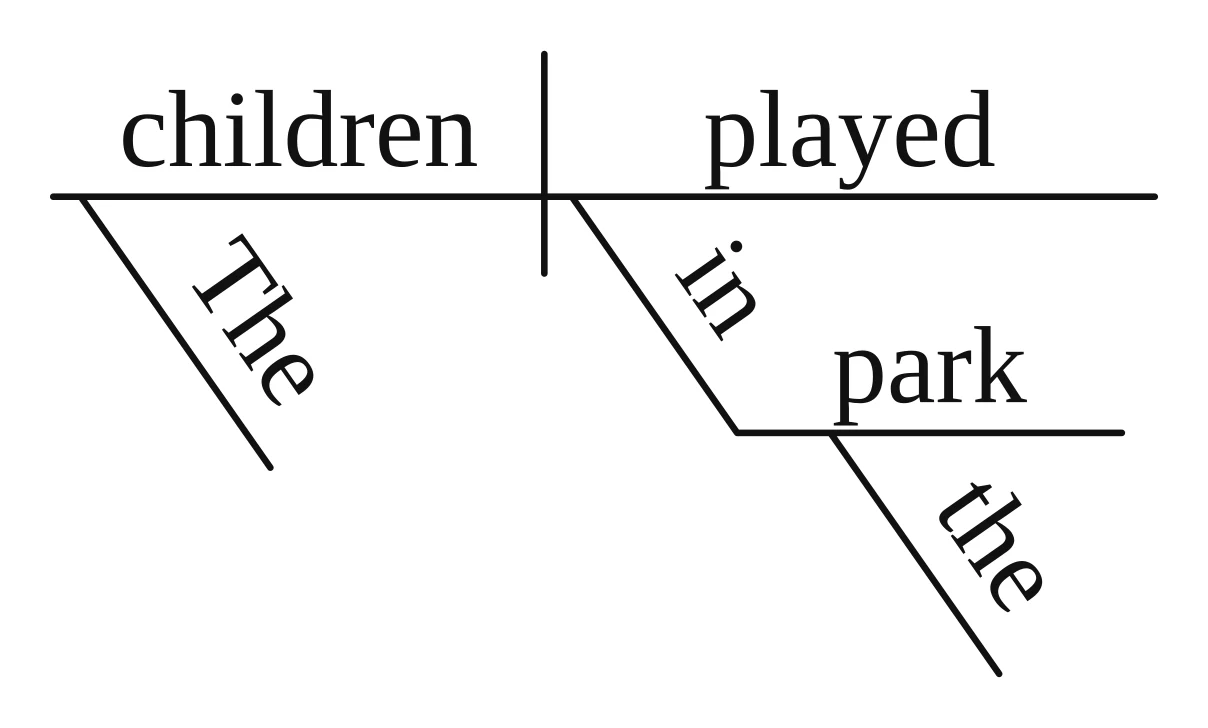
The children played in the park. · Open this sentence in the sentence diagram generator
Nothing about the phrase goes on the baseline. The baseline holds only the subject, the verb and the complements; every prepositional phrase is a modifier, so it always hangs below.
Where does an adjective prepositional phrase go?
When the phrase tells which one or what kind, it acts as an adjective and hangs from the noun or pronoun it describes, even when that noun is the subject.
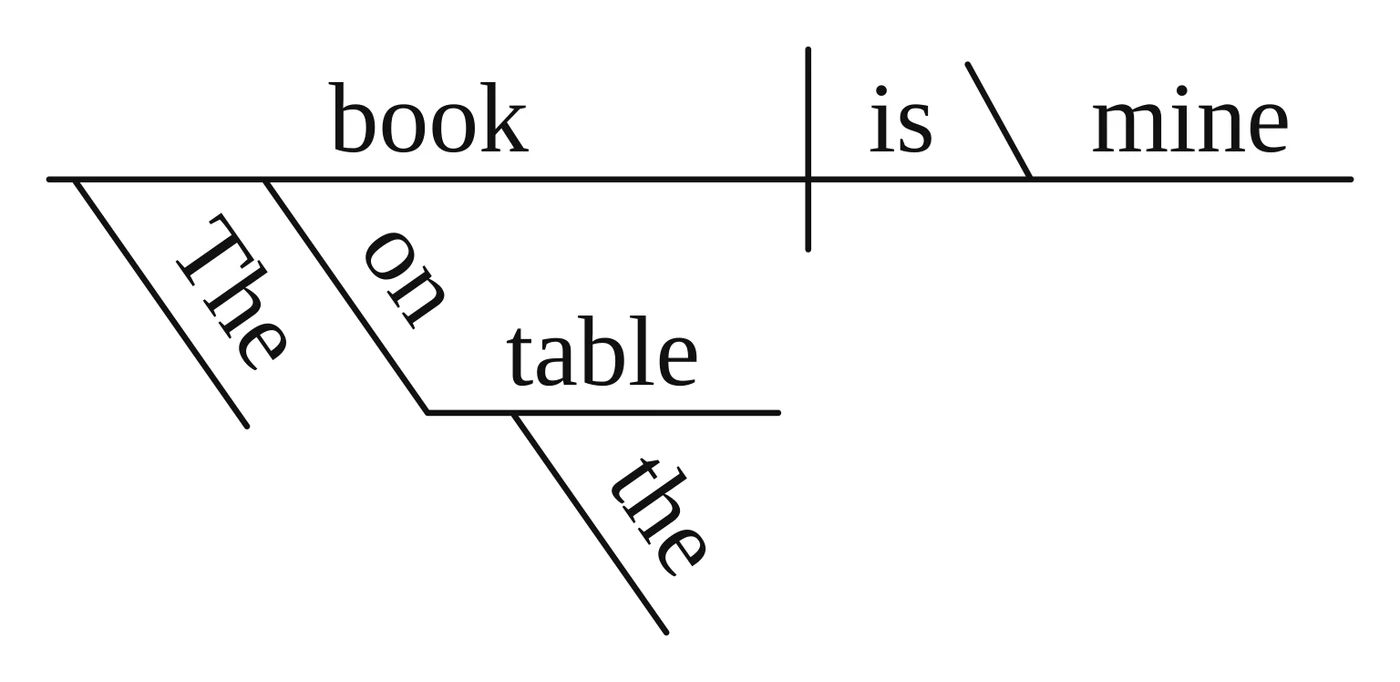
The book on the table is mine. · Open this sentence in the sentence diagram generator
Which book? The one on the table, so the slant starts under book, next to The. An adjective phrase almost always comes right after its noun; if moving the phrase to the front of the sentence changes the meaning (On the table, the book is mine sounds odd), it is probably describing the noun.
A phrase can also describe the object of another phrase. Then it hangs from that object's flat line:
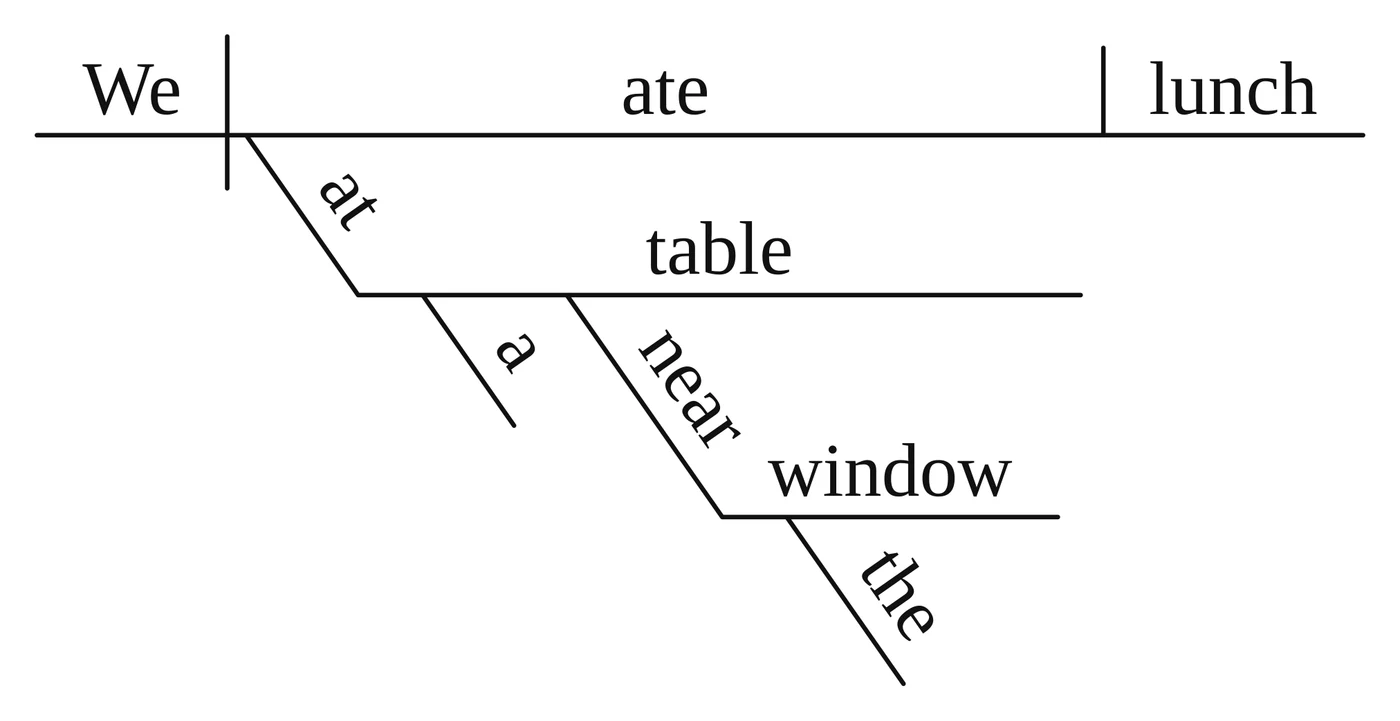
We ate lunch at a table near the window. · Open this sentence in the sentence diagram generator
Near the window tells which table, so it starts under table, not under ate. Chains like this can run three or four phrases deep; each one simply hangs from the word it describes.
Where does an adverb prepositional phrase go?
When the phrase tells where, when, how, why or how much, it acts as an adverb. Most adverb phrases modify the verb, so they hang from the verb, and a sentence can have several of them side by side:
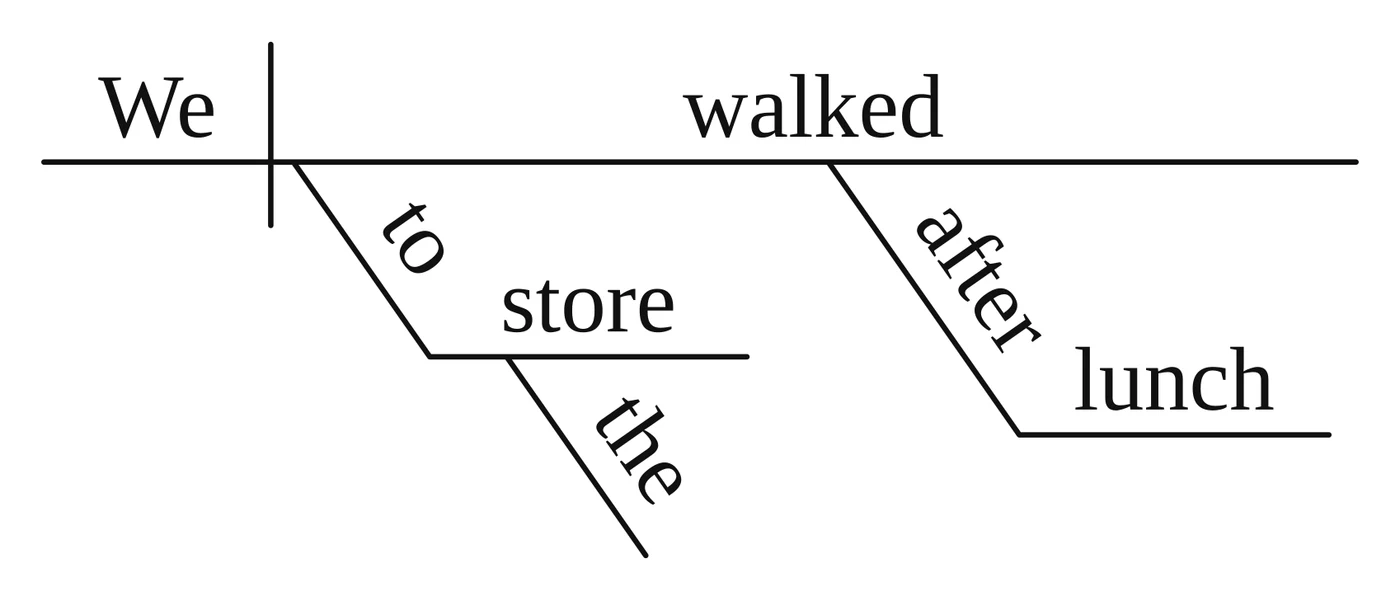
We walked to the store after lunch. · Open this sentence in the sentence diagram generator
An adverb phrase can move around the sentence without changing its job. After the game, we ate pizza puts the phrase first, but it still tells when we ate, so it still hangs from ate:
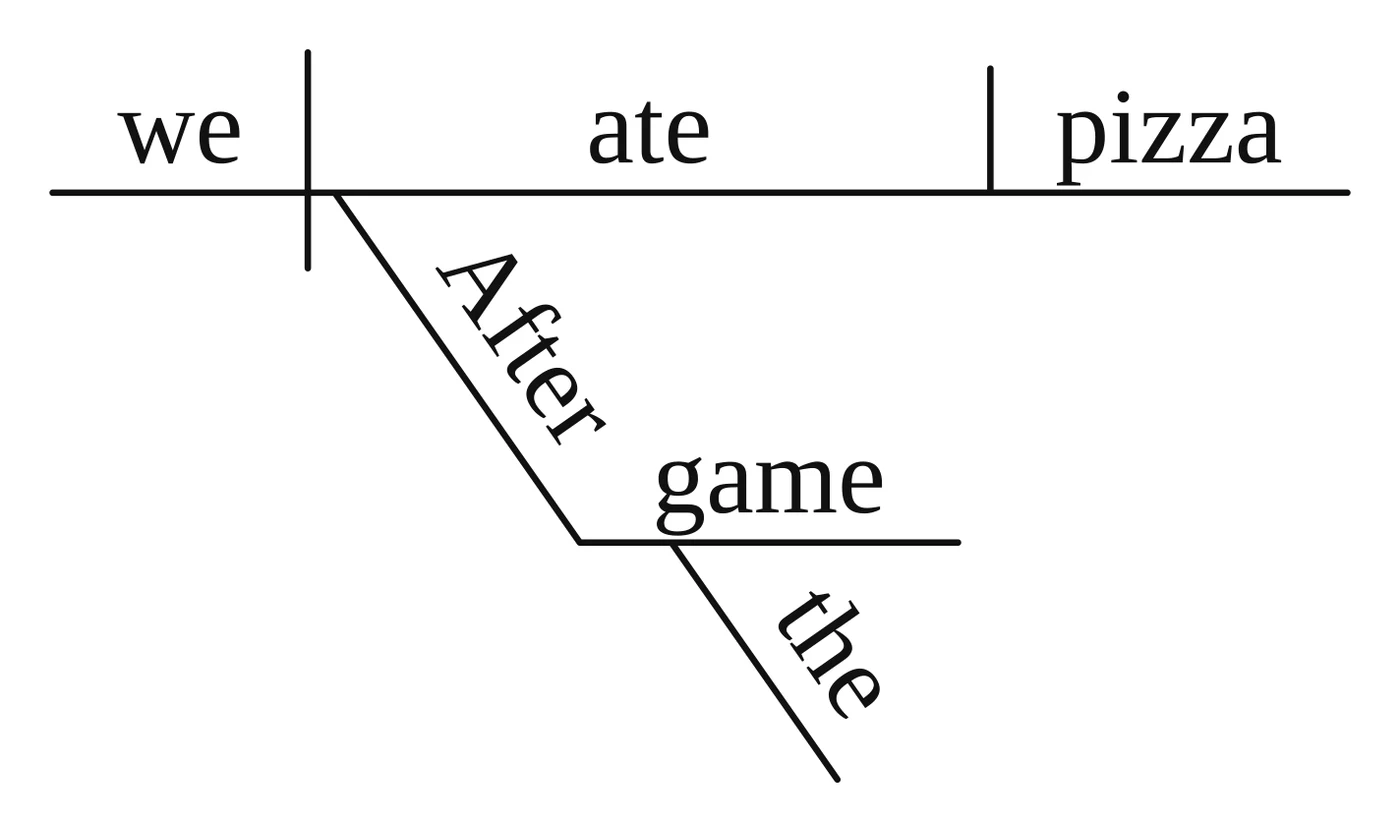
After the game, we ate pizza. · Open this sentence in the sentence diagram generator
An adverb phrase can also modify an adjective. In The bowl is full of soup, the phrase answers "full of what?", so it hangs from the predicate adjective full:
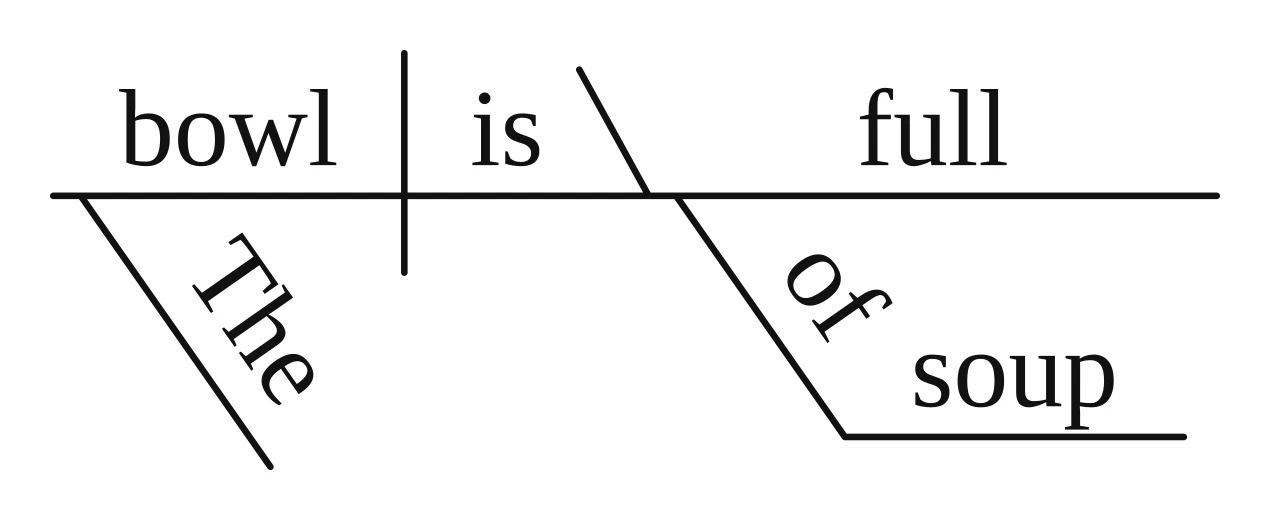
The bowl is full of soup. · Open this sentence in the sentence diagram generator
The same happens with afraid of, good at, proud of and interested in: the phrase goes under the adjective, not under the linking verb.
Compound objects of a preposition
When one preposition has two objects joined by and or or, the object line splits into a fork. Each object gets its own branch, and the conjunction sits on a dashed line between them.
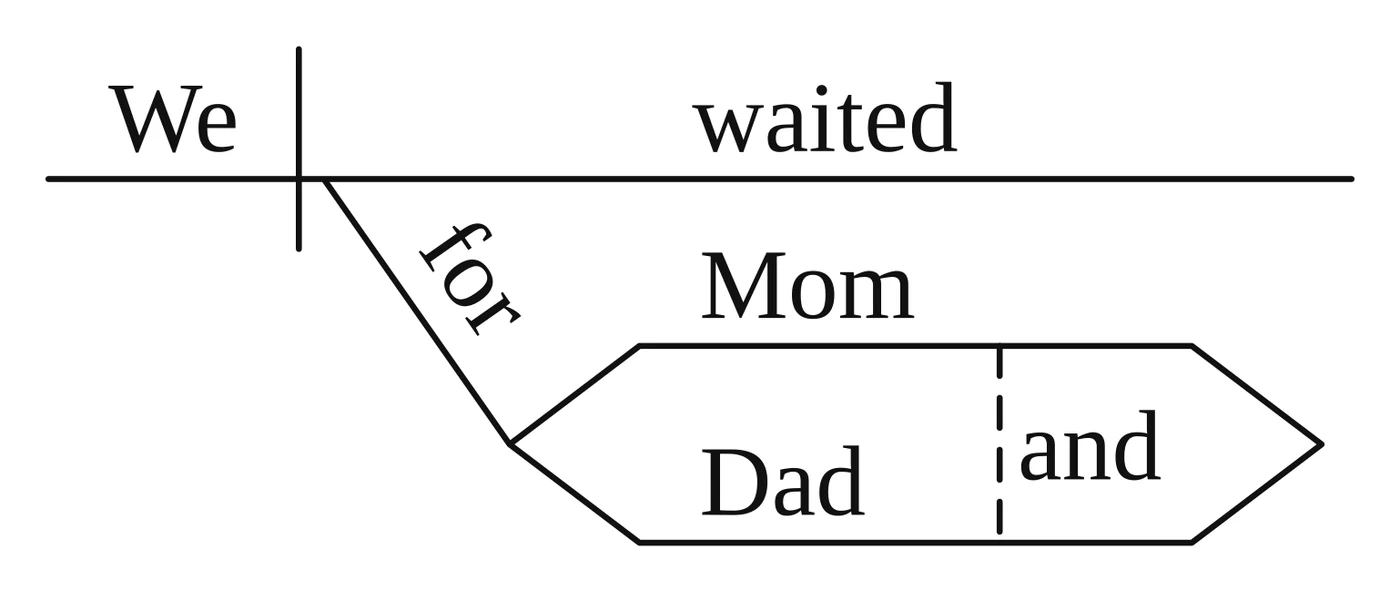
We waited for Mom and Dad. · Open this sentence in the sentence diagram generator
Pronouns after a preposition are objects, so they take the object form: between him and me, not between he and I. Drawing the fork is a quick way to check: each branch should make sense alone after the preposition (between him, between me).
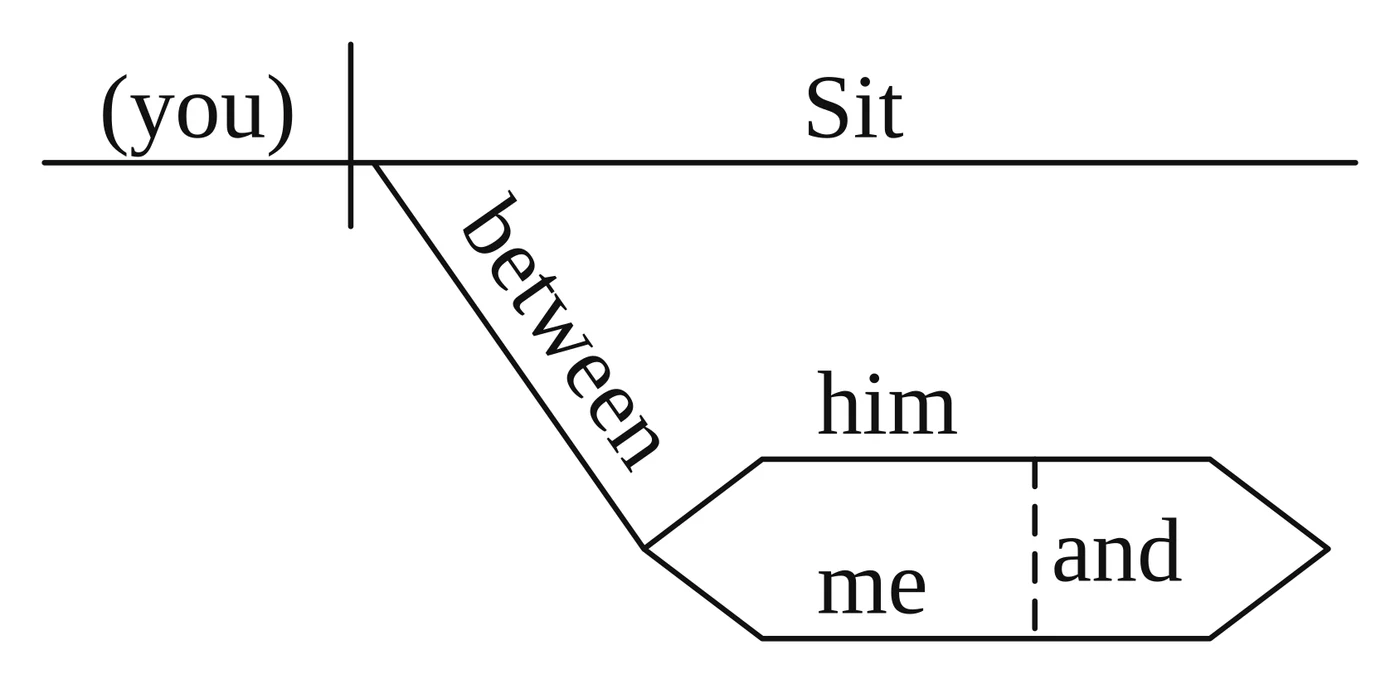
Sit between him and me. · Open this sentence in the sentence diagram generator
The subject of a command is the understood you, written in parentheses.
How do you diagram a two- or three-word preposition?
Because of, instead of, according to, out of, in front of and in spite of work as single prepositions. Write all the words together on the one slanted line, and put only the object on the flat line.
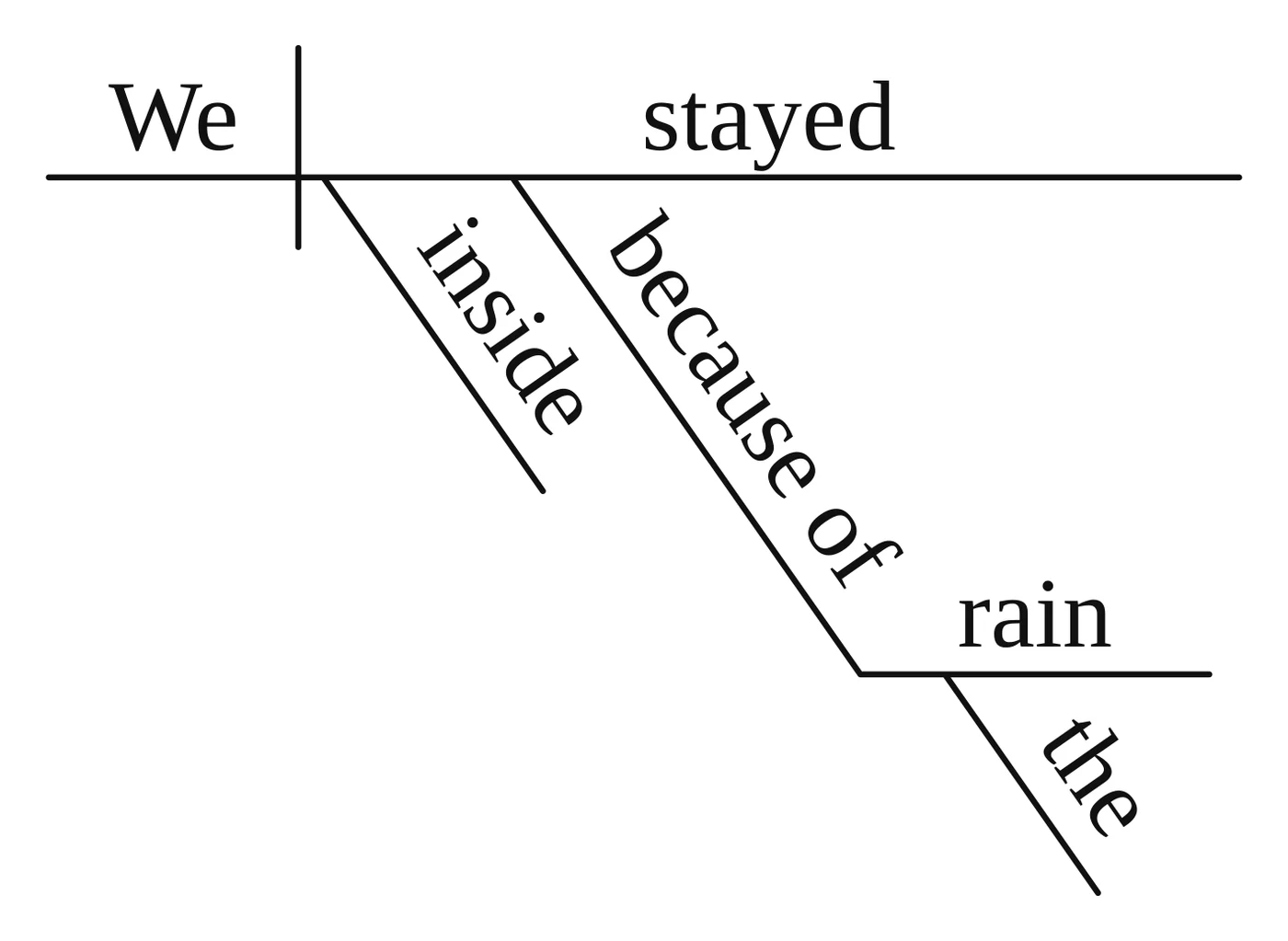
We stayed inside because of the rain. · Open this sentence in the sentence diagram generator
In this sentence inside has no object, so it is a plain adverb on its own slant. That leads to the most common mix-up with prepositions.
Preposition, adverb or particle? How to tell before you draw
Many prepositions (outside, inside, up, down, off, around, before, after) can also be adverbs. The test is simple: a preposition has an object; an adverb does not.
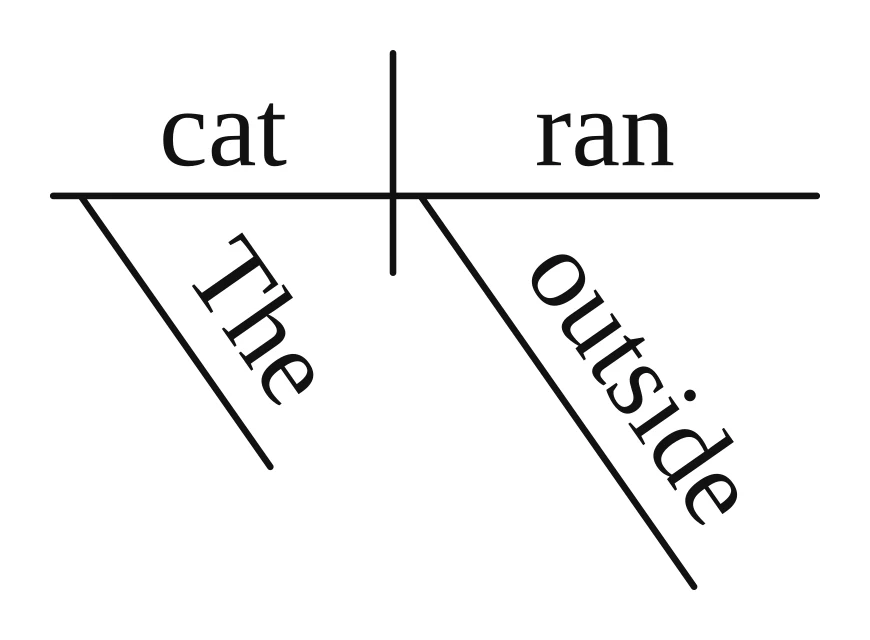
The cat ran outside. · Open this sentence in the sentence diagram generator
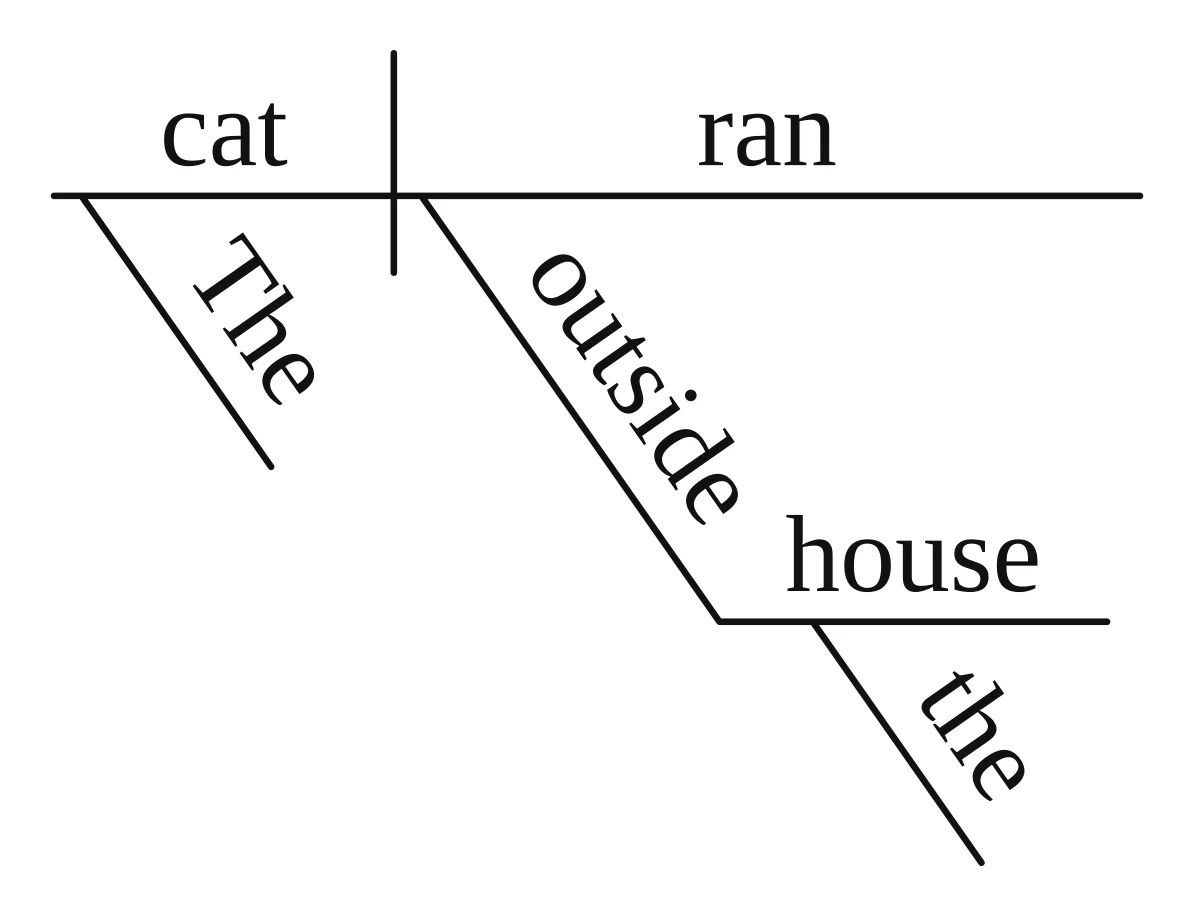
The cat ran outside the house. · Open this sentence in the sentence diagram generator
In the first sentence outside answers "where?" on its own, so it is an adverb: one slant, no flat line. In the second it has an object, the house, so it is a preposition with the usual slant and flat line.
A third case is the particle of a phrasal verb. In She turned off the light, off belongs to the verb (turned off means switched off), and the light is the direct object of the whole verb. Many teachers write the phrasal verb together on the verb line:
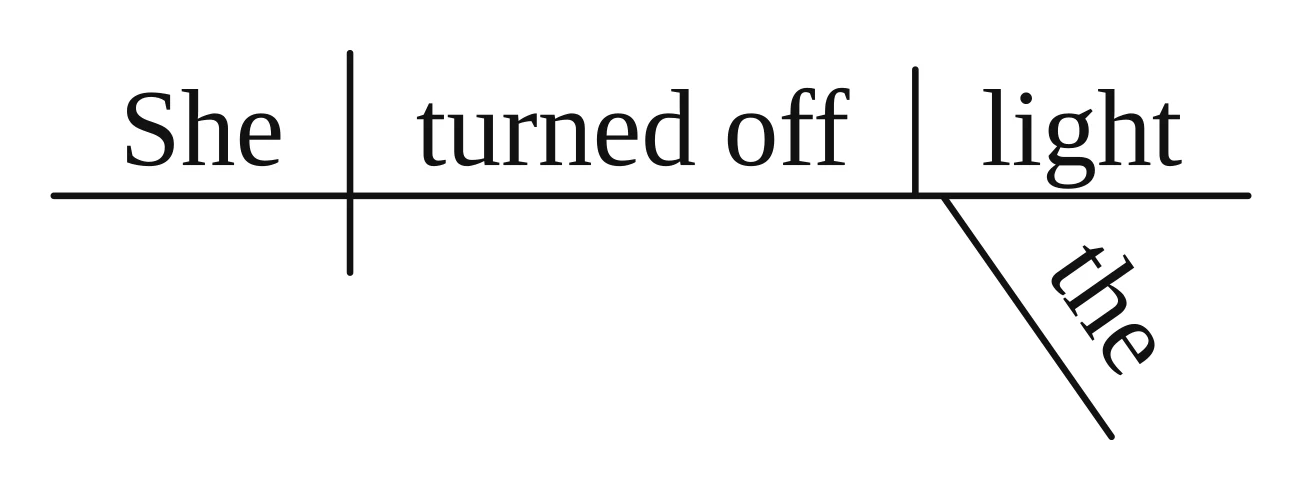
She turned off the light. · Open this sentence in the sentence diagram generator
Two checks for a particle: you can move it after the object (turned the light off), and the verb plus particle has a meaning of its own. A real preposition cannot move that way: She ran off the road cannot become She ran the road off. Some textbooks instead put the particle on a slant under the verb; use your class's convention.
To before a verb (to swim, to read) is not a preposition either. It marks an infinitive, which is diagrammed on a pedestal or a stepped line, not as a prepositional phrase.
Where do the words describing the object go?
Articles and adjectives inside the phrase describe the object, so they slant under the object, in sentence order, exactly as they would under a subject.
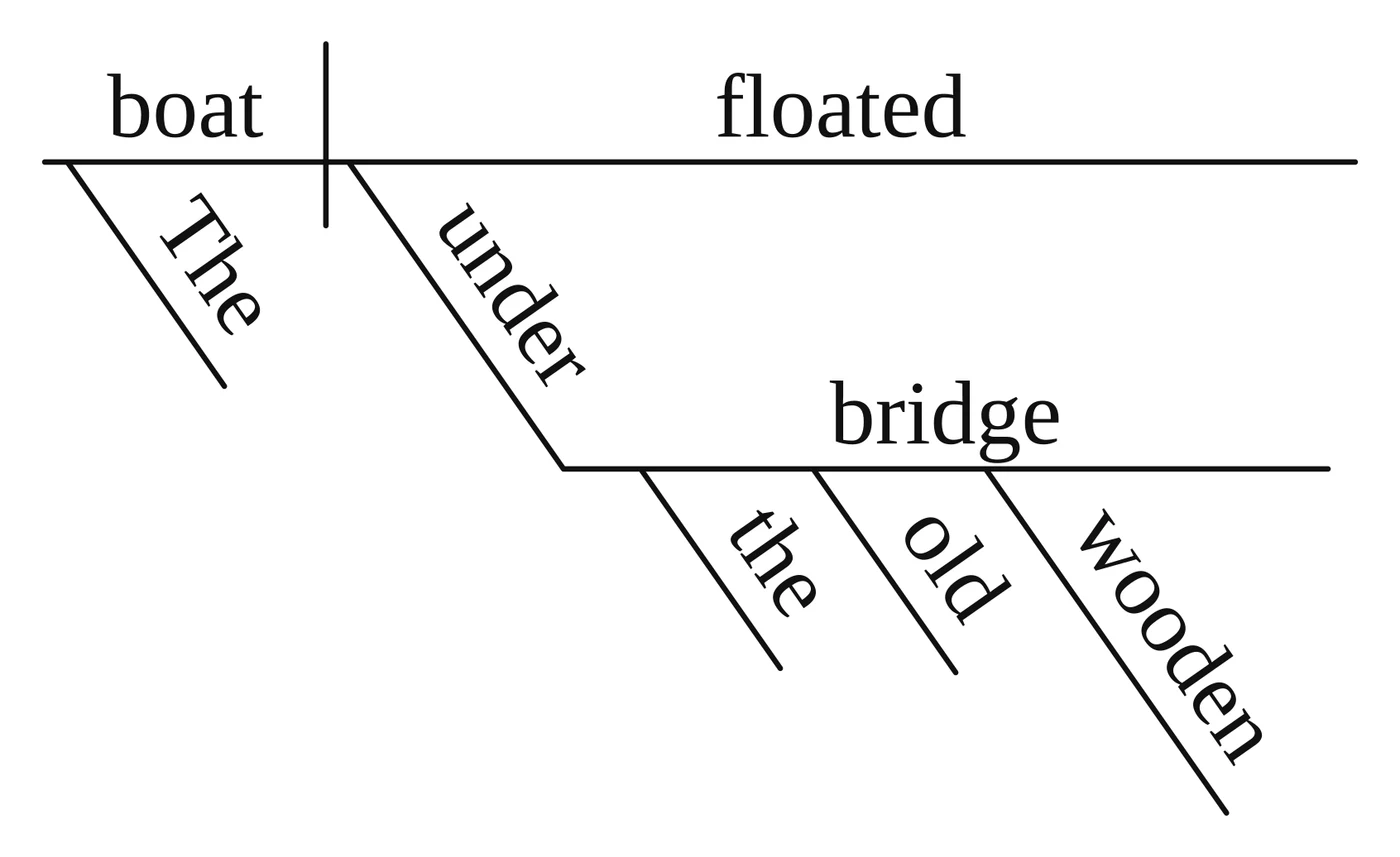
The boat floated under the old wooden bridge. · Open this sentence in the sentence diagram generator
If your worksheet asks you to diagram a prepositional phrase by itself, with no sentence around it, draw the same slant and flat line hanging from an empty line that stands in for the word it would modify:
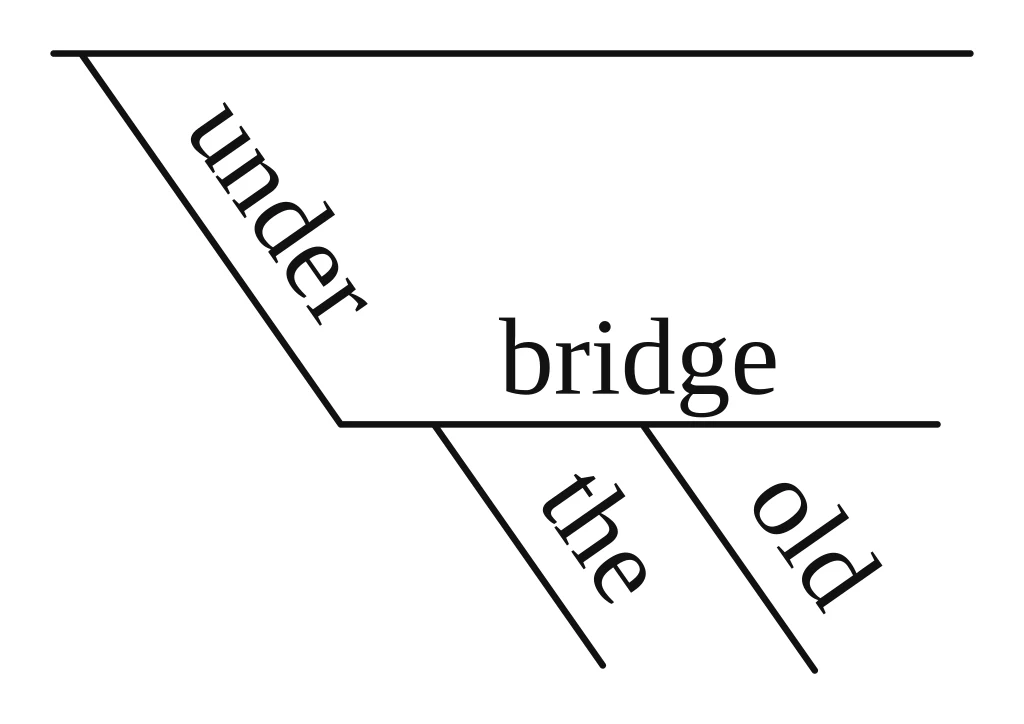
under the old bridge · Open this sentence in the sentence diagram generator
Common mistakes when diagramming prepositional phrases
- Hanging every phrase from the verb. Ask the question first. The letter from my cousin tells which letter, so from my cousin goes under letter, not under the verb.
- Putting the object on the slant. The preposition goes on the slant; the object goes on the flat line at its foot.
- Treating an adverb as a preposition. No object means no flat line: She looked up has an adverb, She looked up the chimney has a phrase.
- Hanging the second phrase of a chain from the verb. In a table near the window, near the window describes table.
- Splitting a two-word preposition. Because of and instead of share one slant.
- Losing the preposition in a question. In Who did you talk to?, the question word is the object of to: think of it as you did talk to whom. Check a generated diagram of a question like this word by word; the grammar reading can drop the preposition or put the question word on the wrong line.
Prepositional phrases to practice
Try these eight sentences on paper first, then compare with the answer key below or open a sentence in the generator to check it. For a whole class set, the sentence diagramming worksheets page shows how to turn up to 20 of your own sentences into a blank worksheet and an answer key.
| # | What to look for | Sentence |
|---|---|---|
| 1 | Adverb | The puppy slept under the couch. |
| 2 | Adjective and adverb | A girl with a backpack waited at the corner. |
| 3 | Adverb, opener | During the storm, the lights flickered. |
| 4 | Phrase inside a phrase | My grandmother lives in a small town near the coast. |
| 5 | Modifies an adjective | He is afraid of spiders. |
| 6 | Adjective and adverb | The letter from my cousin arrived on Monday. |
| 7 | Adjective | The house across the street has a red door. |
| 8 | Phrase inside a phrase | The cat jumped onto the shelf above the sink. |
Answer key
Each answer below is the generator's diagram for that sentence, with a note on which word the phrase hangs from.
1.
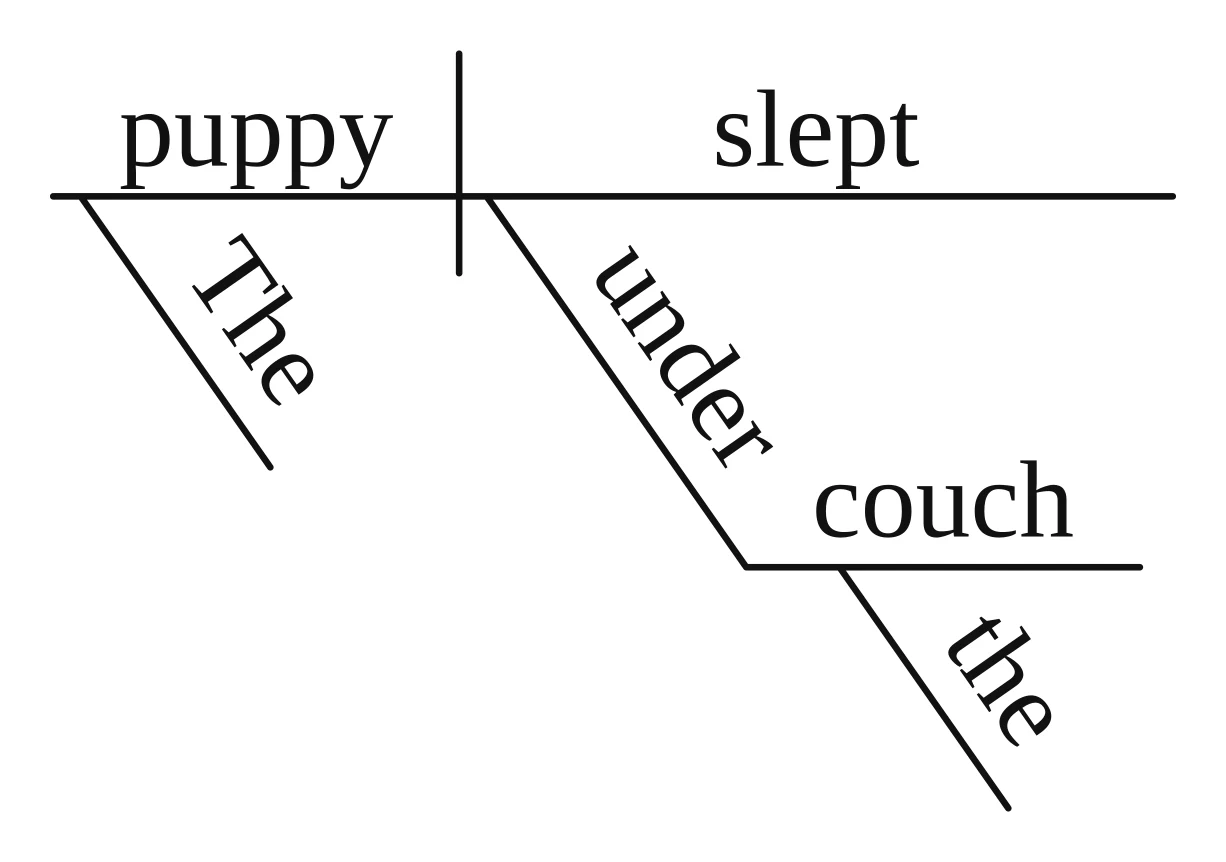
Under the couch tells where the puppy slept, so it hangs from slept. The sits under couch, the object of the preposition.
2.
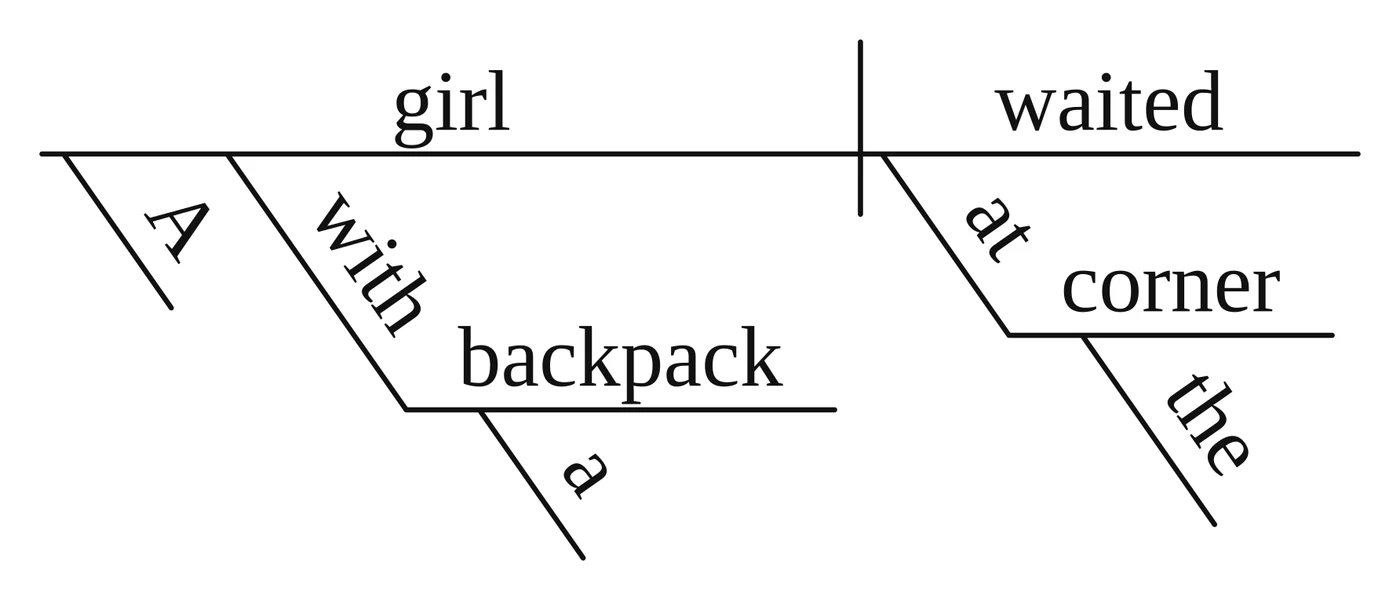
With a backpack tells which girl, so it hangs from girl; at the corner tells where she waited, so it hangs from waited.
3.
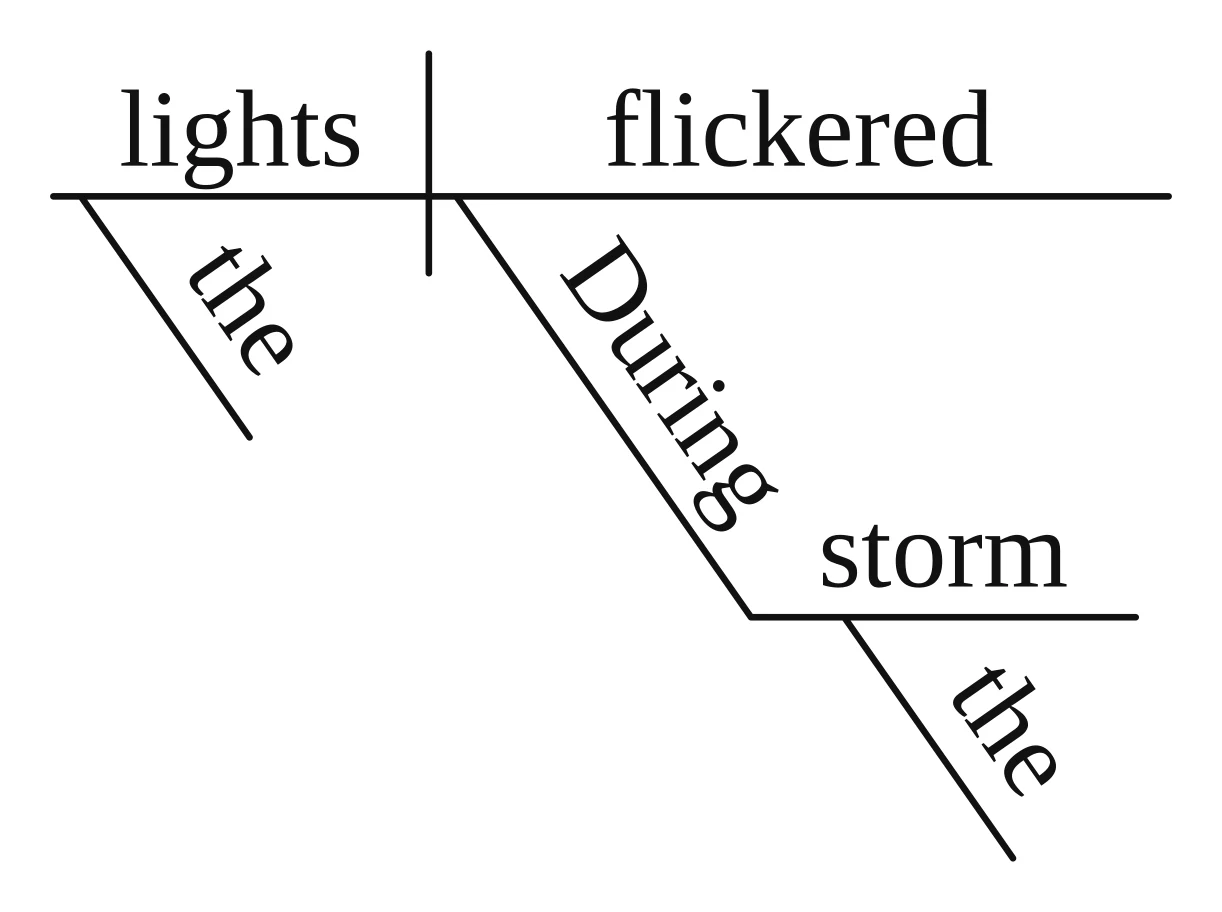
The phrase opens the sentence but still tells when the lights flickered, so it hangs from flickered. The comma is not drawn.
4.
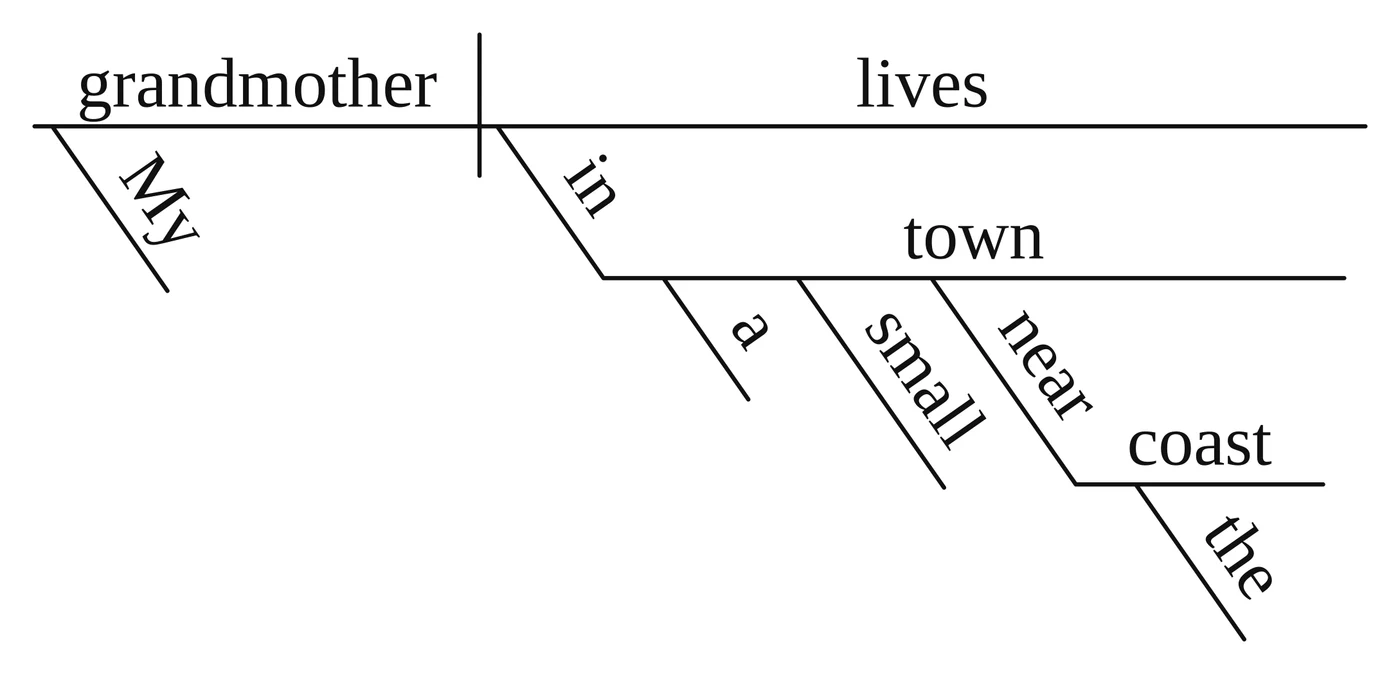
In a small town hangs from lives; near the coast tells which town, so it hangs from town on the first phrase's object line.
5.
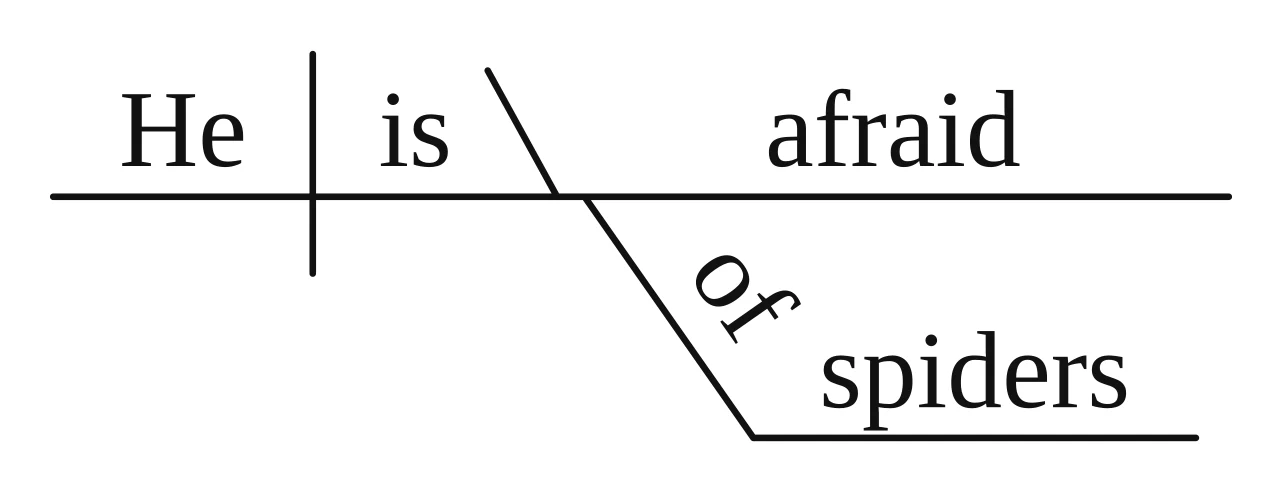
Of spiders tells what he is afraid of, so it hangs from the predicate adjective afraid, not from the verb.
6.
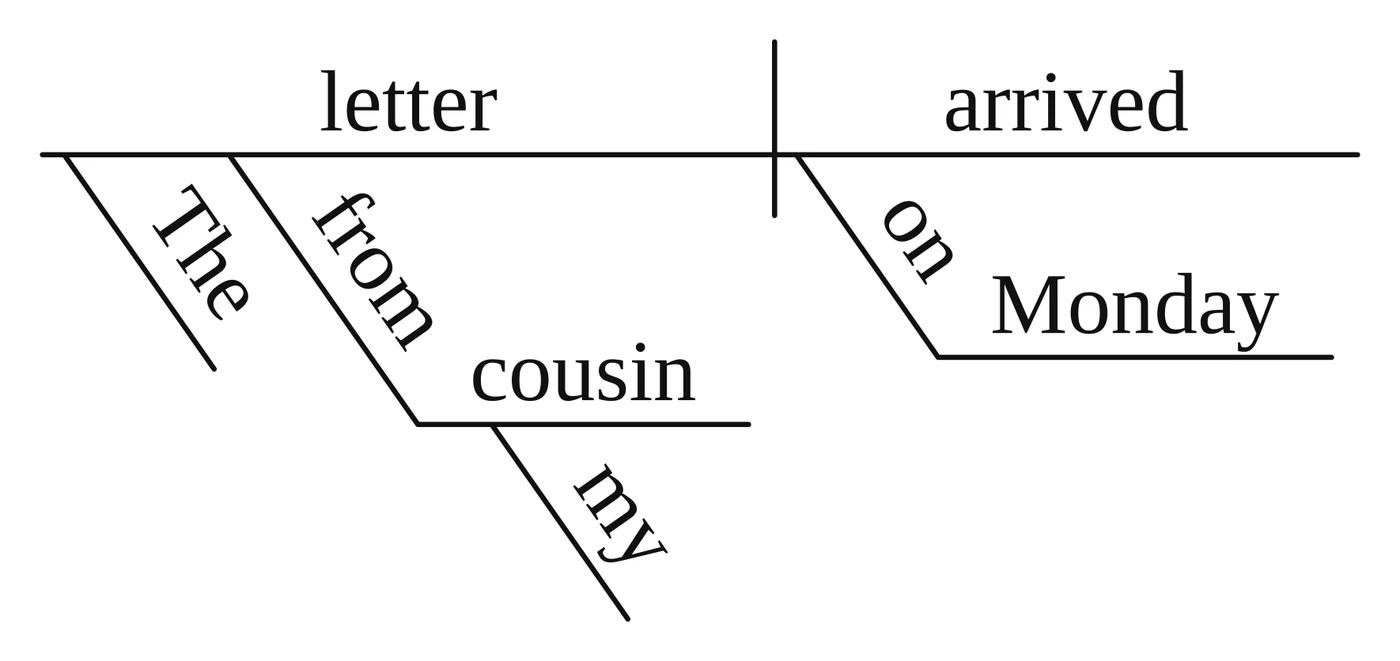
From my cousin tells which letter (adjective phrase, under letter); on Monday tells when it arrived (adverb phrase, under arrived).
7.
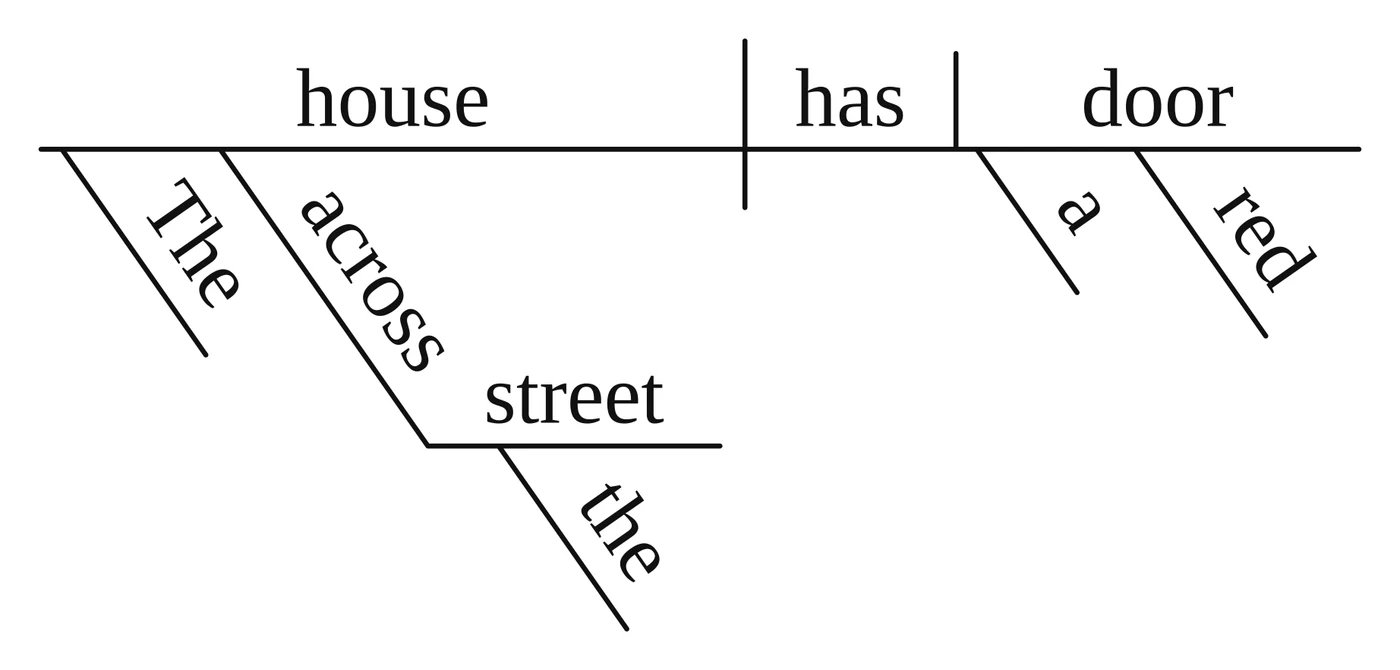
Across the street tells which house, so it hangs from the subject house. A and red describe the direct object door.
8.
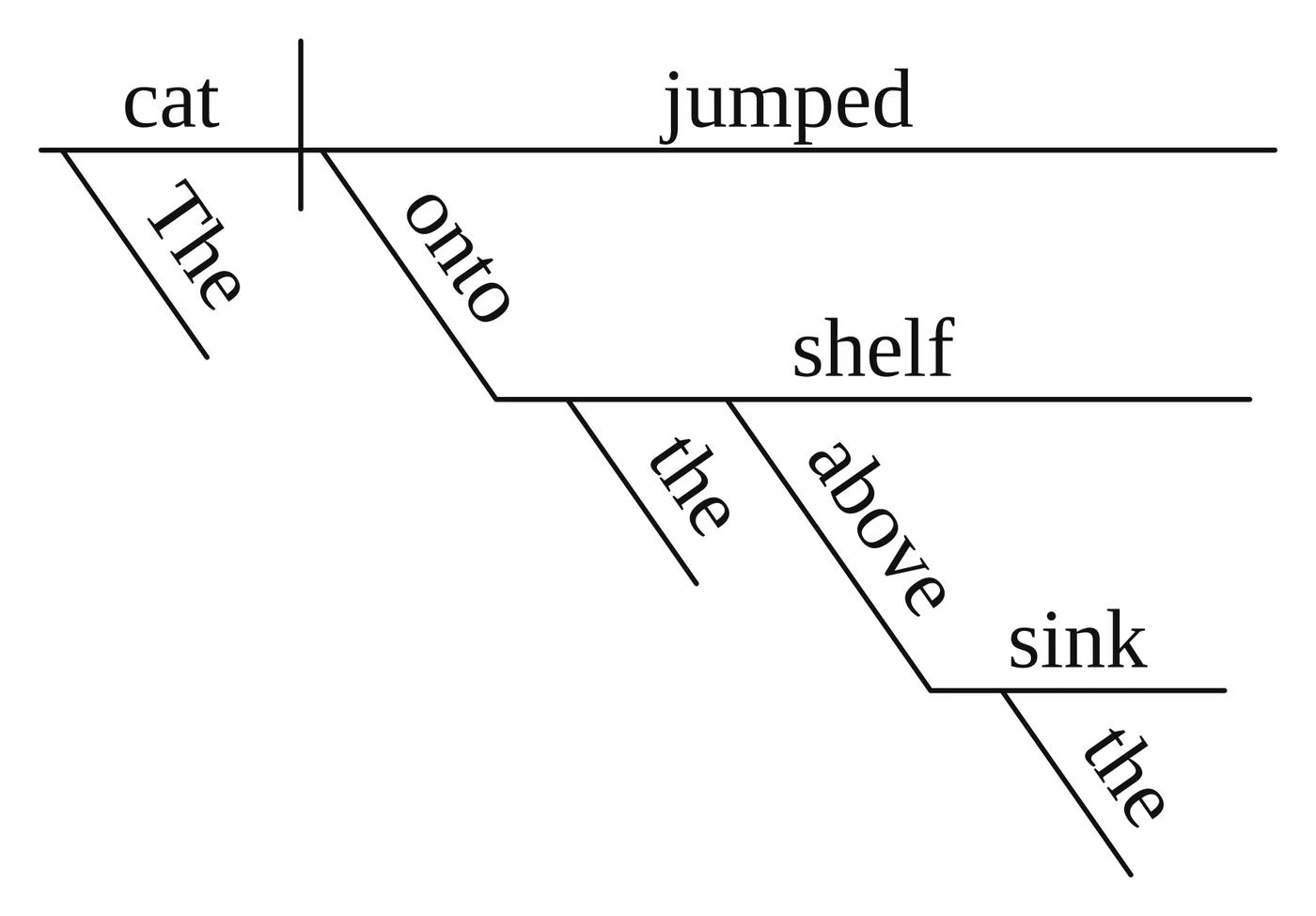
Onto the shelf hangs from jumped; above the sink tells which shelf, so it hangs from shelf.
Frequently asked questions
Where does a prepositional phrase go in a sentence diagram?
Under the word it modifies. The preposition goes on a slanted line hanging from that word, and the object of the preposition goes on a flat line attached to the bottom of the slant.
How do you know if a prepositional phrase is an adjective or an adverb?
Ask what it answers. If it tells which one or what kind about a noun or pronoun, it is an adjective phrase and hangs from that noun. If it tells where, when, how or why, it is an adverb phrase and hangs from a verb, adjective or adverb.
How do you diagram two prepositional phrases in a row?
Decide what each one modifies. If both modify the verb, they hang side by side under the verb. If the second one describes the object of the first (a table near the window), it hangs from that object's flat line.
How do you diagram a compound object of a preposition?
Split the object line into a fork, one branch per object, and write the conjunction on a dashed line between the branches.
Is "to" always a preposition in a sentence diagram?
No. "To" followed by a noun or pronoun (to the store) is a preposition. "To" followed by a verb (to swim) marks an infinitive, which is diagrammed differently.
What is the golden rule of prepositions?
A preposition always has an object, and a pronoun object takes the object form: with him, between you and me, never between you and I. A sentence diagram makes the rule visible: if there is no word to write on the flat line, the word is not working as a preposition.
Can I check my prepositional phrase diagrams online?
Yes. Type the sentence into the sentence diagram generator and it draws the Reed–Kellogg diagram. Downloads are free as watermarked PNGs; a watermark-free file and an editable SVG come with a plan or credit pack. A phrase can still land on the wrong word when the grammar reading is wrong, so check each one against the question it answers.
Diagram your own sentence with prepositional phrases
Type a sentence from your worksheet and get a Reed–Kellogg diagram, or switch to Worksheet mode for up to 20 sentences with an answer key.
