
What is an appositive?
An appositive is a noun or pronoun placed next to another noun to rename or identify it: our teacher, Mrs. Lopez; the poet Robert Frost. An appositive phrase is the appositive together with its own modifiers: Denver, the capital of Colorado. Because an appositive names the same person or thing as the noun it follows, it is not a new sentence part: it has no slot of its own on the baseline.
| Kind | Example | Commas? | Where it goes in the diagram |
|---|---|---|---|
| Nonrestrictive appositive (extra information) | Our teacher, Mrs. Lopez, collects old stamps. | Yes, a pair of commas | In parentheses right after teacher, on the same line |
| Restrictive appositive (needed to say which one) | The poet Robert Frost wrote about farms. | No commas | In parentheses right after poet, on the same line |
| Appositive phrase (appositive + its modifiers) | We visited Denver, the capital of Colorado. | Usually commas | capital in parentheses after Denver; the and of Colorado hang under capital |
The commas change the punctuation and the meaning (which teacher? which poet?), but they do not change the drawing. One rule covers all three rows: the appositive goes in parentheses next to the noun it renames.
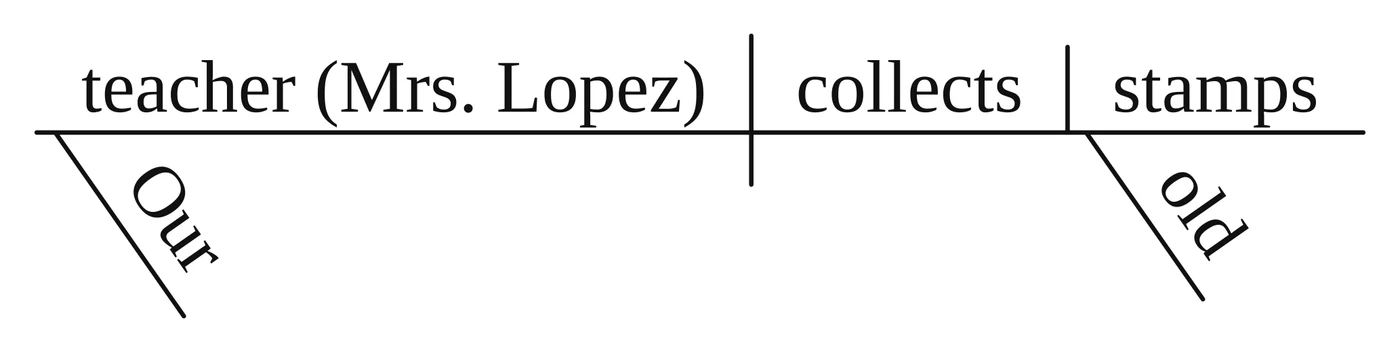
Our teacher, Mrs. Lopez, collects old stamps. · Open this sentence in the sentence diagram generator
How do you diagram an appositive?
Write the appositive in parentheses immediately after the noun it renames, on the same line. Nothing else moves: the noun keeps its place on the baseline (or on its own line under the baseline), the subject–verb line still cuts the baseline, and the noun's own modifiers still slant under the noun. The parentheses are the only mark that says "this word renames the one before it".
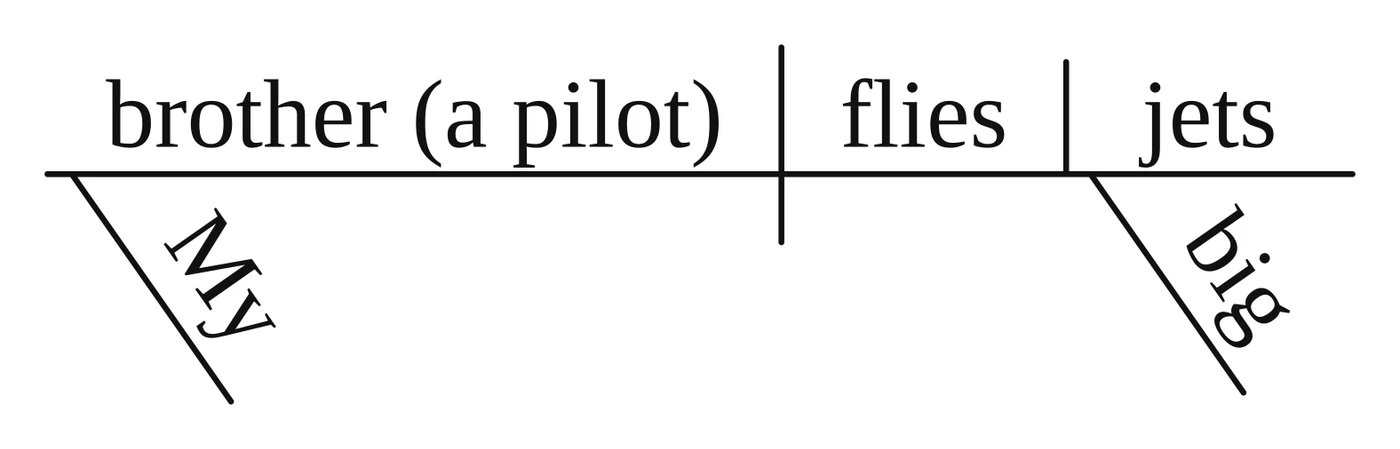
My brother, a pilot, flies big jets. · Open this sentence in the sentence diagram generator
Brother is the subject, so it sits on the baseline before the vertical line; a pilot renames the brother, so it goes in parentheses right after brother. The possessive My hangs under brother, not under the appositive, because it describes the brother.
Notice a in the picture. The generator keeps the appositive's own small words, such as its article, inside the parentheses. On paper, many teachers slant a under pilot on its own short line instead, which is the usual way to draw an appositive phrase; both drawings say the same thing about the grammar. A one-word appositive such as a name needs no modifiers at all:
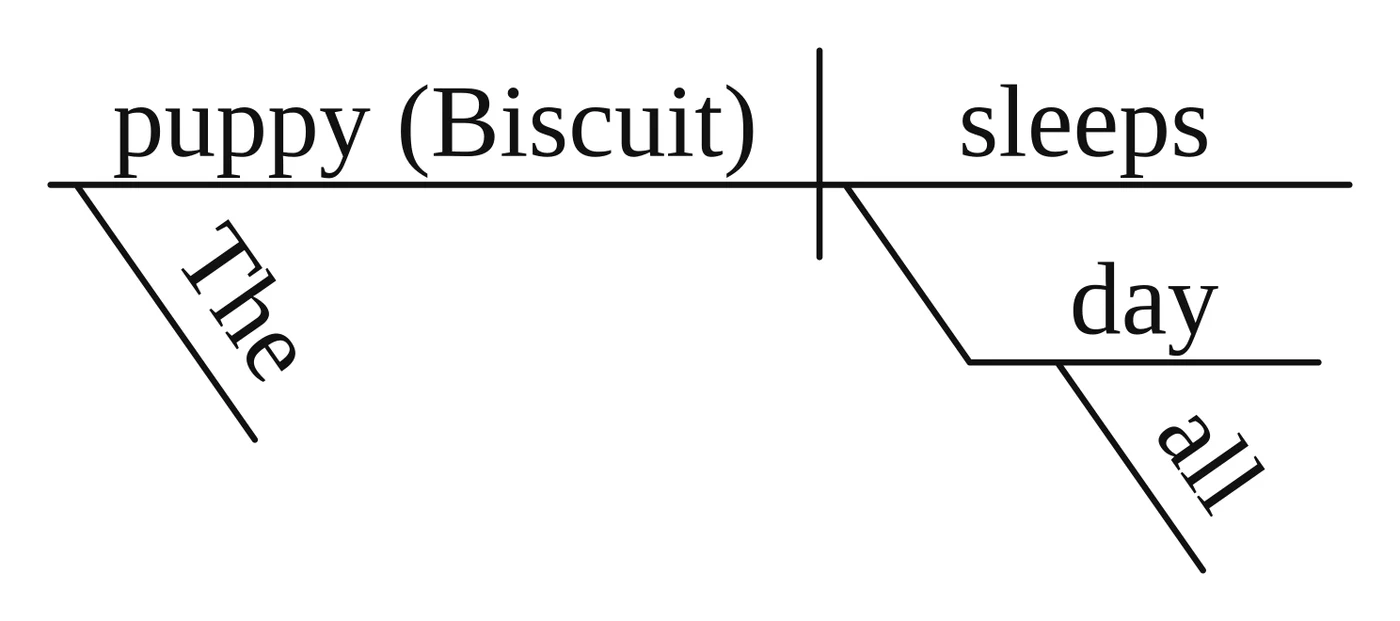
The puppy, Biscuit, sleeps all day. · Open this sentence in the sentence diagram generator
What are the two types of appositives, and do they look different in a diagram?
Appositives come in two types. A nonrestrictive (nonessential) appositive adds extra information and is set off by commas: our teacher, Mrs. Lopez,. A restrictive (essential) appositive is needed to say which one and takes no commas: the poet Robert Frost, my friend Aisha. In the diagram the two look the same: a restrictive appositive is drawn exactly like a nonrestrictive one, in parentheses after the noun. The diagram shows grammar, not punctuation, so the missing commas leave no trace.
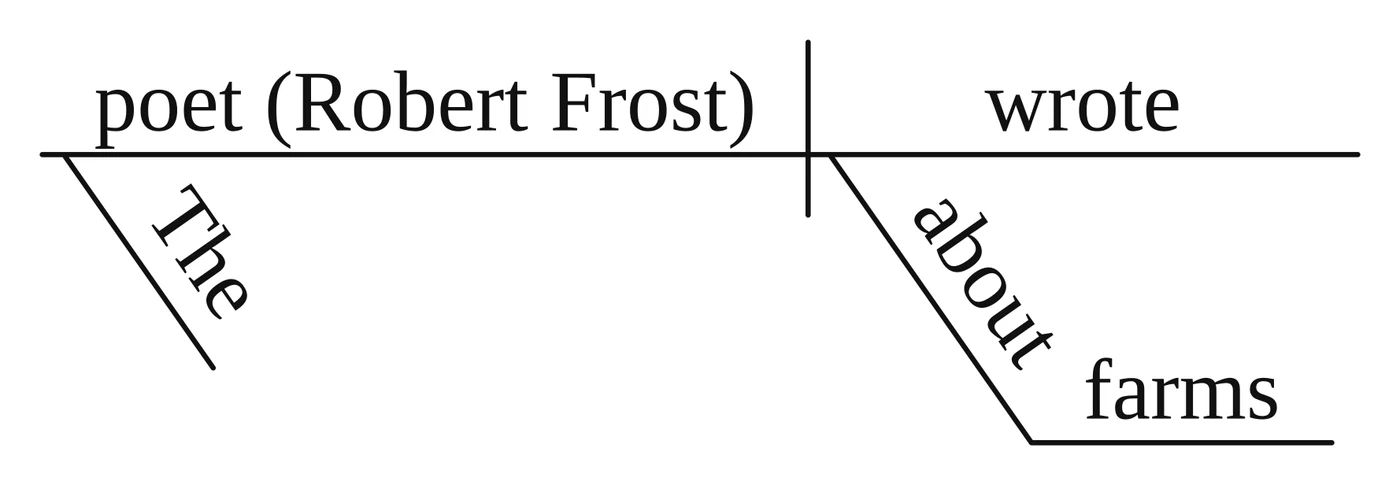
The poet Robert Frost wrote about farms. · Open this sentence in the sentence diagram generator
Which poet? Robert Frost. A two-word name stays together as one appositive; you never split Robert and Frost onto separate lines.
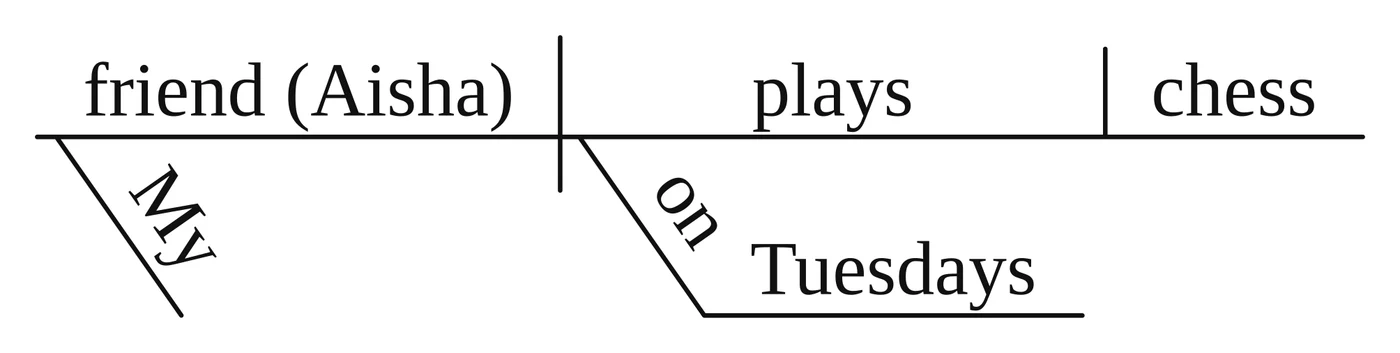
My friend Aisha plays chess on Tuesdays. · Open this sentence in the sentence diagram generator
A common trap in the other direction: a title that is part of a name is not an appositive. In Dr. Lee or Mrs. Park, the title belongs to the name, so the whole name is one word on the line. Only a separate noun that renames (the surgeon, our principal) goes in parentheses.
Diagramming appositives after objects, objects of prepositions and predicate nominatives
Any noun in the sentence can carry an appositive, and the rule does not change with the position: find the noun, then write the appositive in parentheses right after it on whatever line that noun is on.
After a direct object. The parentheses sit on the baseline, after the vertical line that separates verb and object:
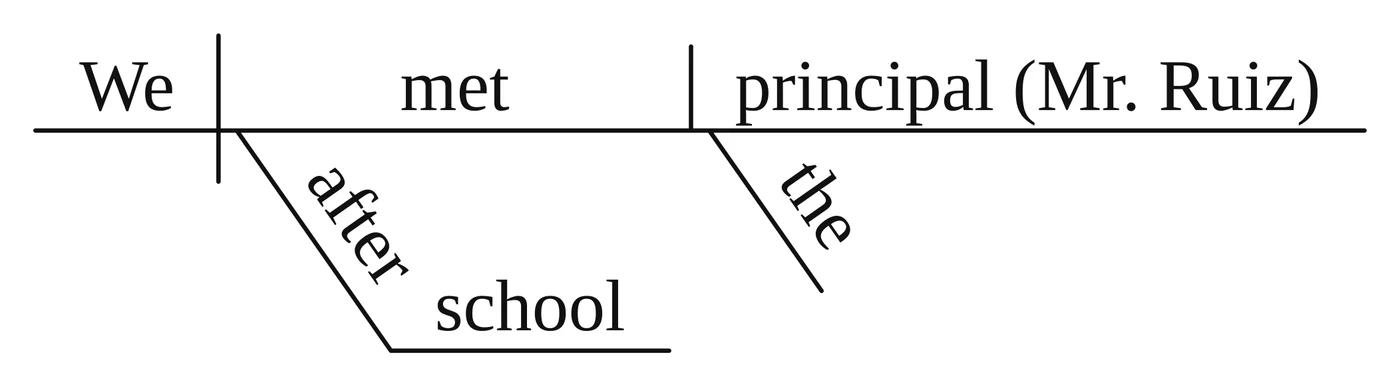
We met the principal, Mr. Ruiz, after school. · Open this sentence in the sentence diagram generator
After the object of a preposition. The appositive goes on the flat line at the foot of the preposition's slant, right after the object, and the object's own modifiers still hang below:
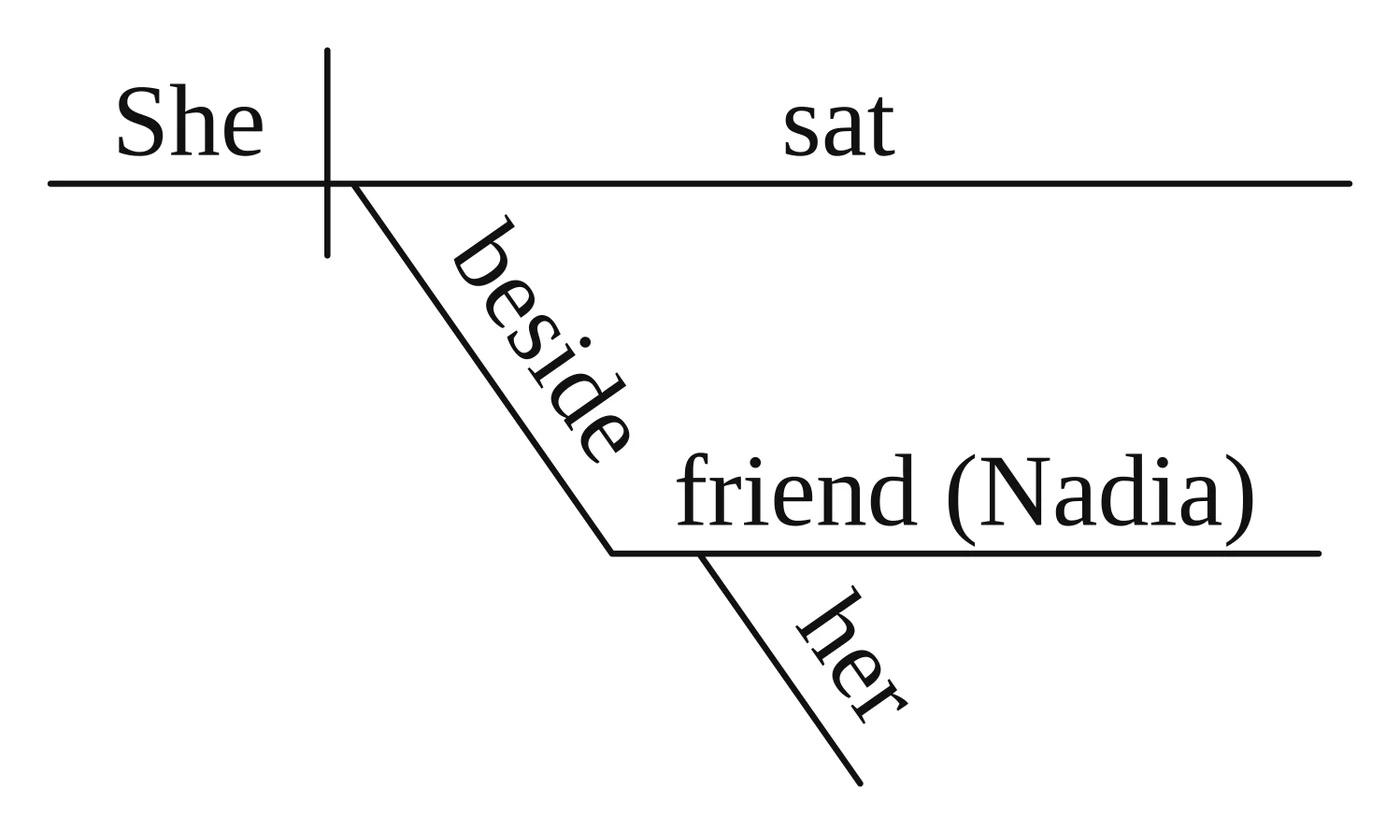
She sat beside her friend, Nadia. · Open this sentence in the sentence diagram generator
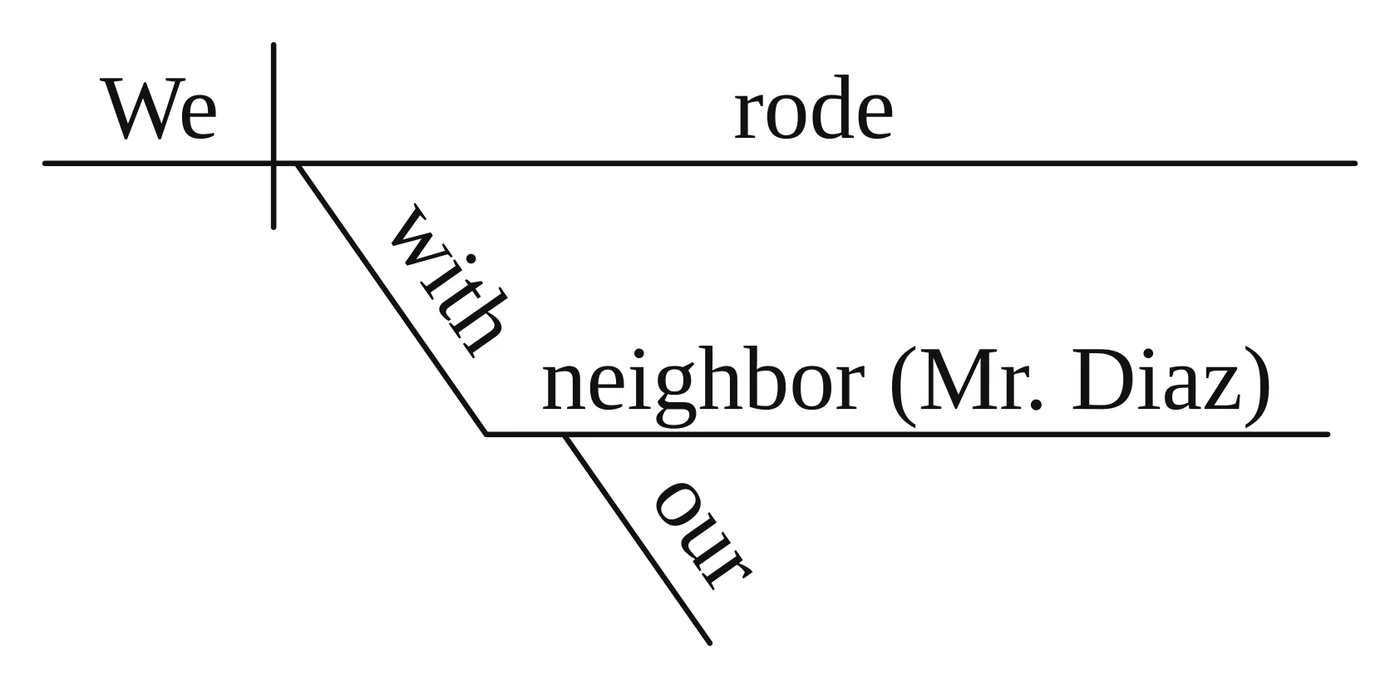
We rode with our neighbor Mr. Diaz. · Open this sentence in the sentence diagram generator
After a predicate nominative. The noun after the linking verb already sits behind a backslash; its appositive follows it in parentheses on the same baseline:
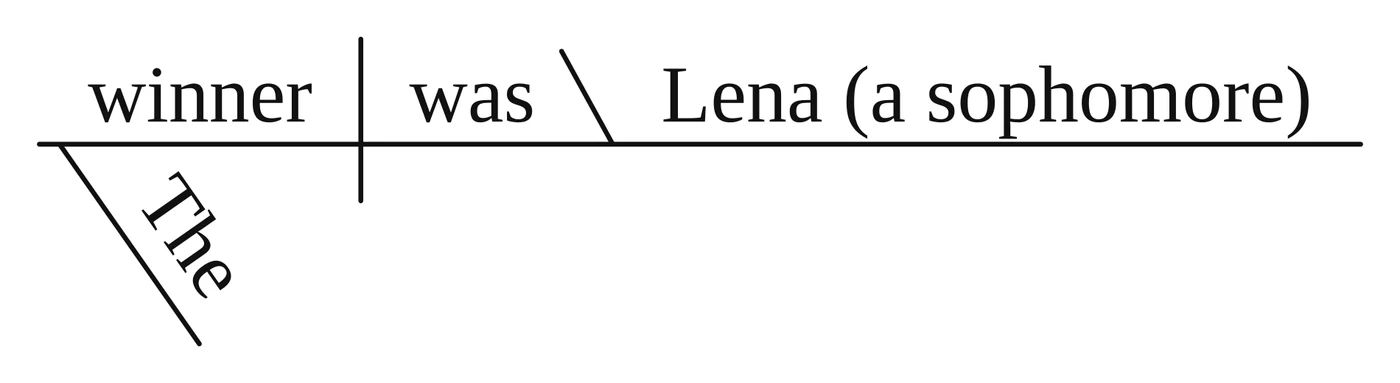
The winner was Lena, a sophomore. · Open this sentence in the sentence diagram generator
Here Lena renames the winner through the linking verb, so she is a predicate nominative; a sophomore renames Lena directly, so it is an appositive. Two different ways of renaming, two different marks: a backslash for the one that goes through the verb, parentheses for the one that sits beside its noun.
How do you diagram an appositive phrase?
Diagramming an appositive phrase follows the same rule, with one more step for the modifiers. An appositive phrase is an appositive that brings its own modifiers: Denver, the capital of Colorado; Mrs. Park, our principal. The head noun of the phrase goes in the parentheses, and on paper its modifiers hang from it the way modifiers hang from any noun: articles and adjectives on slanted lines under the appositive, a prepositional phrase on its own slant and flat line under the appositive.
| Appositive phrase | In the parentheses | Hanging under the appositive |
|---|---|---|
| Denver, the capital of Colorado | capital | the (slant); of on a slant with Colorado on its flat line |
| Mrs. Park, our principal | principal | our (slant) |
| Lena, a sophomore | sophomore | a (slant) |
| Coco, a movie | movie | a (slant) |
| Dr. Lee, the surgeon | surgeon | the (slant) |
The only thing that changes is where the modifiers hang: under the word in parentheses, not under the noun being renamed. In Denver, the capital of Colorado, the phrase of Colorado tells which capital, so it belongs to capital, not to Denver.
When you type one of these into the sentence diagram generator, it keeps the appositive's modifiers inside the parentheses, as (our principal) or (the capital of Colorado), rather than hanging them below. That is a drawing convention, not a different reading of the sentence: the same words are still marked as renaming the same noun. If your class hangs the modifiers, redraw them under the appositive when you copy the diagram, or read the words inside the parentheses as the appositive phrase.
Appositive or predicate nominative?
Both rename the subject, so students mix them up. The test is the verb. If a linking verb (is, was, became, seems) stands between the subject and the noun, the noun is a predicate nominative and goes after a backslash. If the noun sits right next to the subject with no verb between them, it is an appositive and goes in parentheses.
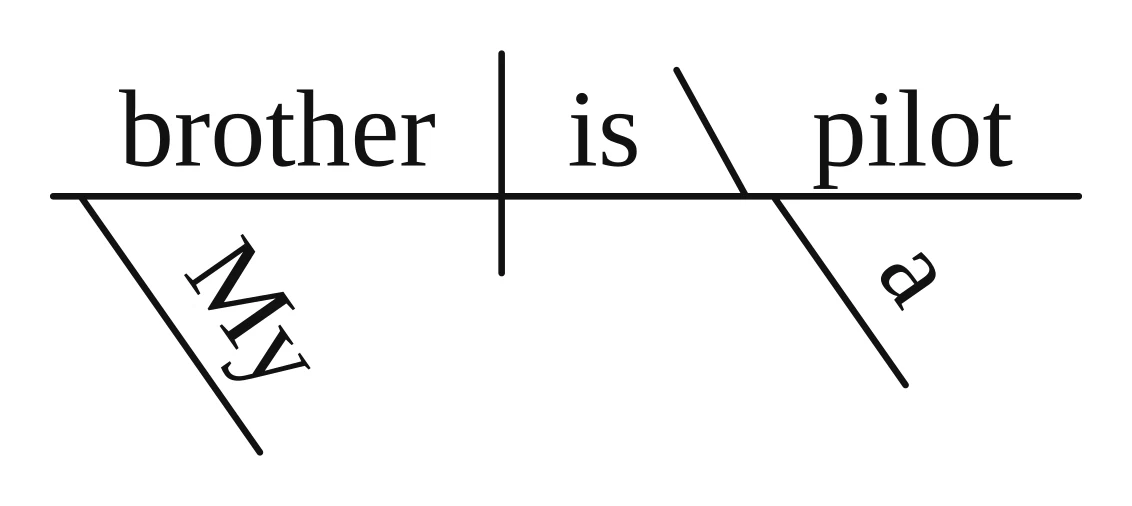
My brother is a pilot. · Open this sentence in the sentence diagram generator
My brother, a pilot, flies big jets. · Open this sentence in the sentence diagram generator
In the first sentence is links brother to pilot, so pilot goes behind the backslash. In the second, a pilot is tucked in beside brother with commas, and the verb flies has its own job, so a pilot goes in parentheses. For more on linking verbs, see the linking verb section of how to diagram a sentence.
Appositive or noun of direct address?
A name set off by commas is not always an appositive. When the sentence speaks to the person (Maria, close the door.), Maria is a noun of direct address. It renames nobody in the sentence, so it does not go in parentheses: it goes on its own short line above the diagram, apart from the baseline.
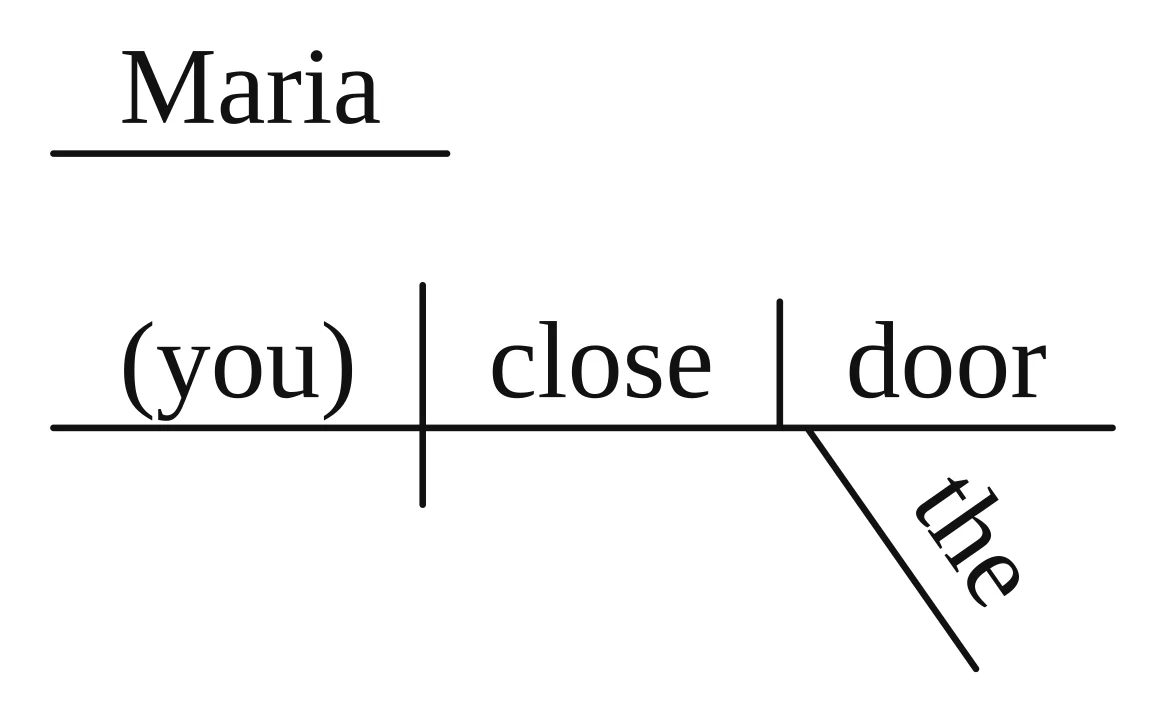
Maria, close the door. · Open this sentence in the sentence diagram generator
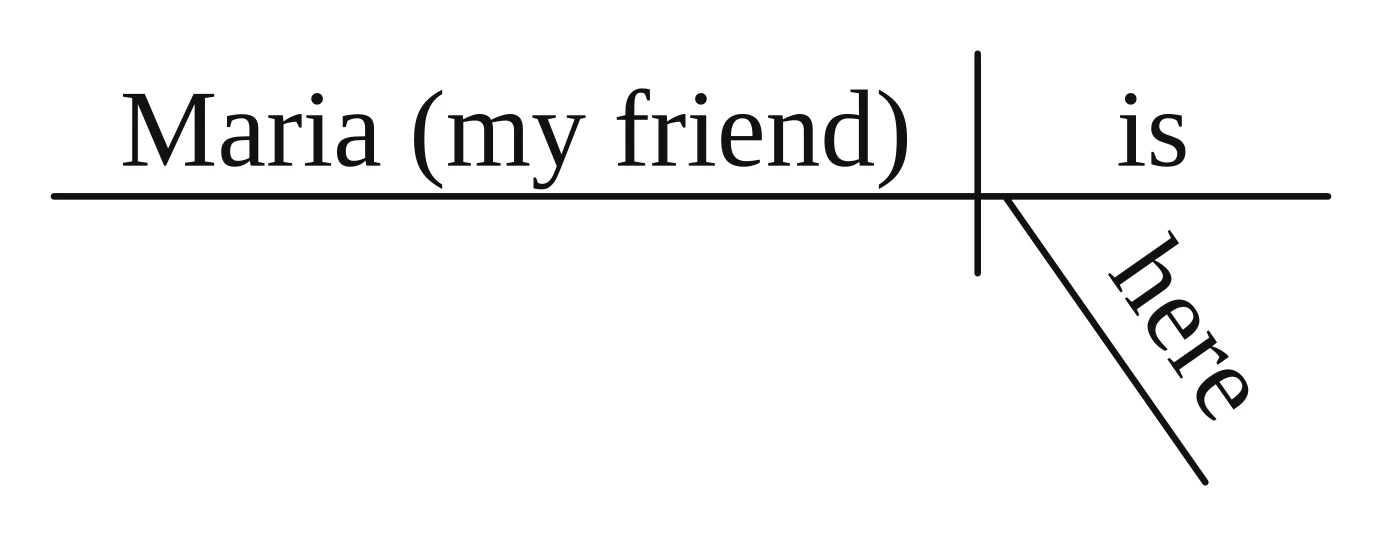
Maria, my friend, is here. · Open this sentence in the sentence diagram generator
In Maria, close the door, the subject is the understood (you), and Maria floats above as the person spoken to. In Maria, my friend, is here, Maria is the subject, and my friend renames her, so it goes in parentheses after Maria. Ask: is the sentence talking to this person or about this person? Only the second one is an appositive.
Appositive or objective complement?
After verbs like name, call, elect and make, a second noun can follow the direct object and rename it: We named the puppy Biscuit. That noun is an objective complement, and it goes on the baseline after a backslash, because the verb is doing the naming. When the same name simply sits beside the noun with commas, it is an appositive and goes in parentheses.
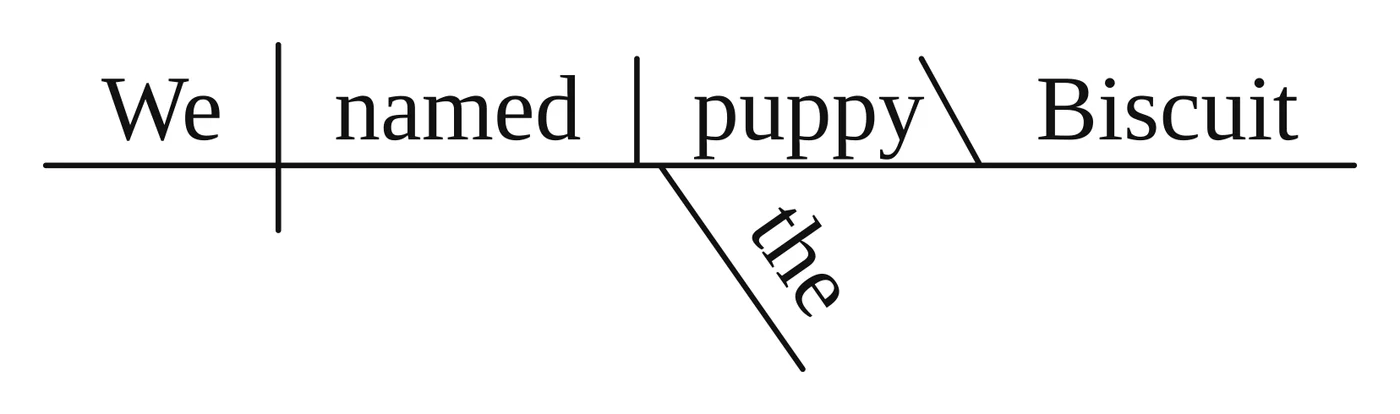
We named the puppy Biscuit. · Open this sentence in the sentence diagram generator
The puppy, Biscuit, sleeps all day. · Open this sentence in the sentence diagram generator
The test: can you put to be between the two nouns? Named the puppy to be Biscuit works, so Biscuit is an objective complement. The puppy to be Biscuit sleeps does not, so in the second sentence Biscuit is an appositive. See how to diagram direct and indirect objects for objective complements in full.
Can a sentence diagram generator draw appositives for you?
Yes. Type a sentence into the sentence diagram generator and it draws the Reed–Kellogg diagram automatically, diagramming appositives in parentheses right after the noun it renames, whether that noun is the subject, an object, the object of a preposition or a predicate nominative. Every diagram on this page was made that way.
- Checking answers. Diagram the sentence on paper first, then type it in and compare: is the appositive next to the right noun, and did a noun of direct address or a predicate nominative get mistaken for one? Each example here has an Open this sentence link that fills the sentence in for you.
- Worksheets and answer keys. Worksheet mode turns up to 20 of your own sentences into a blank worksheet and a matching answer key as PDFs (Letter or A4). See sentence diagramming worksheets.
- Downloads. A watermarked PNG is free. A watermark-free file, 4K and an editable SVG, with the words kept as real text you can retype, come with a plan or credit pack.
- Appositive phrases. The generator writes the whole appositive phrase inside the parentheses, (the capital of Colorado), instead of hanging the and of Colorado under capital. If your textbook hangs them, move them when you copy the diagram; see how to diagram an appositive phrase.
- Accuracy. The generator compares its reading with your sentence and redraws when words go missing or extra words appear, but a word can still land on the wrong line when the grammar reading is wrong. A name with a lowercase title in front of it (my aunt Rosa) may be read as one name rather than as aunt with the appositive Rosa; add commas or check the result against the rules above.
Common mistakes when diagramming appositives
- Giving the appositive its own slot. An appositive is not a second subject or a second object. It never gets its own vertical line or its own place on the baseline; it rides along in parentheses beside the noun it renames.
- Hanging the appositive under the noun like an adjective. A word on a slanted line describes the noun; an appositive is the noun under another name. Keep it on the same line, in parentheses.
- Splitting a name. Robert Frost, Mr. Ruiz and Mrs. Lopez each stay together as one appositive. Do not put the first name in parentheses and hang the last name under it.
- Treating a title as an appositive. In Dr. Lee, Dr. is part of the name, not a noun being renamed. In They thanked Dr. Lee, the surgeon, the appositive is the surgeon.
- Diagramming a noun of direct address as an appositive. Maria, close the door speaks to Maria; she goes on a separate line above the diagram, and the subject is (you).
- Putting a predicate nominative in parentheses. If a linking verb stands between the two nouns (My brother is a pilot), the second noun goes behind a backslash, not in parentheses.
- Hanging the appositive's modifiers under the wrong noun. In Denver, the capital of Colorado, of Colorado tells which capital, so it belongs under capital, not under Denver.
- Dropping the commas and changing the drawing. Commas mark restrictive versus nonrestrictive; the diagram is the same either way.
Appositives to practice
Practice diagramming appositives with these eight sentences on paper first: find the noun that is being renamed, decide whether the word beside it really renames it (or is a noun of direct address, a predicate nominative or an objective complement instead), then draw the parentheses. Compare with the answer key, or open a sentence in the generator to check it. For a whole class set, the sentence diagramming worksheets page shows how to turn up to 20 of your own sentences into a blank worksheet and an answer key.
| # | Look for | Sentence |
|---|---|---|
| 1 | Restrictive appositive | My cousin Leo plays the drums. |
| 2 | Appositive phrase after the subject | Mrs. Park, our principal, visited the class. |
| 3 | Appositive after a direct object | We watched Coco, a movie, on Friday. |
| 4 | Appositive after the subject | The capital, Austin, lies on the Colorado River. |
| 5 | Appositive or direct address? | Sam, hand me the hammer. |
| 6 | Appositive after the subject | Our dog, Max, chased the mail truck. |
| 7 | Appositive and predicate nominative | My sister Rosa is a nurse. |
| 8 | Appositive after a direct object | They thanked Dr. Lee, the surgeon. |
Answer key
Each answer below is the generator's diagram for that sentence, with a note on why the appositive goes where it does.
1.
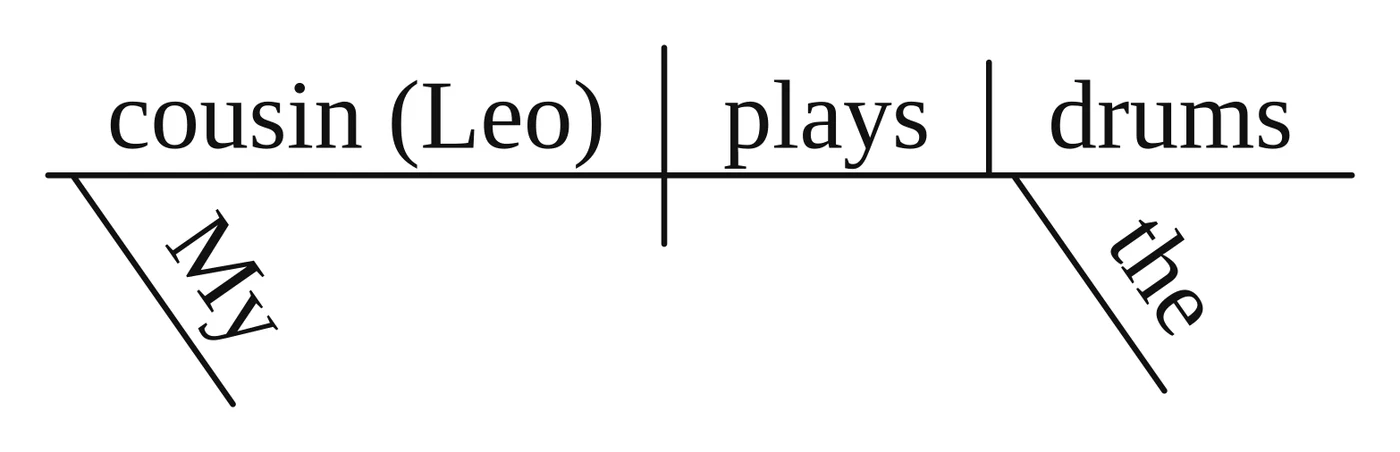
Which cousin? Leo, so it is a restrictive appositive with no commas, and it goes in parentheses after cousin. My hangs under cousin; the hangs under the direct object drums.
2.
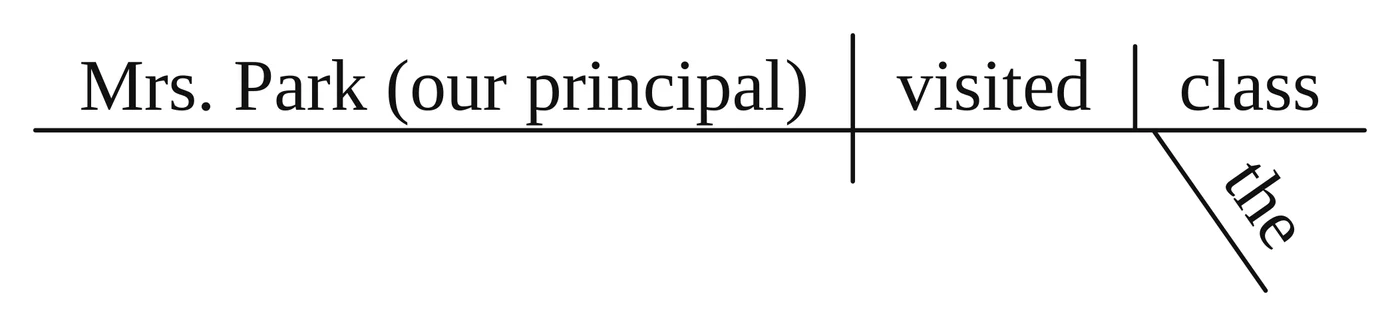
Our principal renames Mrs. Park, so it sits in parentheses after Mrs. Park on the baseline. Mrs. Park stays together as one name. The generator keeps our inside the parentheses; on paper you may slant it under principal.
3.
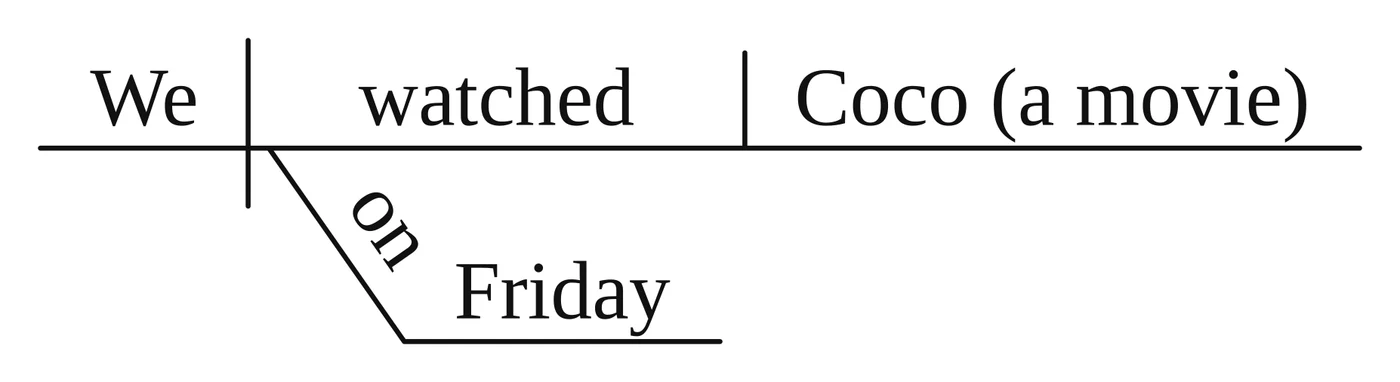
Coco is the direct object (watched what?), and a movie renames it, so the parentheses follow Coco after the object line. On Friday tells when, so it hangs from watched.
4.
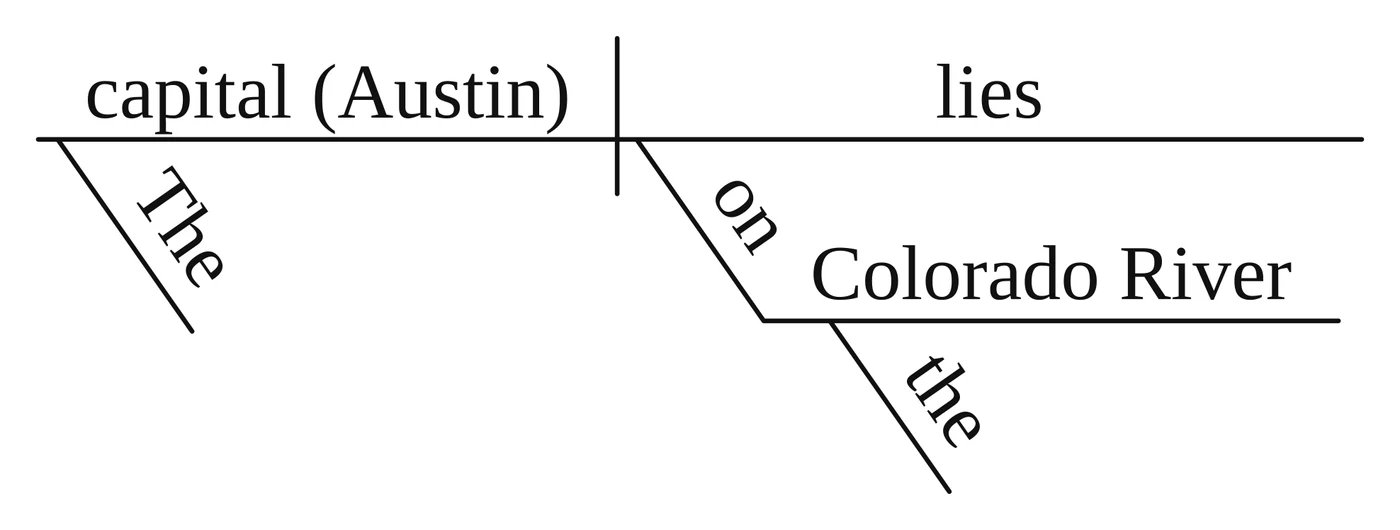
Austin renames the subject capital, so it goes in parentheses after capital, with The slanting under capital. On the Colorado River hangs from lies; Colorado River is one name on the flat line.
5.
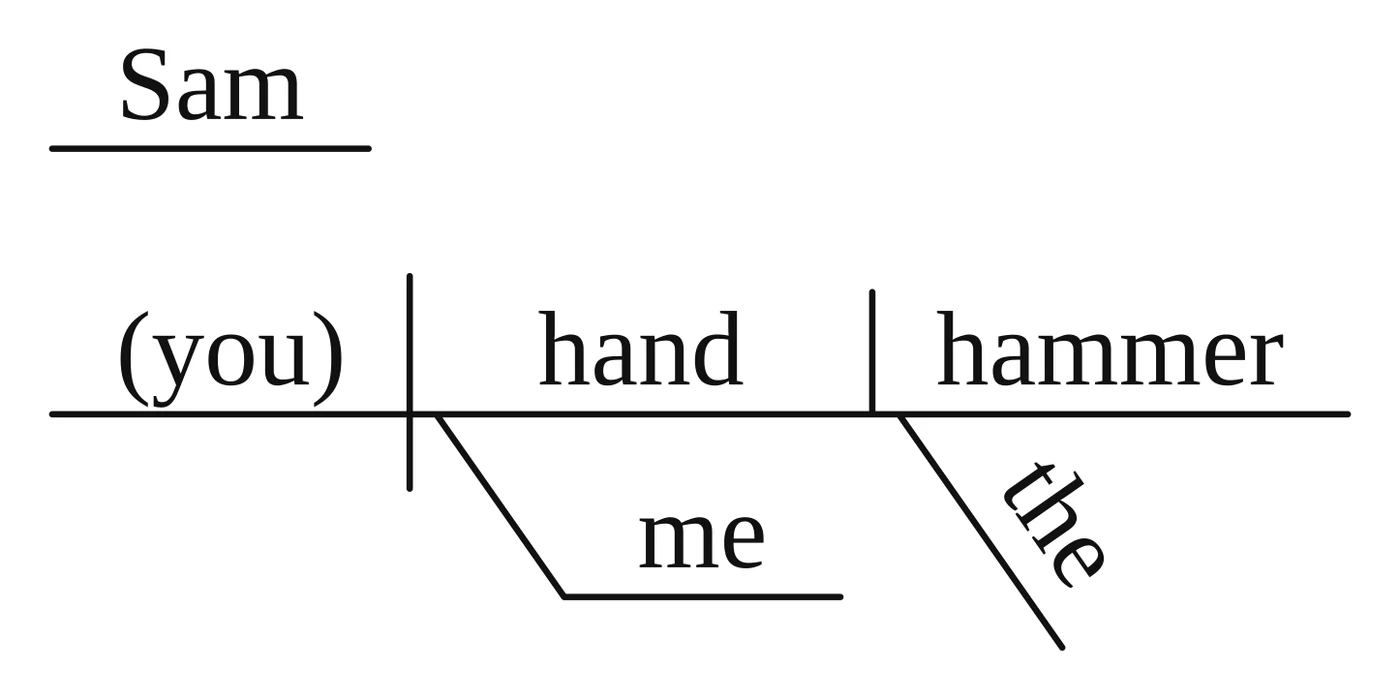
Not an appositive. The sentence speaks to Sam, so Sam goes on its own line above the diagram, the subject is (you), hammer is the direct object, and me is the indirect object under hand.
6.
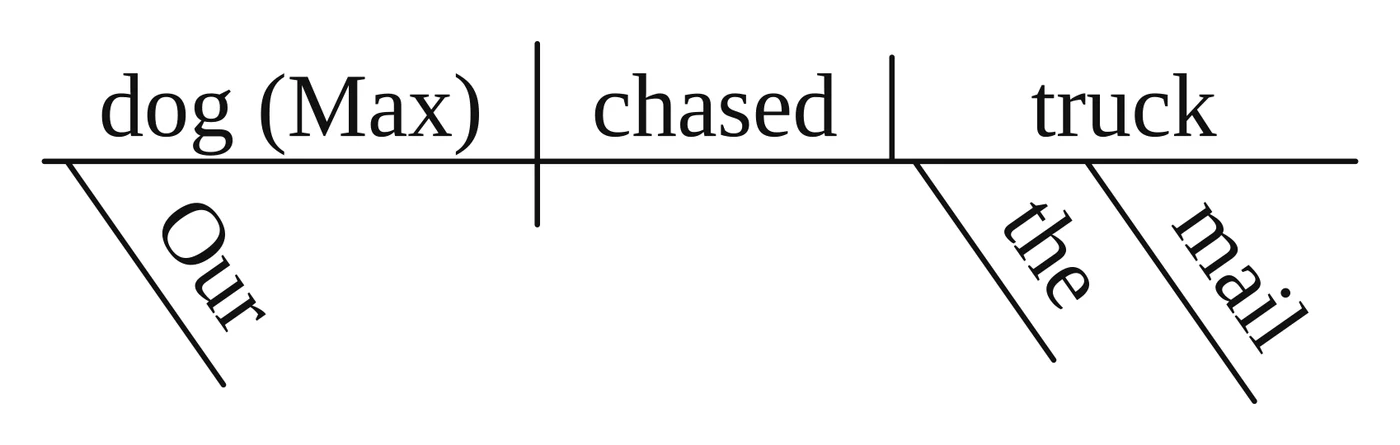
Max renames dog, so it goes in parentheses after dog, with Our slanting under dog. Mail and the both describe the direct object truck, so they slant under it.
7.
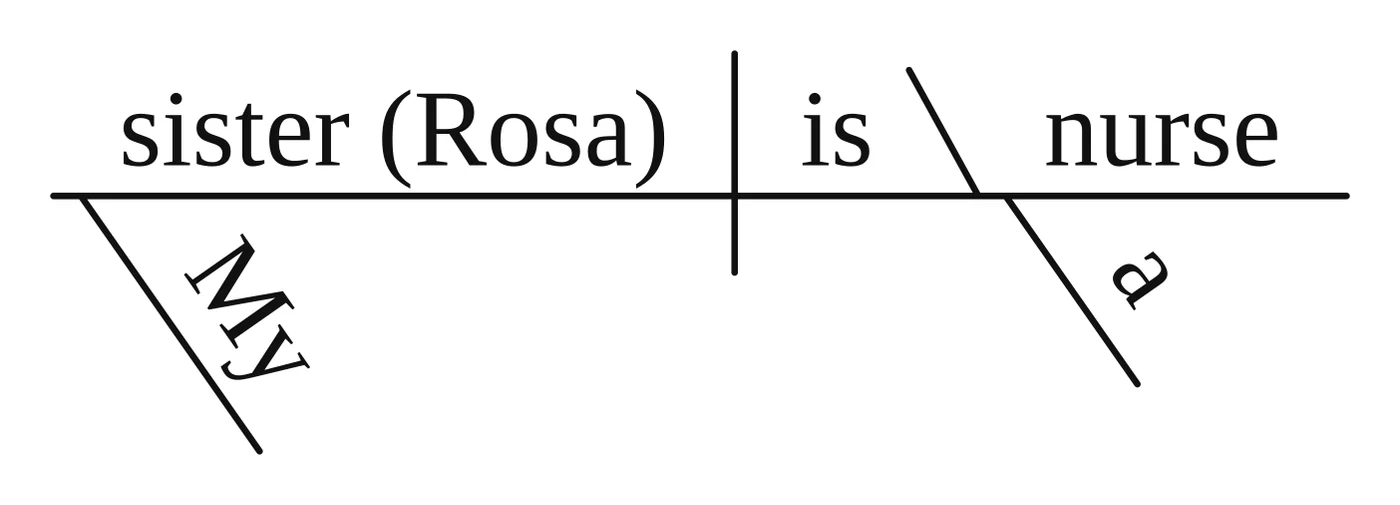
Two kinds of renaming in one sentence. Rosa sits beside sister with no verb between them, so it is an appositive in parentheses. Nurse comes after the linking verb is, so it is a predicate nominative behind a backslash.
8.

Dr. Lee is the direct object, one name including the title. The surgeon renames Dr. Lee, so it goes in parentheses after the name on the baseline.
Frequently asked questions
How do you diagram an appositive?
Write the appositive in parentheses immediately after the noun it renames, on the same line as that noun. The noun keeps its own place and its own modifiers; the parentheses are the only new mark. This works for the subject, a direct object, the object of a preposition and a predicate nominative alike.
How do you diagram an appositive phrase?
Put the head noun of the phrase in the parentheses and hang its modifiers under it: articles and adjectives on slanted lines, a prepositional phrase on a slant and flat line. In "Denver, the capital of Colorado," "capital" goes in parentheses after "Denver," with "the" and "of Colorado" hanging under "capital."
What are the two types of appositives?
Nonrestrictive (nonessential) appositives add extra information and are set off by commas: "Our teacher, Mrs. Lopez, collects stamps." Restrictive (essential) appositives are needed to say which one and take no commas: "The poet Robert Frost wrote about farms." Both are diagrammed the same way, in parentheses right after the noun they rename.
Do restrictive appositives (no commas) get a different diagram?
No. "The poet Robert Frost" and "our teacher, Mrs. Lopez," are drawn the same way, with the appositive in parentheses after the noun. The commas change the punctuation and meaning, not the diagram.
Does an appositive go on its own line in a sentence diagram?
No. An appositive shares the line of the noun it renames, in parentheses right after it: "brother (a pilot)". The only name that gets a separate line above the diagram is a noun of direct address, as in "Maria, close the door," which renames nothing. An appositive phrase keeps the same spot; only its modifiers hang below.
Is "Maria" in "Maria, close the door" an appositive?
No. It is a noun of direct address: the sentence speaks to Maria rather than renaming anyone. It goes on its own short line above the diagram, and the subject of the command is the understood "(you)." Only a noun that renames another noun in the sentence goes in parentheses.
What is the difference between an appositive and a predicate nominative in a diagram?
A predicate nominative comes after a linking verb and goes behind a backslash on the baseline ("My brother is \ pilot"). An appositive sits right beside its noun with no verb between them and goes in parentheses ("brother (a pilot)"). Both rename the subject; the verb between them is what separates the two.
Where does the appositive go when it renames the object of a preposition?
On the flat line at the foot of the preposition's slant, in parentheses right after the object: "beside her friend, Nadia" is drawn as "beside" on the slant and "friend (Nadia)" on the flat line, with "her" slanting under "friend."
Can ChatGPT diagram appositives?
ChatGPT can tell you which noun is the appositive, but a written description of the lines is easy to get wrong, and it cannot show the parentheses sitting on the right line. To get an actual Reed–Kellogg drawing, type the sentence into a sentence diagram generator and check the result against the rules on this page.
Can I check my appositive diagrams online?
Yes. Type the sentence into the sentence diagram generator and it draws the Reed–Kellogg diagram with the appositive in parentheses. Downloads are free as watermarked PNGs; a watermark-free file and an editable SVG come with a plan or credit pack. The generator keeps an appositive phrase's modifiers inside the parentheses, and a word can still land on the wrong line when the grammar reading is wrong, so check each diagram against the sentence word by word.
Diagram your own sentence with an appositive
Type a sentence from your worksheet and get a Reed–Kellogg diagram with the appositive in parentheses, or switch to Worksheet mode for up to 20 sentences with an answer key.
