
What are direct and indirect objects?
A direct object is a noun or pronoun that receives the action of a transitive verb; an indirect object receives the direct object. Ask two questions of the verb, in this order, and you will find them:
| Part | Question it answers | Example | Where it goes in the diagram |
|---|---|---|---|
| Direct object | Verb + what? or whom? | The dog chased the ball. | On the baseline after the verb, behind a short vertical line |
| Indirect object | To whom? or for whom? the action was done | The teacher gave the class a quiz. | On a flat line under the verb, joined by an empty slant |
| Objective complement | What the direct object is named or made | The team named Jake captain. | On the baseline after the direct object, behind a backslash |
Find the direct object first. An indirect object only shows up in a sentence that already has one, and it always sits between the verb and the direct object: gave the class a quiz. Verbs like give, send, show, tell, bring, buy, make, hand, teach and write are the usual ones.
Some action verbs are intransitive: they take no object at all. The baby slept stops at the verb, so the baseline ends there: no vertical line, no object slot.
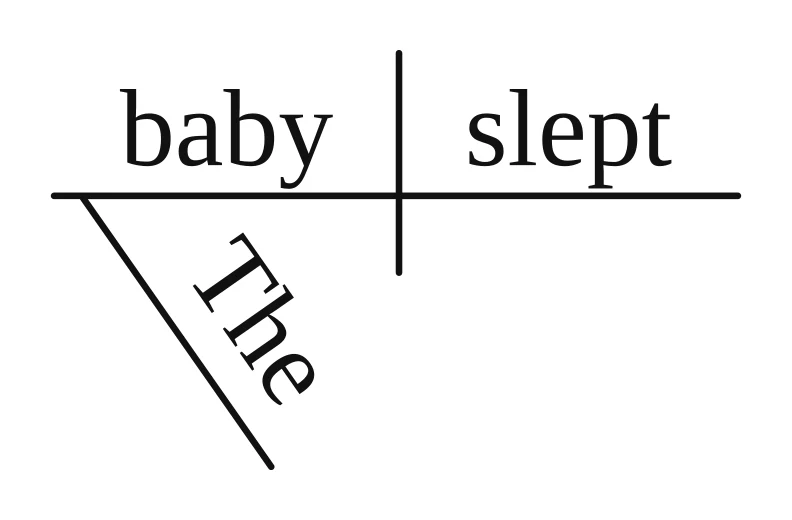
The baby slept. · Open this sentence in the sentence diagram generator
How do you diagram a direct object?
Write the direct object on the baseline to the right of the verb, and separate the two with a short vertical line that stops at the baseline. Only the line between subject and verb cuts through the baseline; the object line sits on top of it. That difference is how a reader tells the verb–object split from the subject–verb split at a glance.
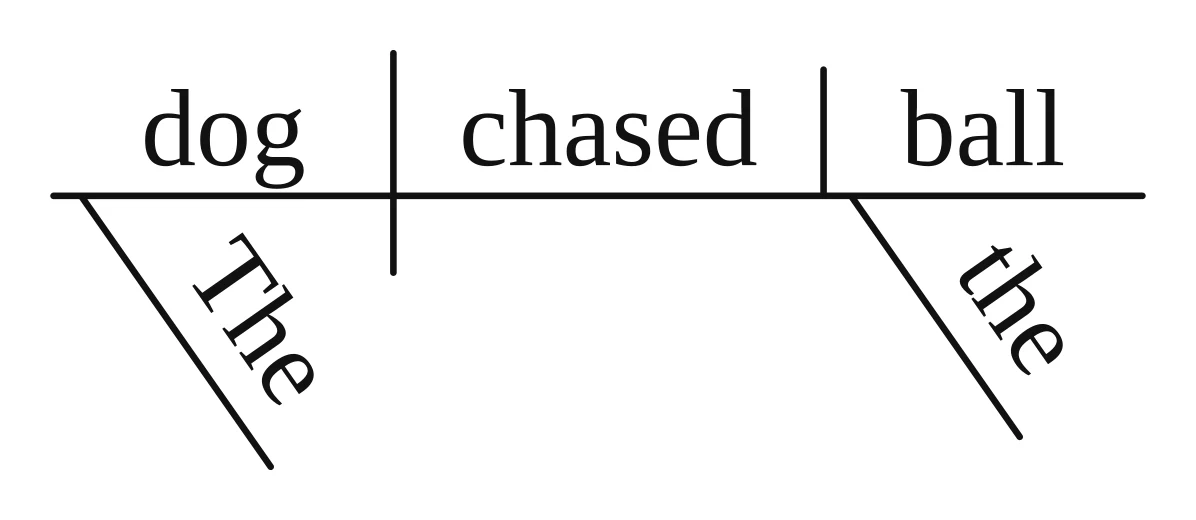
The dog chased the ball. · Open this sentence in the sentence diagram generator
What did the dog chase? The ball. Articles and adjectives that describe the object hang under it on slanted lines, just as they hang under the subject. A prepositional phrase goes under the word it modifies: in the next sentence for the party tells why Maria baked, so it hangs from the verb, while a and chocolate slant under cake.
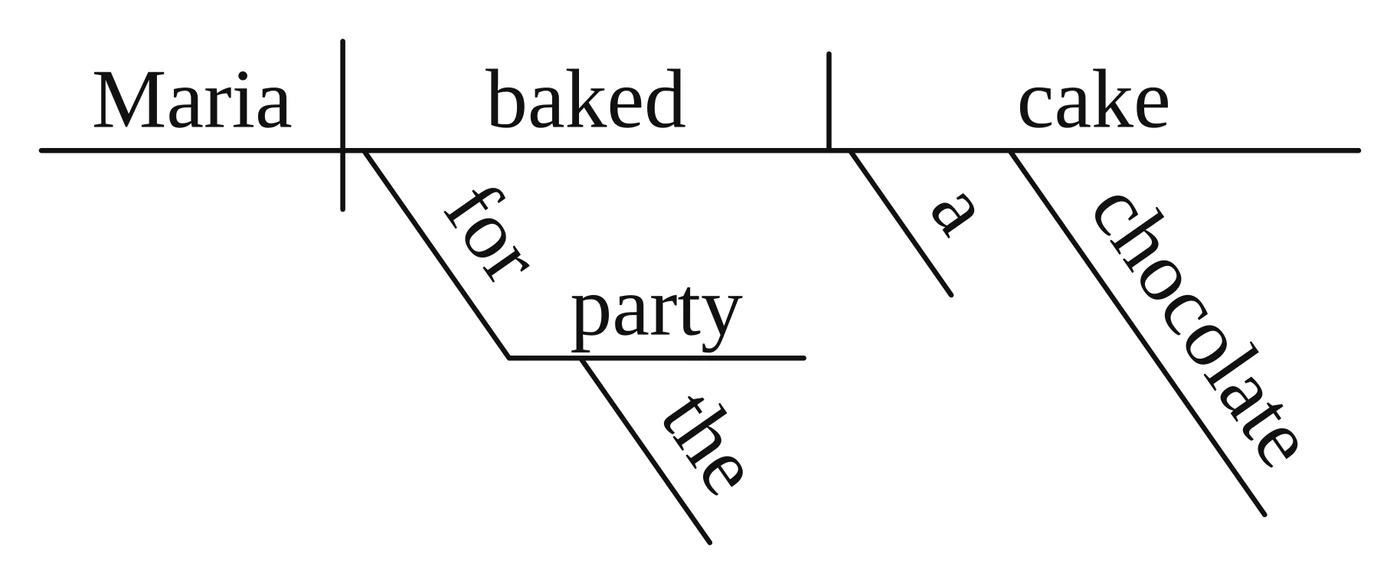
Maria baked a chocolate cake for the party. · Open this sentence in the sentence diagram generator
How do you diagram an indirect object?
An indirect object does not go on the baseline. Draw a slanted line down from the verb, leave it empty, and put the indirect object on a flat line at the foot of the slant. The empty slant stands for the to or for the sentence leaves out: gave the class a quiz means gave a quiz to the class. Many textbooks and grammar sites write a small (x) on that slant to mark the missing preposition; both versions mean the same thing, so use the one your class uses.
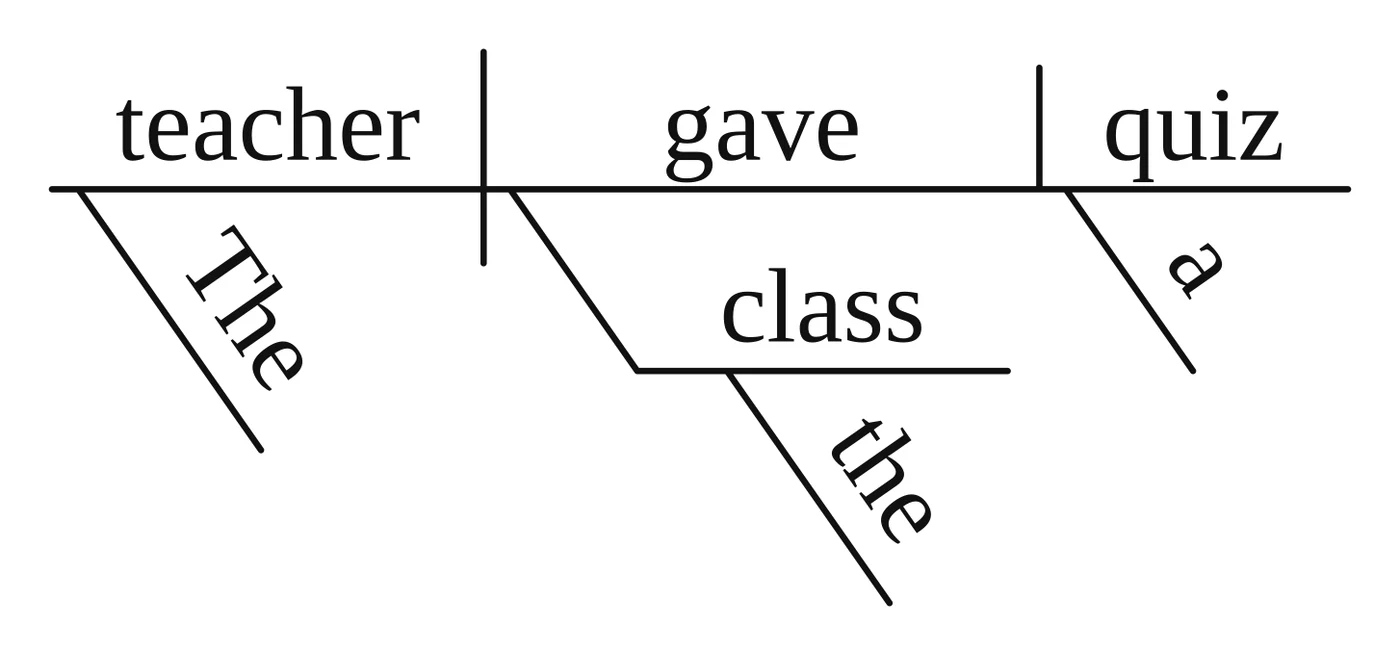
The teacher gave the class a quiz. · Open this sentence in the sentence diagram generator
To whom did the teacher give a quiz? The class, so class goes under the verb; quiz answers "gave what?" and stays on the baseline. Pronouns work the same way, and they take the object form: us, me, him, her, them.
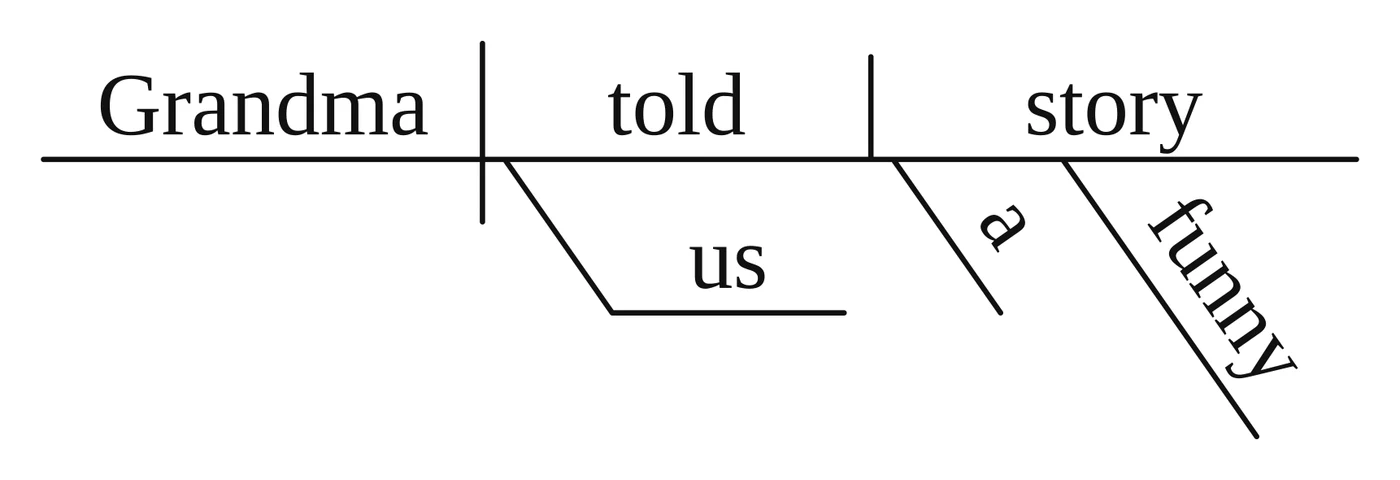
Grandma told us a funny story. · Open this sentence in the sentence diagram generator
The indirect object keeps its own modifiers. They hang from its flat line, exactly as they would hang from a word on the baseline:
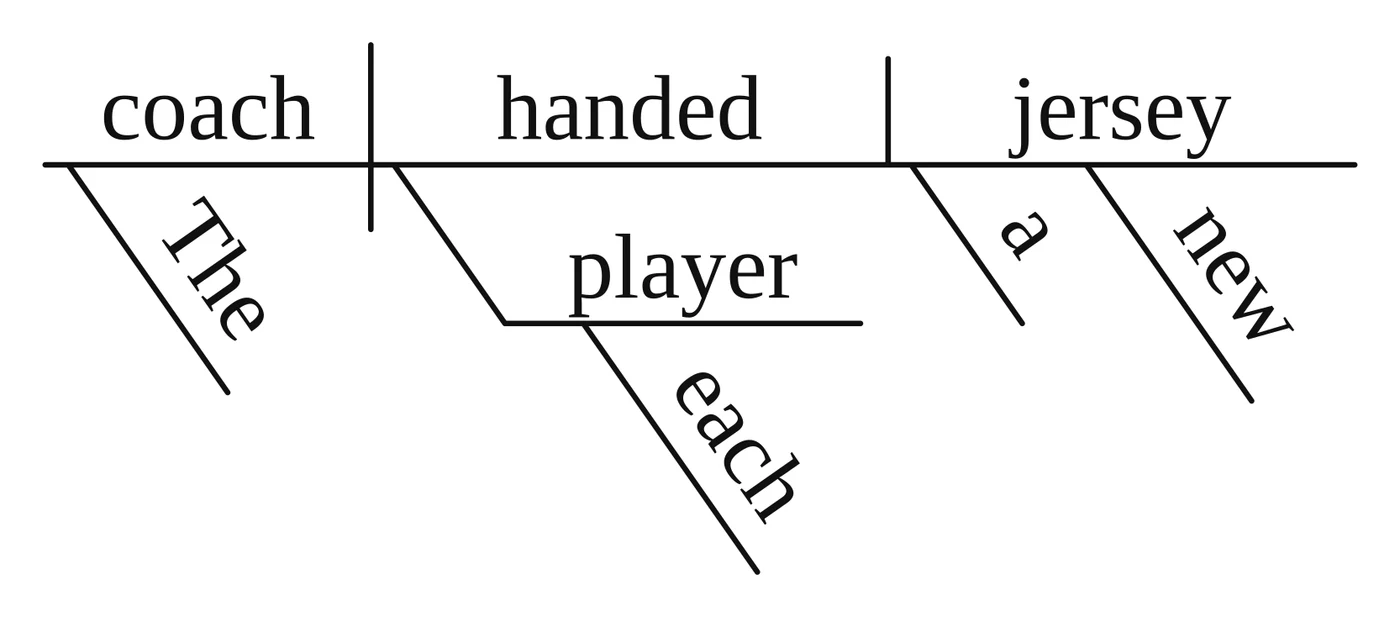
The coach handed each player a new jersey. · Open this sentence in the sentence diagram generator
Indirect object or prepositional phrase? The to/for test
The same meaning can be written two ways, and the diagrams differ:
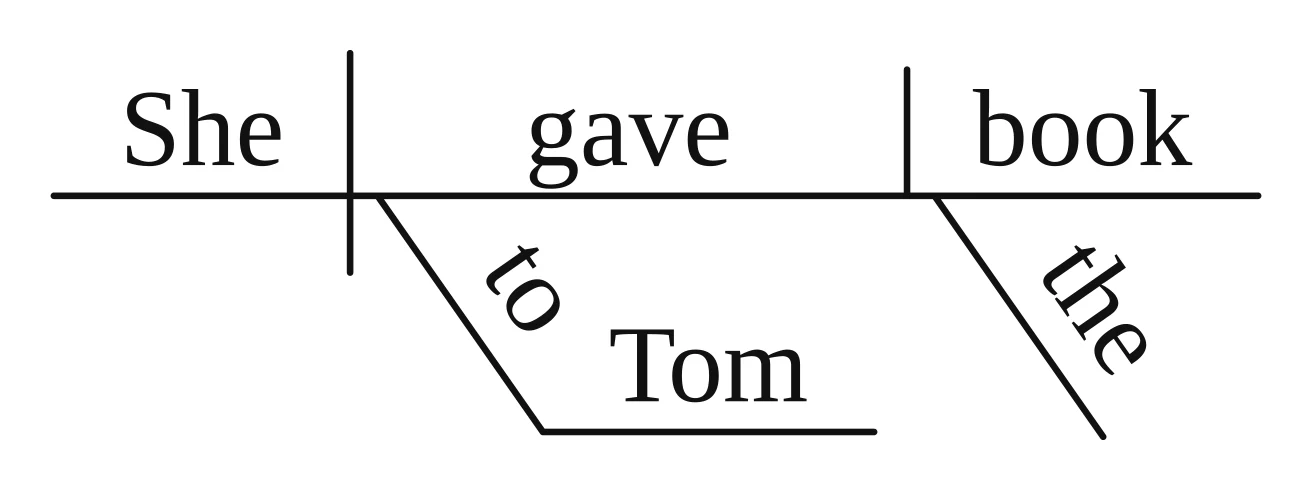
She gave the book to Tom. · Open this sentence in the sentence diagram generator
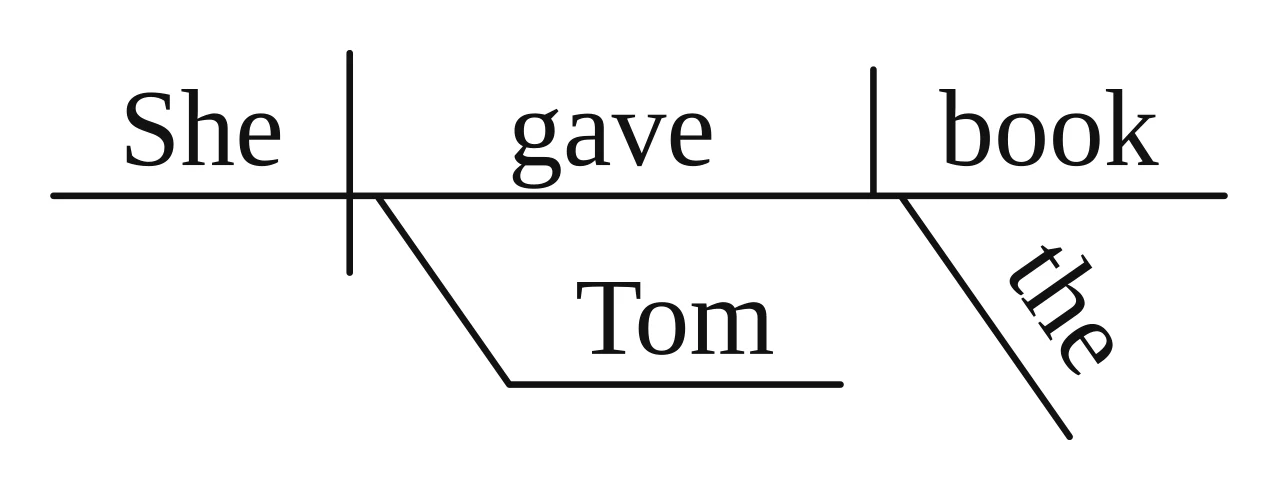
She gave Tom the book. · Open this sentence in the sentence diagram generator
In the first sentence the word to is actually there, so to Tom is a prepositional phrase: to goes on the slant and Tom is its object. In the second, to is missing, Tom comes before the direct object, and the slant stays empty: Tom is an indirect object. The two pictures look alike on purpose; the only difference is whether a word sits on the slant.
The test: if you can move the word after the direct object and add to or for without changing the meaning (gave Tom the book → gave the book to Tom; made my brother a sandwich → made a sandwich for my brother), it is an indirect object. Phrases like these are covered in full in how to diagram prepositional phrases.
How do you diagram compound direct and indirect objects?
When a verb has two objects joined by and or or, split that slot into a fork: one branch for each object, and the conjunction on a dashed line between them. For a compound direct object, the fork opens on the baseline after the vertical line.
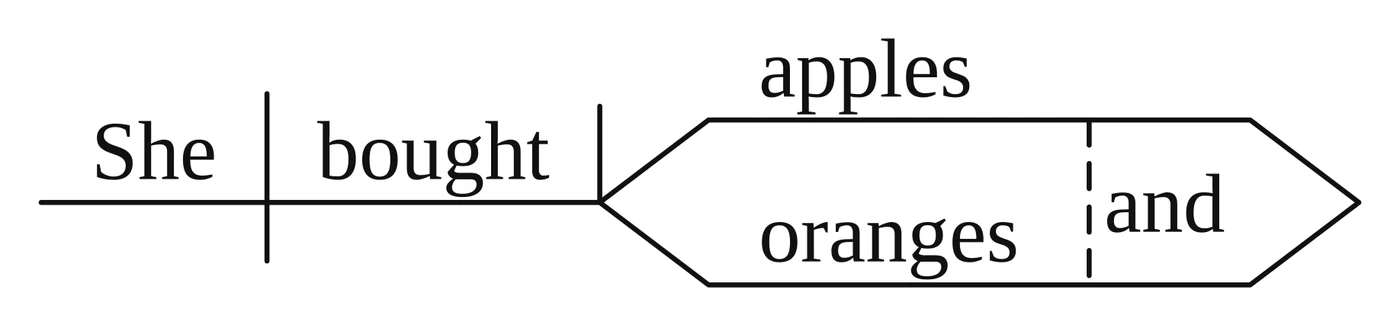
She bought apples and oranges. · Open this sentence in the sentence diagram generator
For a compound indirect object, the fork opens at the foot of the empty slant under the verb, and the direct object stays on the baseline:
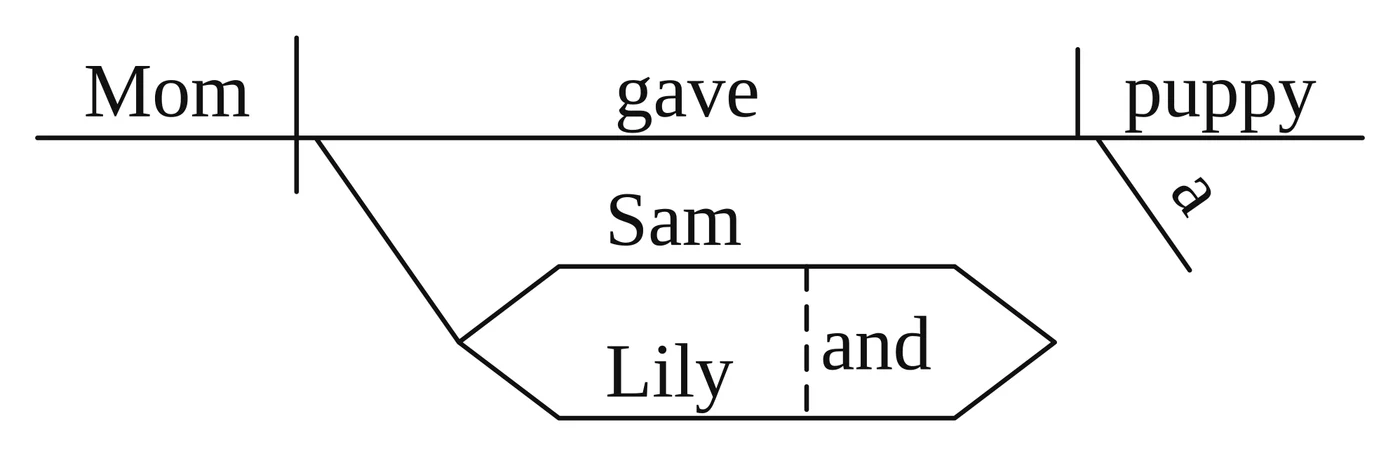
Mom gave Sam and Lily a puppy. · Open this sentence in the sentence diagram generator
Indirect objects in commands
A command has an understood subject, you. Write (you) in parentheses in the subject slot, then diagram the rest as usual. The indirect object of a command is often a pronoun like me or us:
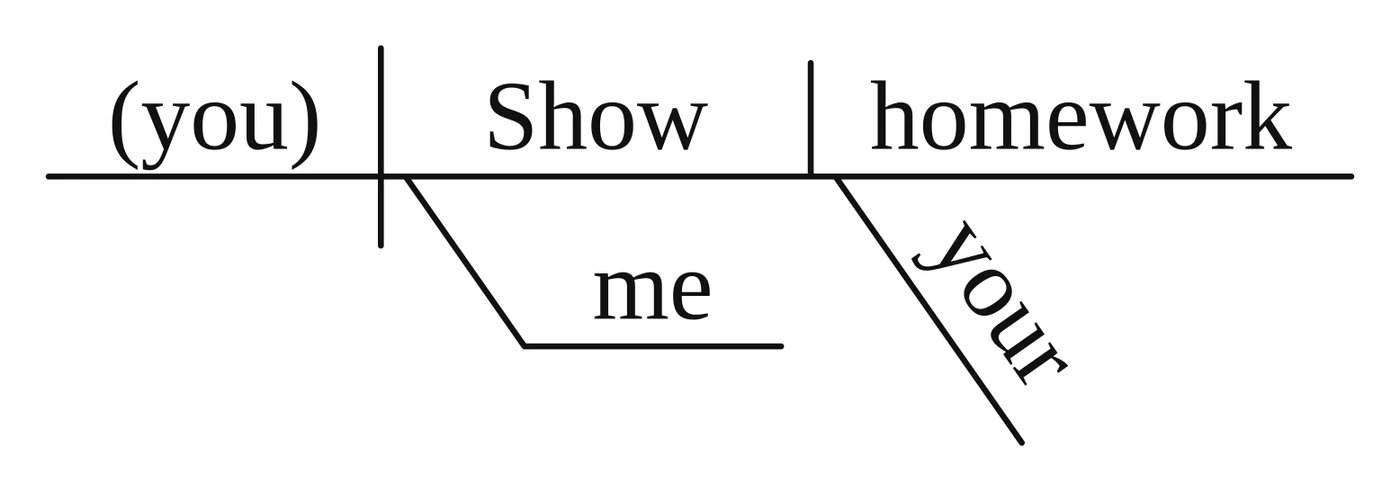
Show me your homework. · Open this sentence in the sentence diagram generator
Show what? Your homework (direct object). Show it to whom? Me (indirect object).
How do you diagram an objective complement?
Verbs like name, elect, call, make, consider and declare can take a direct object plus a second word that renames or describes it. That second word is an objective complement. It goes on the baseline after the direct object, behind a backslash that leans back toward the object and stops at the baseline.
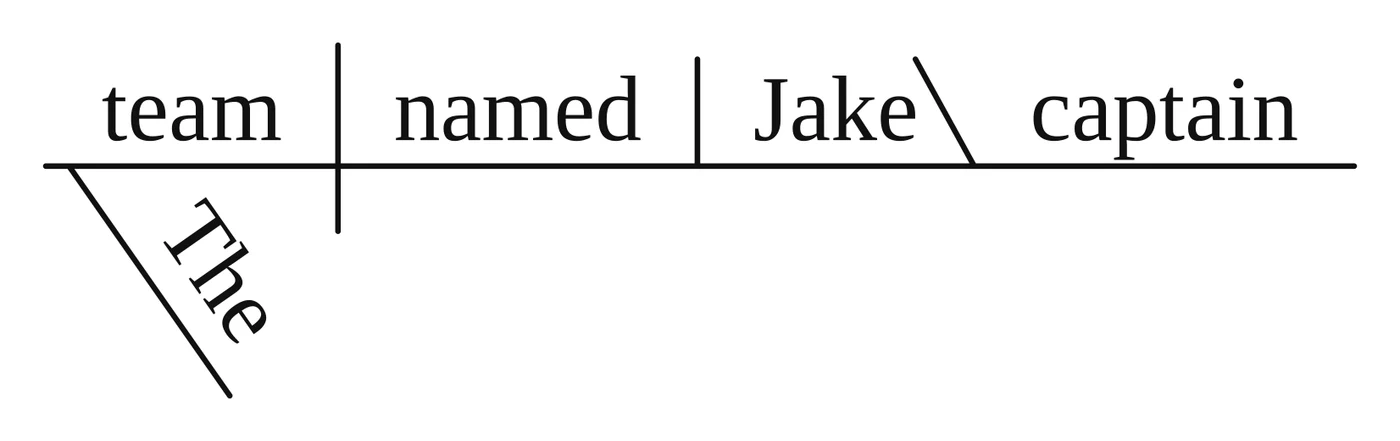
The team named Jake captain. · Open this sentence in the sentence diagram generator
The complement can be an adjective too. Bright describes the room, not the paint:
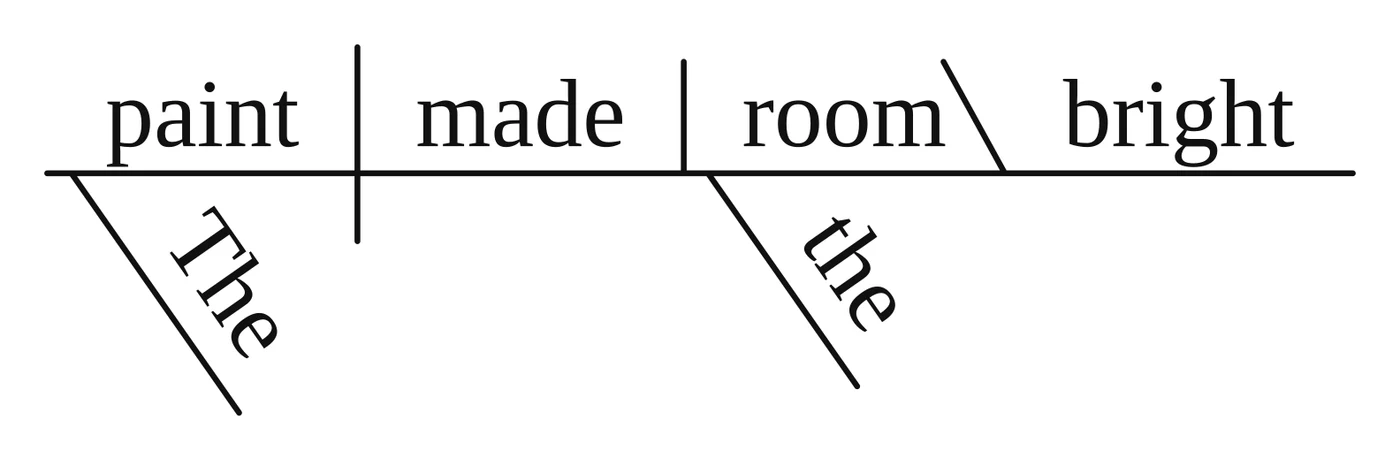
The paint made the room bright. · Open this sentence in the sentence diagram generator
Don't mix this up with an indirect object. Named Jake captain means Jake is the captain, and you can add to be: named Jake to be captain. Gave Jake a medal means the medal went to Jake, and Jake is not the medal. Same word order, different picture: an objective complement stays on the baseline; an indirect object drops under the verb.
Direct object or predicate nominative?
A noun after a linking verb (is, was, became, seems) is not an object. It renames the subject, so it is a predicate nominative, and it goes after a backslash instead of a vertical line:
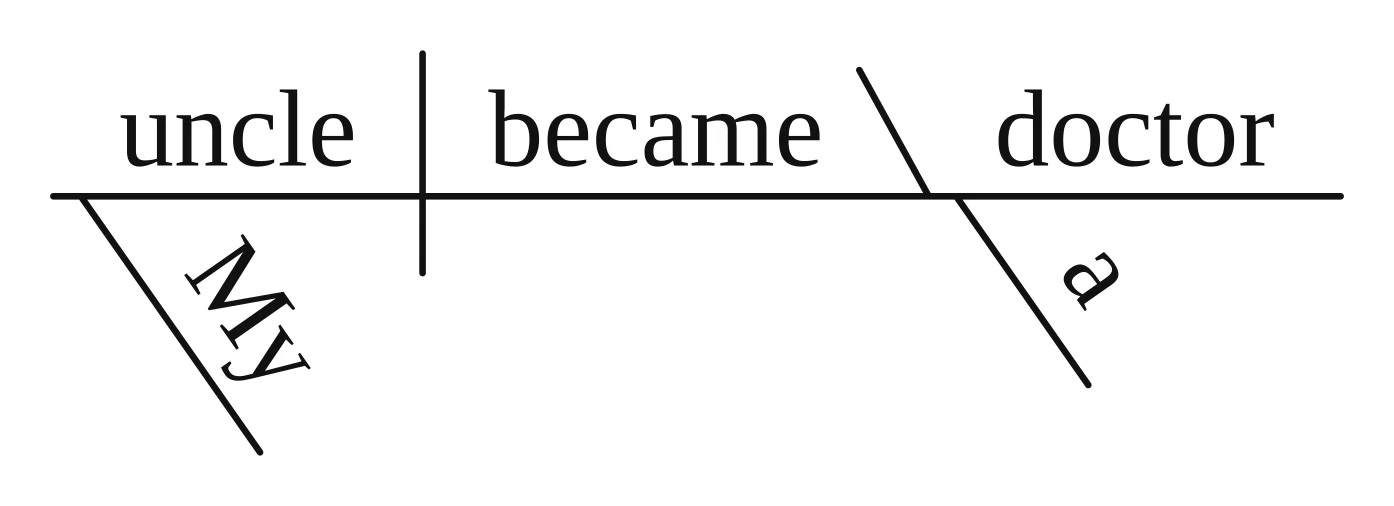
My uncle became a doctor. · Open this sentence in the sentence diagram generator
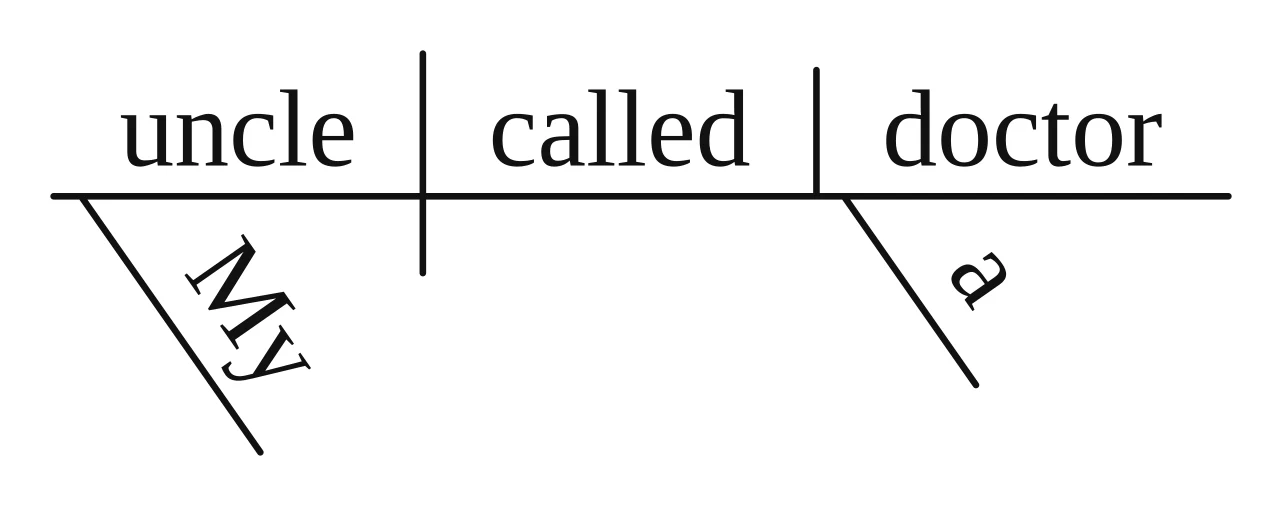
My uncle called a doctor. · Open this sentence in the sentence diagram generator
Ask whether the noun and the subject are the same person or thing. In the first sentence the uncle is the doctor, so doctor is a predicate nominative. In the second, the uncle and the doctor are two different people and called is an action, so doctor is a direct object. For more on linking verbs, see the linking verb section of how to diagram a sentence.
Can a sentence diagram generator draw direct and indirect objects for you?
Yes. Type a sentence into the sentence diagram generator and it draws the Reed–Kellogg diagram automatically: the direct object on the baseline after its vertical line, the indirect object on a flat line under an empty slant from the verb, and an objective complement after a backslash. Every diagram on this page was made that way.
- Checking answers. Diagram the sentence on paper first, then type it in and compare line by line. Each example here has an Open this sentence link that fills the sentence in for you.
- Worksheets and answer keys. Worksheet mode turns up to 20 of your own sentences into a blank worksheet and a matching answer key as PDFs (Letter or A4). See sentence diagramming worksheets.
- Downloads. A watermarked PNG is free. A watermark-free file, 4K and an editable SVG, with the words kept as real text you can retype, come with a plan or credit pack.
- Accuracy. The generator compares its reading with your sentence and redraws when words go missing or extra words appear, but a word can still slip through or land on the wrong line when the grammar reading is wrong. Check each object against the two questions above, and follow your textbook on conventions such as the (x) on the slant.
Common mistakes when diagramming objects
- Writing to or for on the empty slant. The slant of an indirect object stays blank (or holds an (x), if your textbook uses one). If the sentence actually says to or for, you have a prepositional phrase, not an indirect object.
- Writing the indirect object on the slant itself. The word goes on the flat line at the foot of the slant, not along the slanted line. Some explanations online get this wrong, so check against the picture.
- Putting the indirect object on the baseline. Only the direct object goes after the verb on the baseline. The indirect object always drops under the verb.
- Letting the object line cross the baseline. The line before a direct object stops at the baseline; only the subject–verb line cuts through.
- Looking for an indirect object first. Find the direct object first. No direct object usually means no indirect object.
- Calling a predicate nominative a direct object. After is, became or seems, the noun renames the subject and gets a backslash.
- Confusing an objective complement with an indirect object. If the second noun is the first one (named Jake captain), it is an objective complement on the baseline.
- Using a subject pronoun as an object. Objects take the object form: gave her and me a ride, not gave she and I a ride. The diagram makes it obvious, because both words sit in an object slot.
Direct and indirect objects to practice
Try these eight sentences on paper first: find the verb, ask "what?" for the direct object, then ask "to whom?" or "for whom?" for the indirect object. Watch for the ones that have a prepositional phrase or an objective complement instead. Compare with the answer key, or open a sentence in the generator to check it. For a whole class set, the sentence diagramming worksheets page shows how to turn up to 20 of your own sentences into a blank worksheet and an answer key.
| # | Look for | Sentence |
|---|---|---|
| 1 | Indirect object | The waiter brought us menus. |
| 2 | Prepositional phrase or indirect object? | Kevin threw the ball to his dog. |
| 3 | Compound indirect object | Our neighbors sent Mom and Dad a card. |
| 4 | Objective complement | The judges declared Ana the winner. |
| 5 | Command | Please pass me the salt. |
| 6 | Compound direct object | I made my brother a sandwich and some soup. |
| 7 | Objective complement | The long hike made everyone tired. |
| 8 | Indirect object | She wrote her grandmother a long letter. |
Answer key
Each answer below is the generator's diagram for that sentence, with a note on why each object goes where it does.
1.
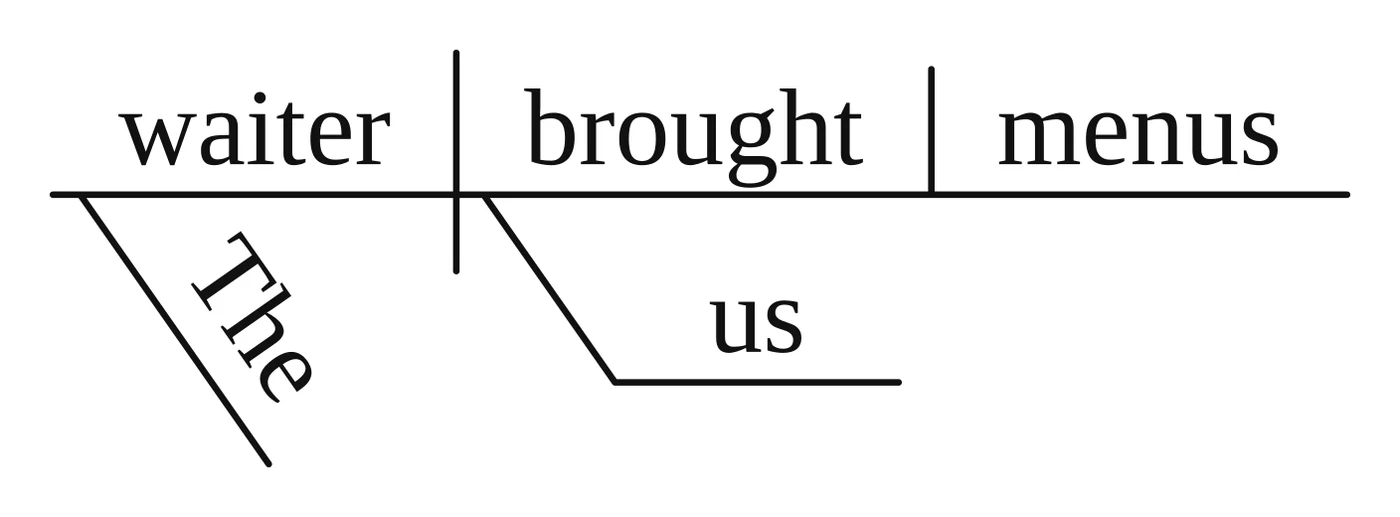
Brought what? Menus (direct object, on the baseline). Brought menus to whom? Us, the indirect object on a flat line under an empty slant.
2.
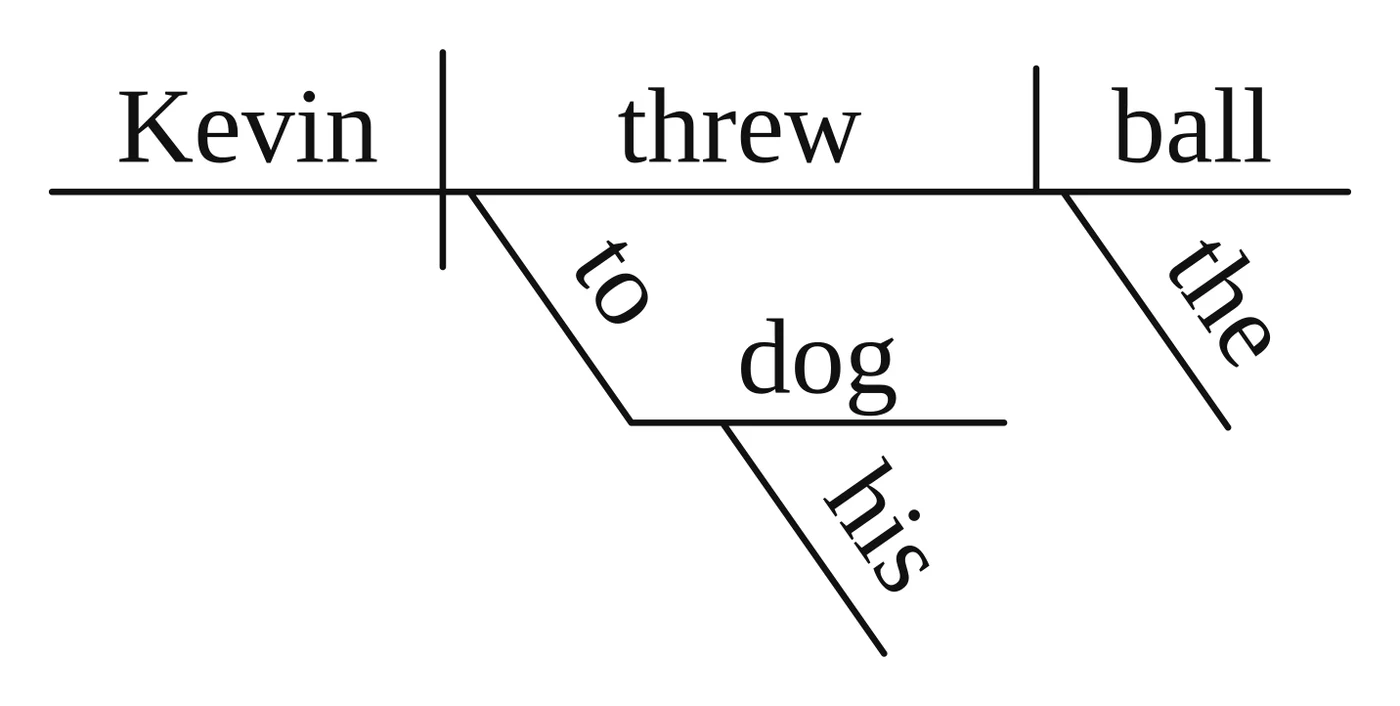
There is no indirect object here. To is written in the sentence, so to his dog is a prepositional phrase hanging from threw; ball is the direct object. Rewrite it as Kevin threw his dog the ball and dog becomes an indirect object.
3.
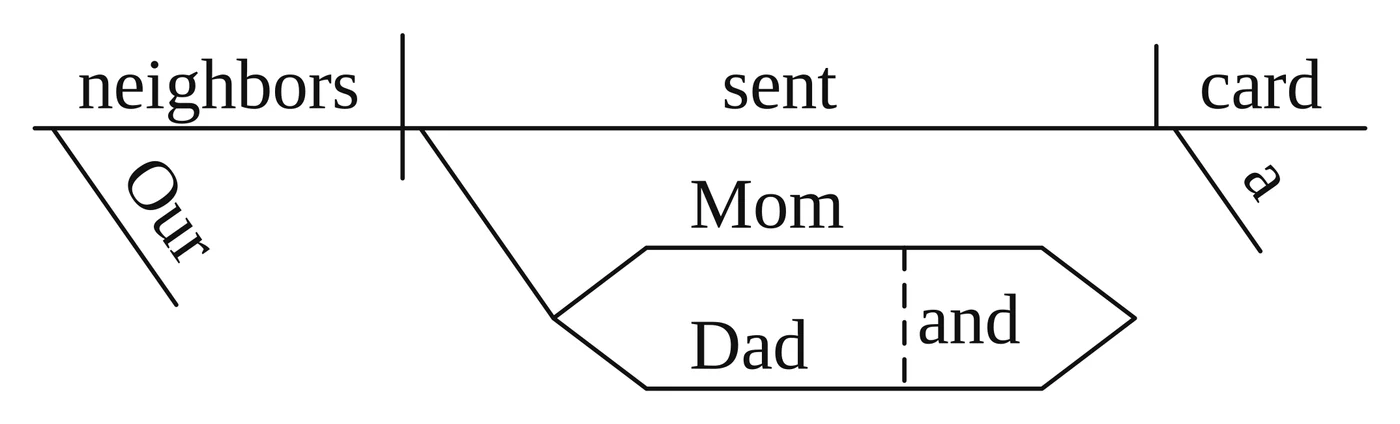
Sent what? A card. Sent it to whom? Mom and Dad, so the fork opens at the foot of the empty slant under sent, with and on the dashed line.
4.
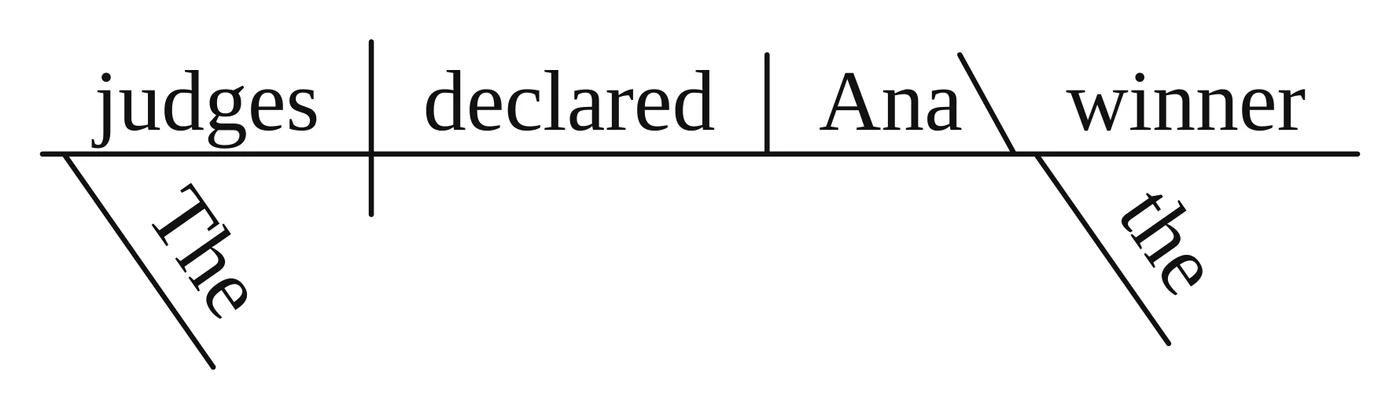
Ana is the direct object; winner renames her (Ana is the winner), so it goes after a backslash on the baseline. You can test it with declared Ana to be the winner.
5.
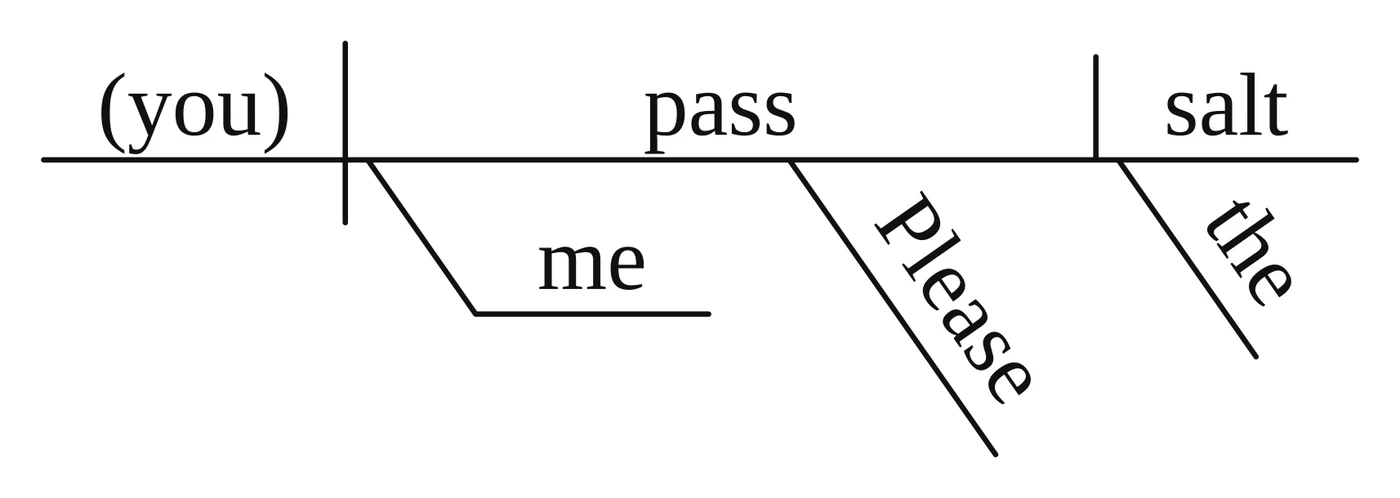
The subject is the understood (you). Salt is the direct object and me the indirect object. Here Please hangs from the verb as an adverb; some textbooks put please on a separate line above the baseline instead, so follow your class.
6.
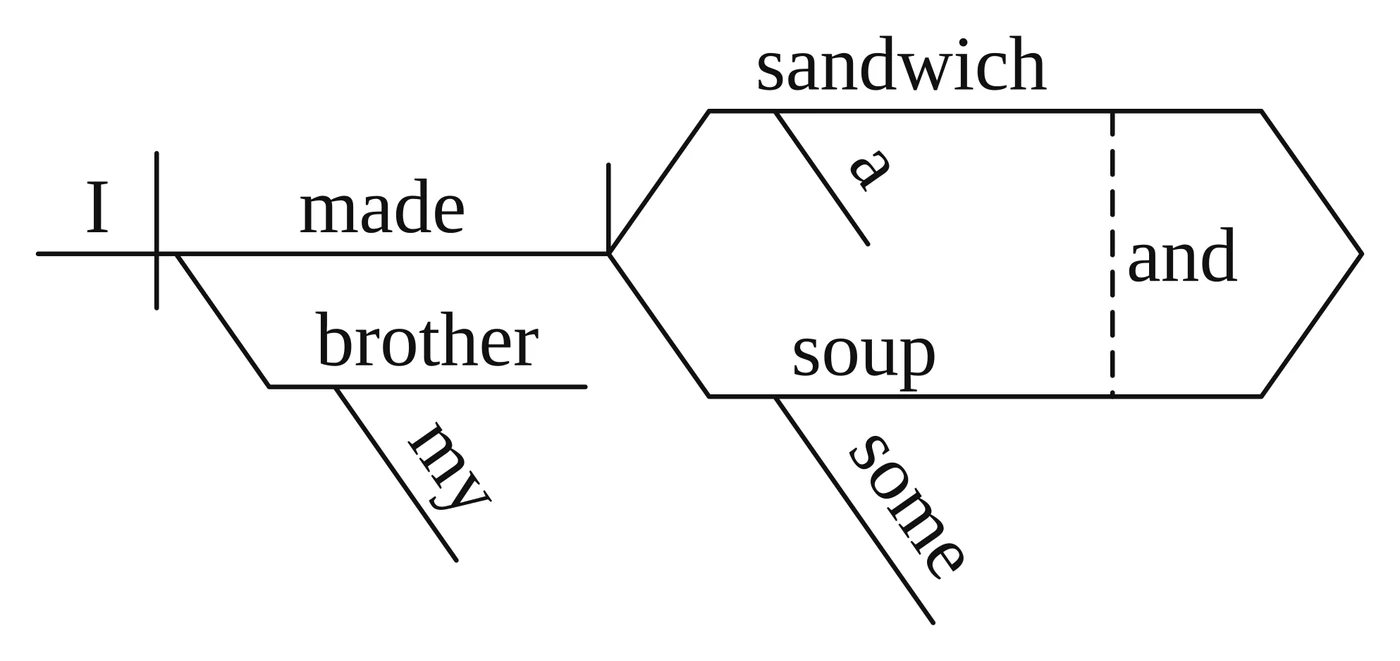
My brother is the indirect object (made it for my brother), and the direct object is compound: a sandwich and some soup forks on the baseline.
7.
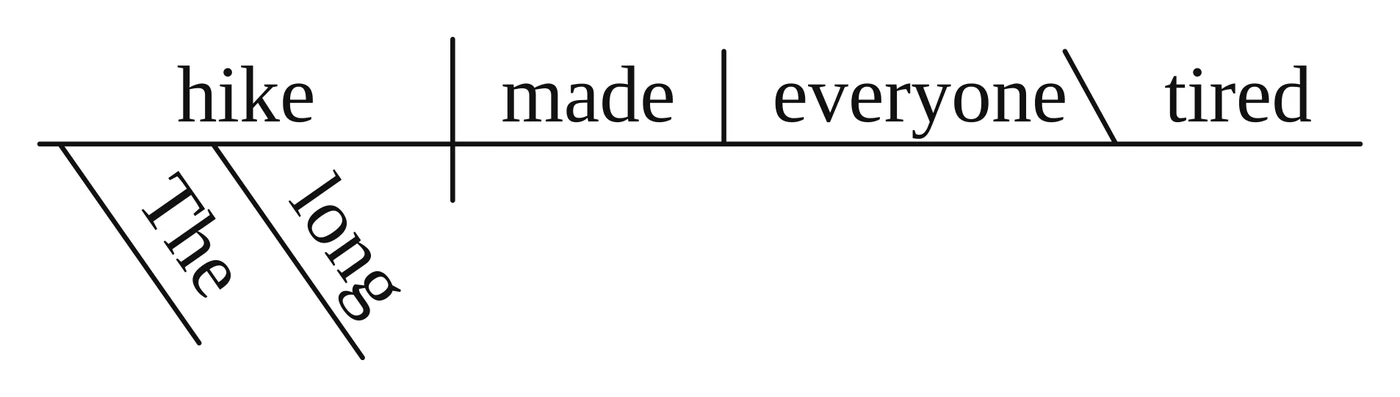
Compare with sentence 6. Here made means caused to be: tired describes everyone, so it is an adjective objective complement after a backslash, not a second object.
8.
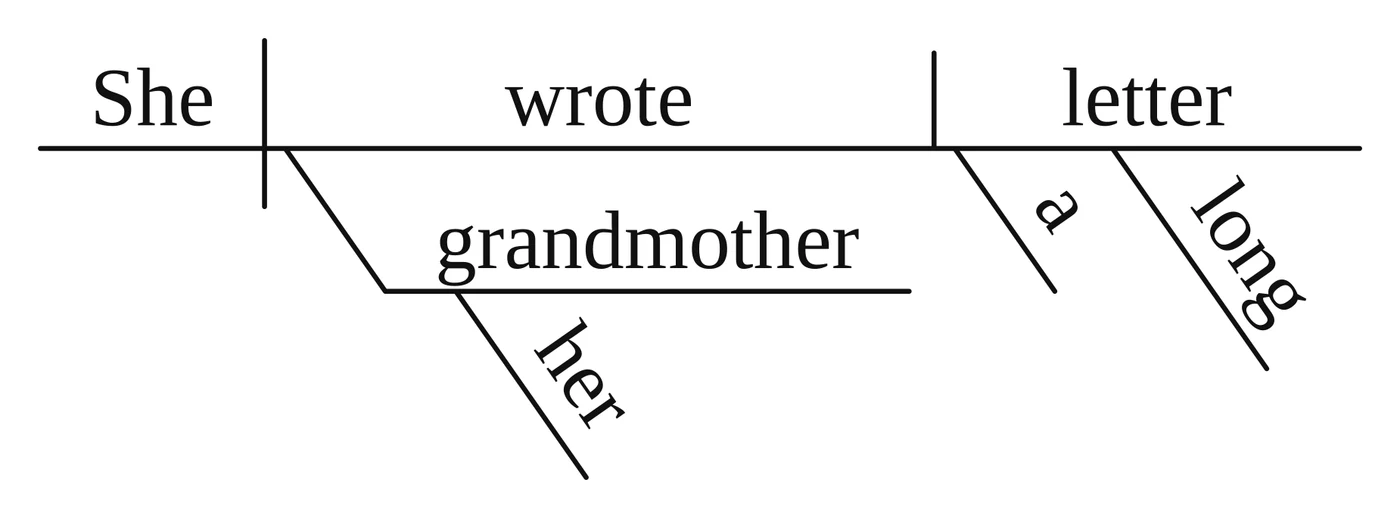
Wrote what? A long letter. Wrote it to whom? Her grandmother, the indirect object, with her slanting under grandmother.
Frequently asked questions
How do you diagram an indirect object?
Draw an empty slanted line down from the verb and put the indirect object on a flat line at its foot. The slant stays blank (some textbooks mark it (x)) because it stands for the "to" or "for" the sentence leaves out. The direct object stays on the baseline after the verb.
How do you diagram a direct object?
Write it on the baseline right after the verb and separate the two with a short vertical line that stops at the baseline, so it does not cut through like the subject–verb line. Words that describe the object slant under it.
How do you tell a direct object from an indirect object?
Ask the verb "what?" or "whom?" to find the direct object. Then ask "to whom?" or "for whom?" the action was done; that answer is the indirect object. The indirect object comes between the verb and the direct object, and you can move it after the direct object by adding "to" or "for".
Is "to Tom" in "She gave the book to Tom" an indirect object?
No. When "to" or "for" is written in the sentence, the words form a prepositional phrase: "to" goes on a slant under the verb and "Tom" on the flat line at its foot. Only "She gave Tom the book" has an indirect object.
Can a sentence have an indirect object without a direct object?
In most school grammar books, no. An indirect object tells who receives the direct object, so find the direct object first. In "She told me," most textbooks treat "me" as the direct object; check your textbook if your class uses a different rule.
How do you diagram an objective complement?
Put it on the baseline after the direct object, behind a backslash that leans toward the object. It renames or describes the object: in "The team named Jake captain," Jake is the captain. An indirect object, by contrast, goes under the verb.
Can ChatGPT diagram direct and indirect objects?
ChatGPT can explain which word is the direct object and which is the indirect object, but a written description of the lines can be wrong; a common slip is putting the indirect object on the slant instead of on the flat line below it. To get an actual Reed–Kellogg drawing, type the sentence into a sentence diagram generator and check the result against the rules on this page.
Can I check my object diagrams online?
Yes. Type the sentence into the sentence diagram generator and it draws the Reed–Kellogg diagram. Downloads are free as watermarked PNGs; a watermark-free file and an editable SVG come with a plan or credit pack. An object can still land in the wrong slot when the grammar reading is wrong, so check each diagram against the sentence word by word.
Diagram your own sentence with direct and indirect objects
Type a sentence from your worksheet and get a Reed–Kellogg diagram, or switch to Worksheet mode for up to 20 sentences with an answer key.
