
What are verbals?
A verbal is a verb form that does the job of another part of speech. It looks like a verb and can still take its own object and modifiers, but in the sentence it works as a noun, an adjective or an adverb. There are three kinds:
| Verbal | Form | Works as | Example | Shape in a diagram |
|---|---|---|---|---|
| Gerund | -ing | Noun | Swimming is good exercise. | Stepped line on a pedestal, in the noun slot |
| Infinitive | to + verb | Noun, adjective or adverb | Tom wants to win. | Pedestal when it is a noun; slant and flat line when it modifies |
| Participle | -ing, -ed or irregular (broken) | Adjective | The girl wearing the blue hat | Bent line under the noun it describes |
A verbal is never the main verb of its clause. The dog is barking has a verb phrase (is barking), not a verbal; the barking dog has a participle. That one test settles most questions before you start drawing. A verbal phrase also has no subject–verb pair of its own, so it never counts as a clause; for clauses, see diagramming compound and complex sentences.
How do you diagram a gerund?
A gerund is an -ing word used as a noun, so it goes wherever a noun can go: subject, direct object, predicate nominative or object of a preposition. Write it on a stepped line (a short step up, then a flat line) and stand that line on a pedestal, a vertical post with a small forked foot, planted in the noun's slot.
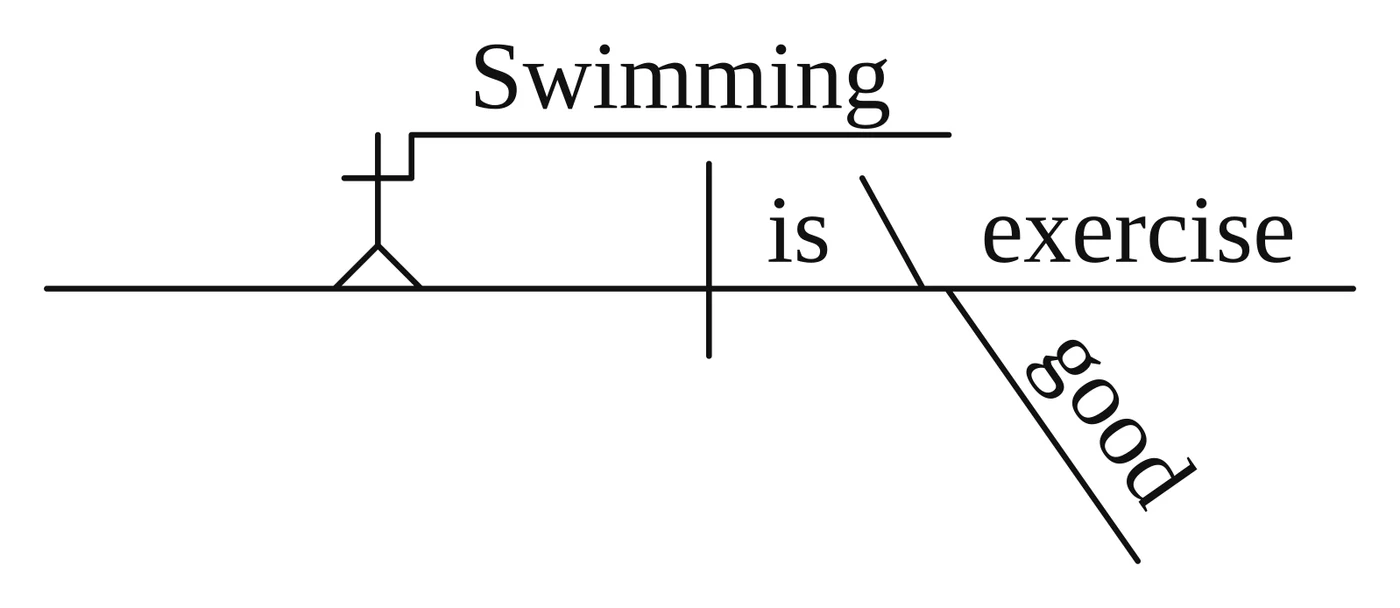
Swimming is good exercise. · Open this sentence in the sentence diagram generator
A gerund phrase brings its own object and modifiers along. They go on the gerund's line exactly as they would on a baseline: the object after a short vertical line, adjectives slanting under the object.
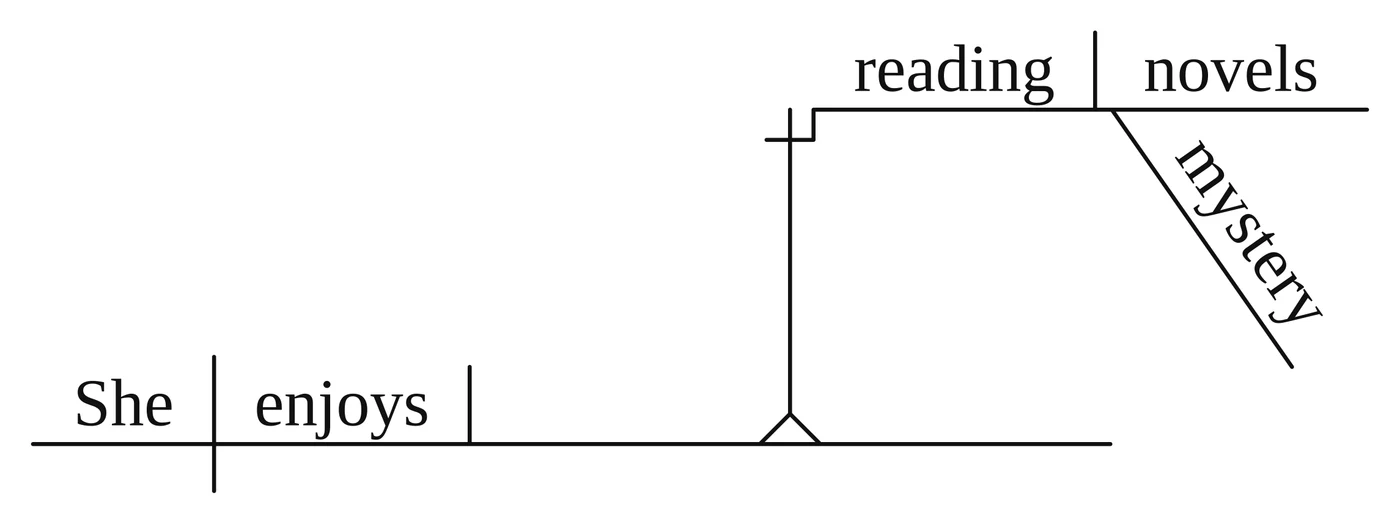
She enjoys reading mystery novels. · Open this sentence in the sentence diagram generator
What is the direct object of enjoys? Reading mystery novels. The whole phrase is one noun, so the whole phrase goes on the pedestal, and novels is the gerund's own object.
Where does a gerund go after a preposition or a linking verb?
After a preposition, the gerund is the object, so the pedestal stands on the flat line at the foot of the preposition's slant:
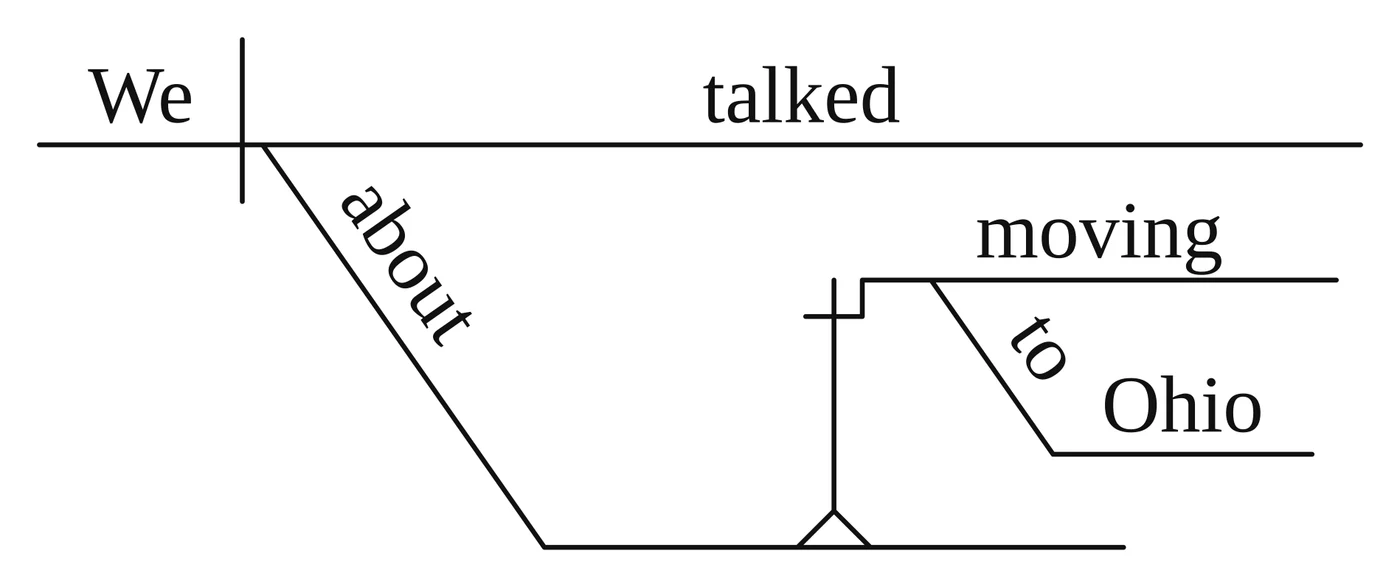
We talked about moving to Ohio. · Open this sentence in the sentence diagram generator
Moving to Ohio answers "talked about what?", and to Ohio is a prepositional phrase that modifies the gerund itself, so it hangs from moving. Some textbooks leave out the pedestal when a gerund is the object of a preposition and write it straight on the stepped line; both versions are common, so follow your class.
After a linking verb, a gerund that renames the subject is a predicate nominative. It stands on the pedestal after the backslash:
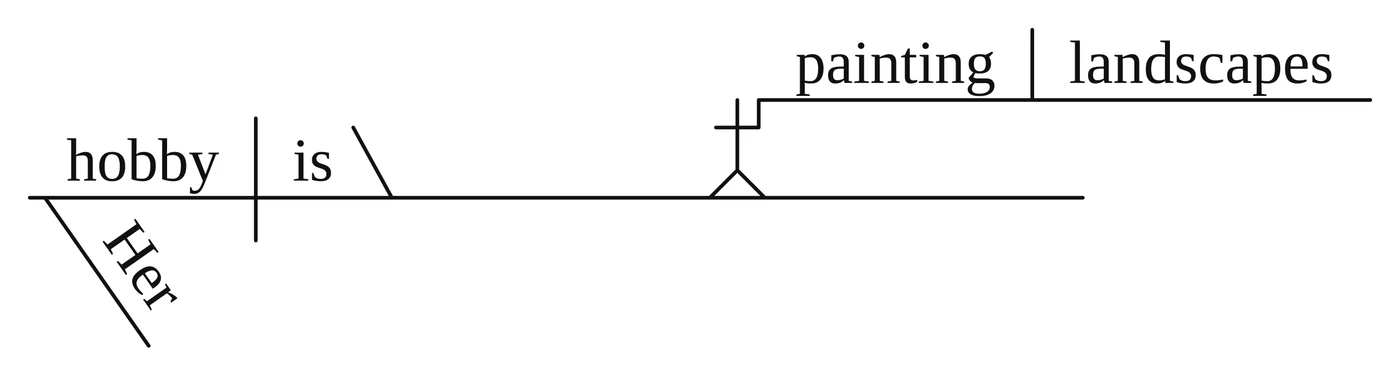
Her hobby is painting landscapes. · Open this sentence in the sentence diagram generator
If the gerund is the subject of the sentence, the pedestal stands in the subject slot to the left of the dividing line, as in Swimming is good exercise above.
How do you diagram an infinitive used as a noun?
An infinitive is to plus the plain form of a verb: to win, to read, to travel. When it works as a noun, it also stands on a pedestal, but the line on top is different: to goes on a slanted piece and the verb on a flat line after it, so the top looks like a little prepositional phrase.
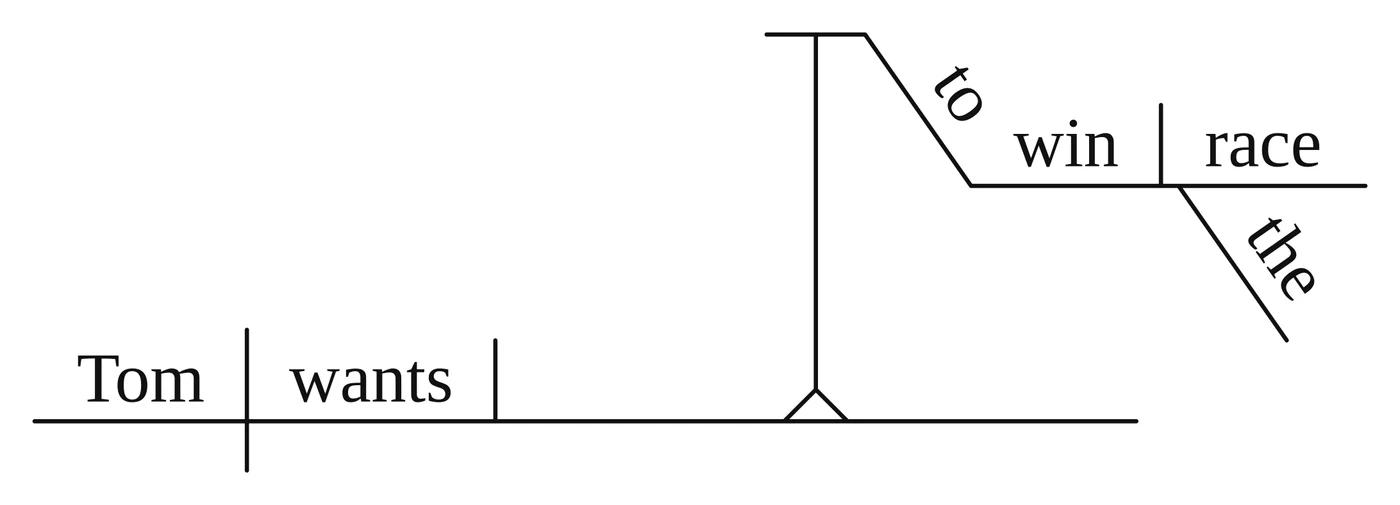
Tom wants to win the race. · Open this sentence in the sentence diagram generator
The infinitive keeps its own object (race) after a short vertical line, like a mini-sentence with no subject. As a predicate nominative it stands after the backslash:
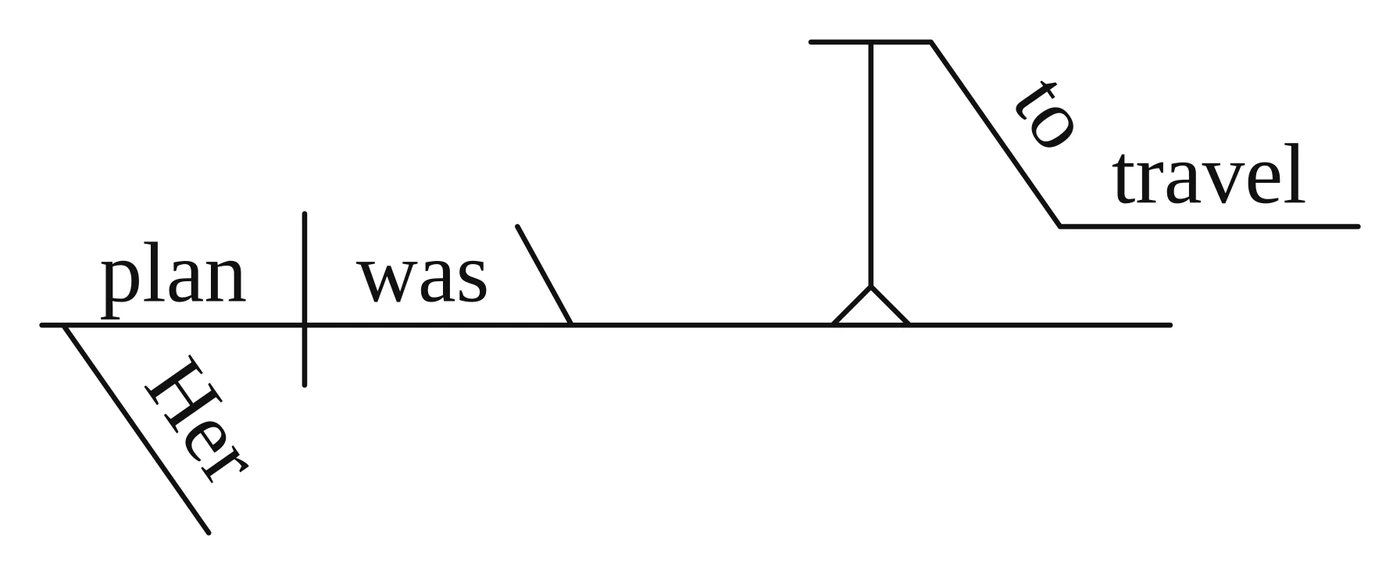
Her plan was to travel. · Open this sentence in the sentence diagram generator
An infinitive can be the subject too (To travel is my dream). The picture is the same pedestal, planted in the subject slot left of the dividing line. Sentences that open with To are worth checking word by word in any generated diagram: the reading can repeat the to or crowd the raised line into the verb.
How do you diagram an infinitive used as an adjective or adverb?
When an infinitive describes a word instead of naming a thing, it hangs under the word it modifies, drawn like a prepositional phrase: to on the slant, the verb on the flat line at its foot. No pedestal.
Adjective infinitive. It answers which one or what kind about a noun:
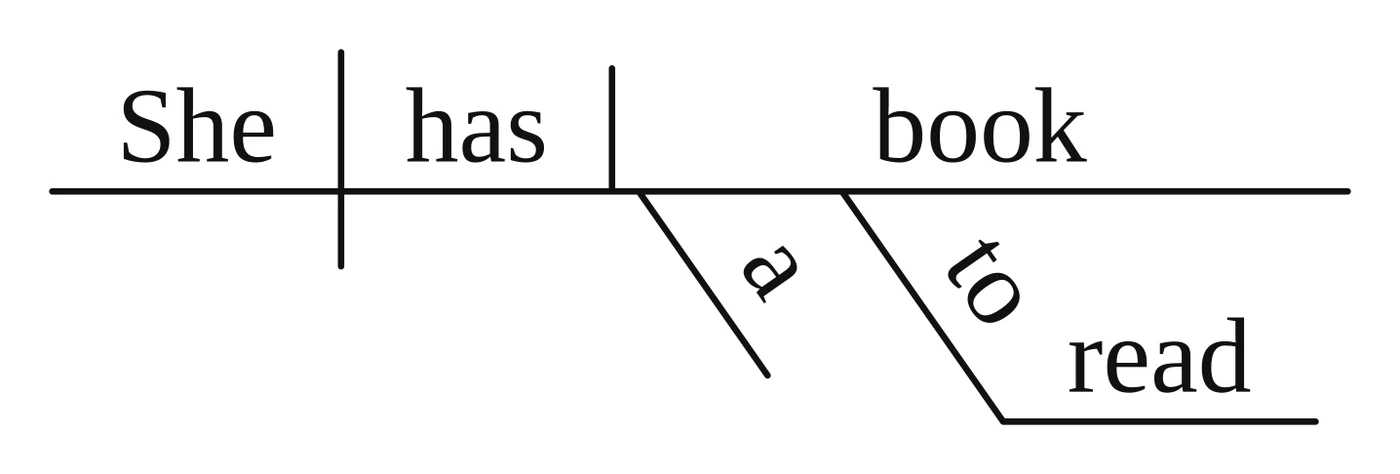
She has a book to read. · Open this sentence in the sentence diagram generator
What kind of book? A book to read, so it hangs from book.
Adverb infinitive. It answers why (sometimes how or to what extent) about a verb, adjective or adverb. Most often it tells why someone did something:
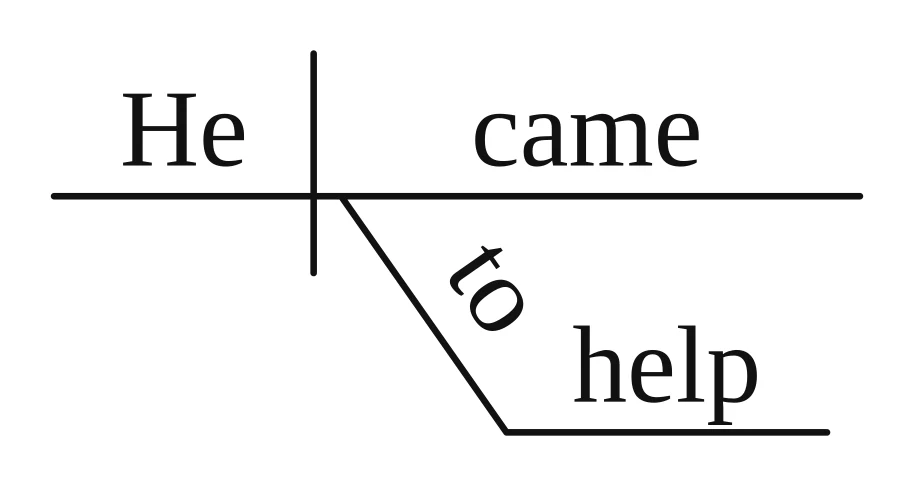
He came to help. · Open this sentence in the sentence diagram generator
When an adverb infinitive sits next to a prepositional phrase, both hang from the verb. The difference is what comes after to: a noun (to the store) makes a prepositional phrase, a verb (to buy) makes an infinitive, and the infinitive can take its own object.
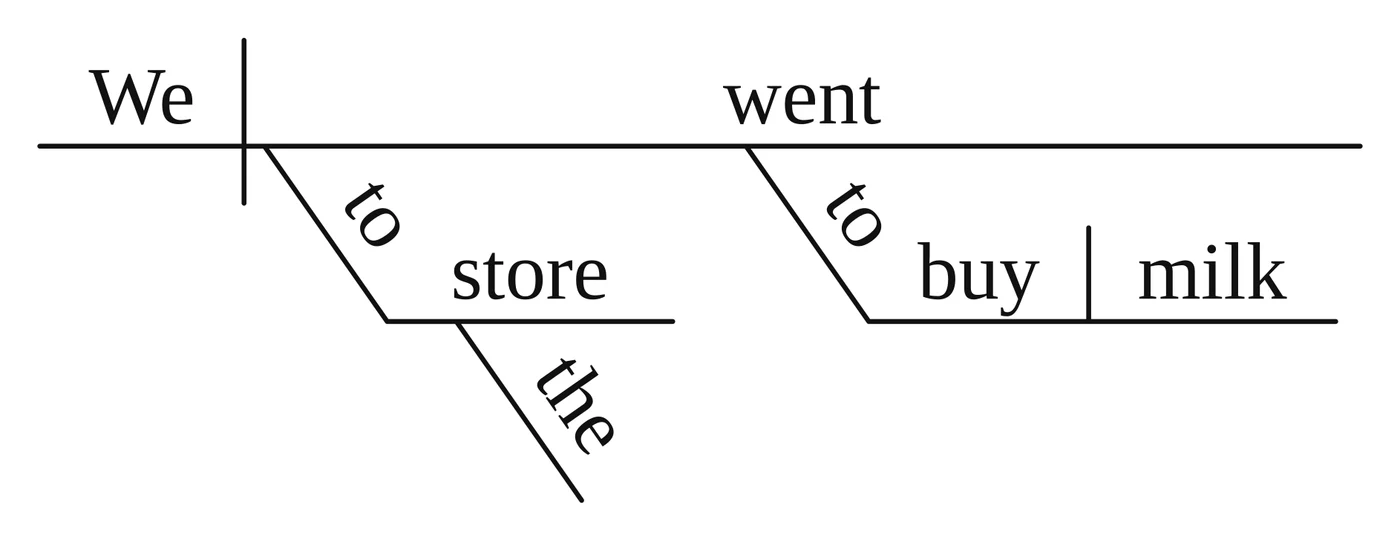
We went to the store to buy milk. · Open this sentence in the sentence diagram generator
An adverb infinitive can also modify an adjective. In She was eager to learn, the infinitive tells eager to do what, so it hangs under the predicate adjective eager, not under the linking verb:
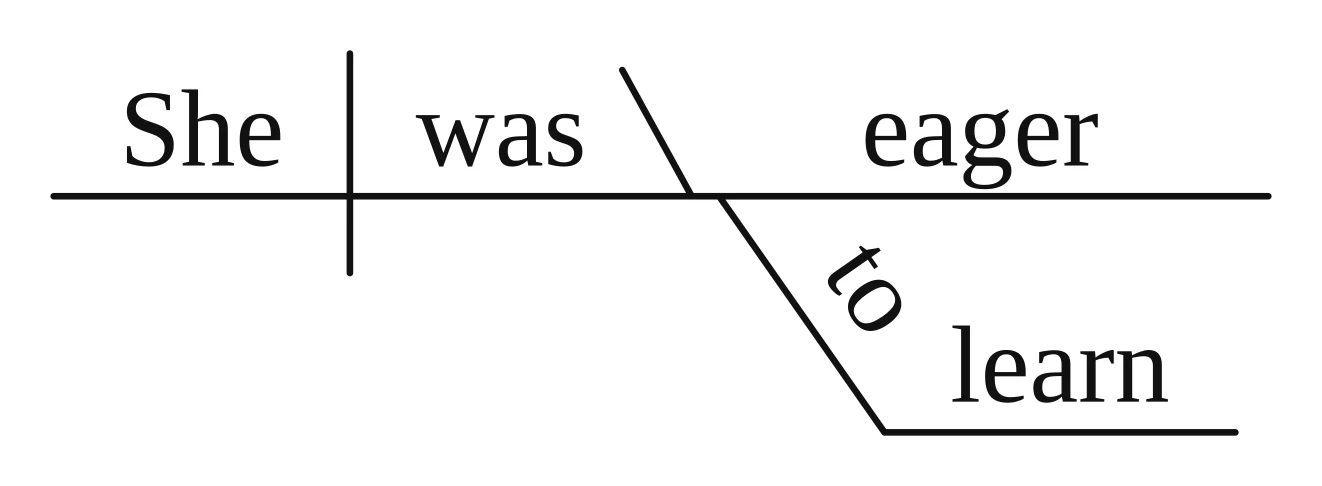
She was eager to learn. · Open this sentence in the sentence diagram generator
How do you diagram a participle?
A participle is a verb form used as an adjective: present participles end in -ing (wearing, smiling), past participles usually in -ed or -en (baked, broken, lost). A participle hangs under the noun or pronoun it describes, on a bent line: it starts down a slant and then curves into a flat line, and the participle sits on the flat part.
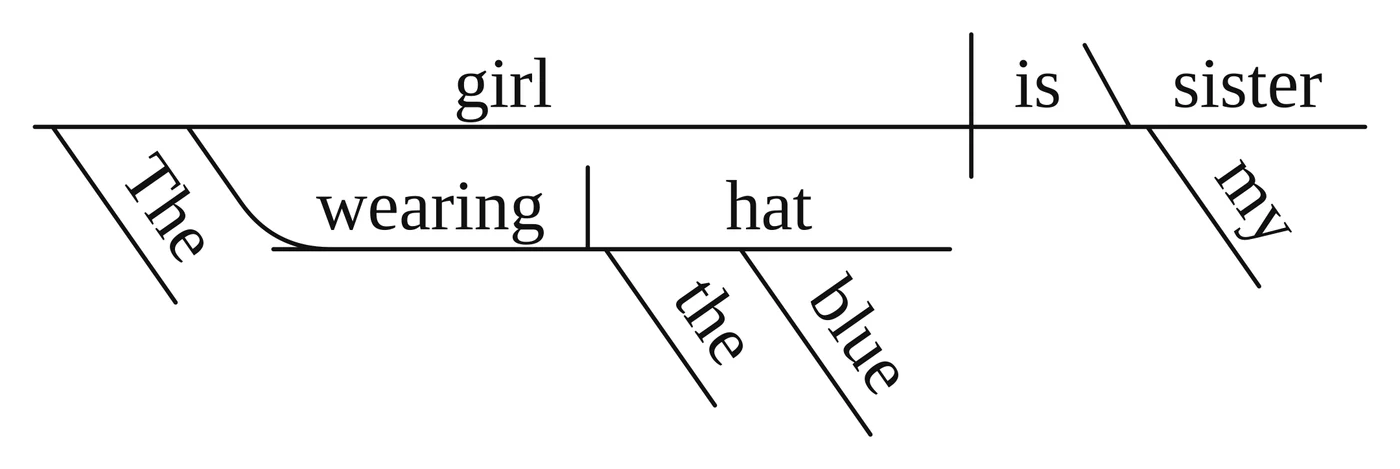
The girl wearing the blue hat is my sister. · Open this sentence in the sentence diagram generator
A participial phrase keeps its own object and modifiers on that flat part: wearing takes the object hat, so hat goes after a short vertical line. A phrase built on a past participle works the same way; here by my aunt is a prepositional phrase hanging from baked:
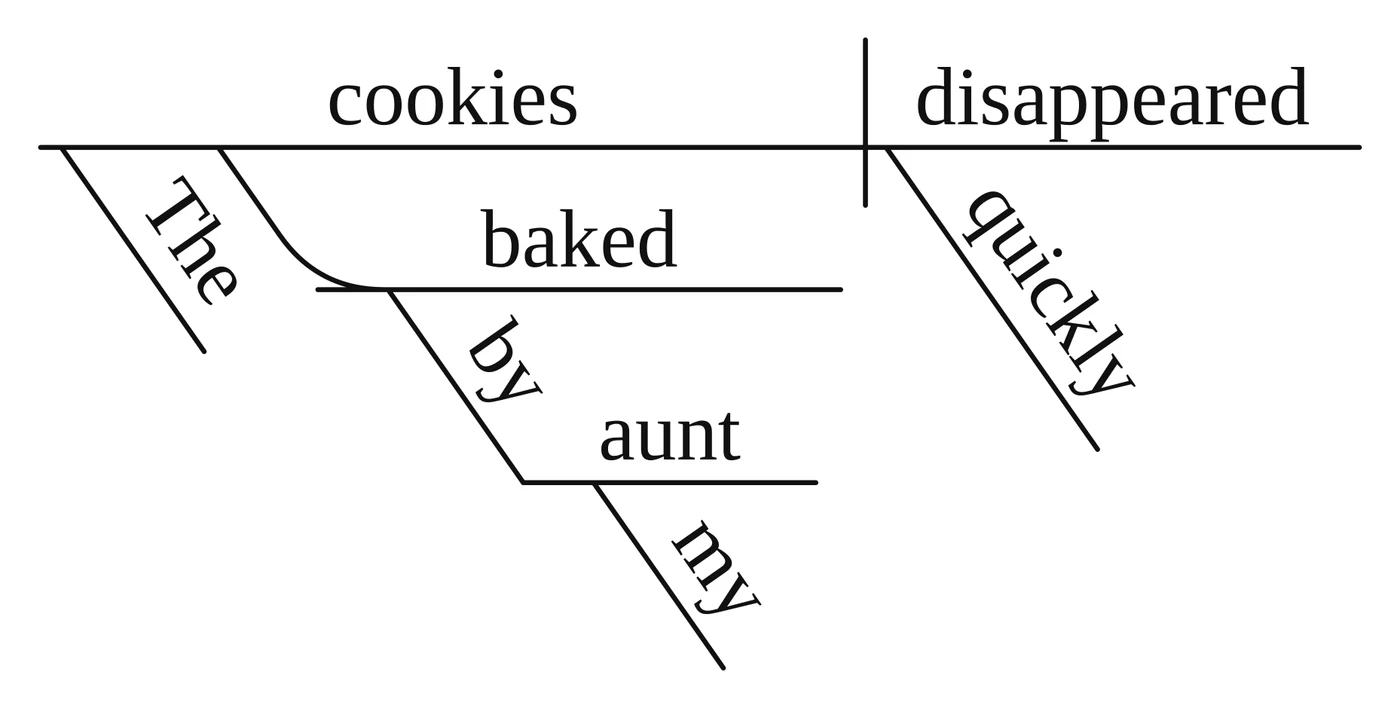
The cookies baked by my aunt disappeared quickly. · Open this sentence in the sentence diagram generator
A one-word participle in front of its noun (the barking dog, the broken window) uses the same bent line in most textbooks; some simply slant it like an ordinary adjective. Follow the convention your class uses.
Where does a participial phrase at the start of a sentence go?
An opening participial phrase is set off by a comma, but it still describes a noun, almost always the subject. So it hangs from the subject, not from the verb, even though it comes first in the sentence:
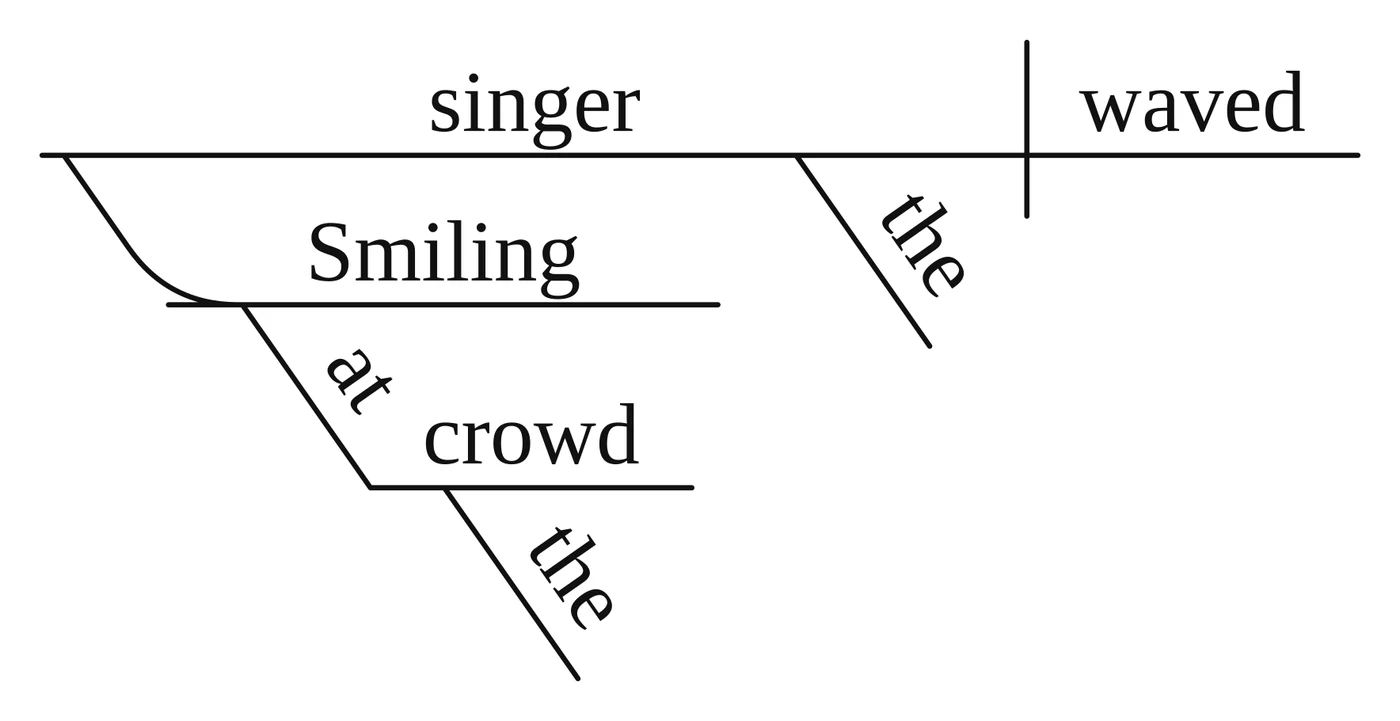
Smiling at the crowd, the singer waved. · Open this sentence in the sentence diagram generator
Who was smiling? The singer, so the bent line starts under singer. If the subject cannot be the one doing the action (Smiling at the crowd, the stage lights came on), the participle is dangling: it has no word to hang from, and that is a sign the sentence itself needs rewriting.
Gerund, participle or verb? How to tell -ing words apart
Gerunds, present participles and progressive verbs all end in -ing, so the ending tells you nothing. Ask what job the word does:
| Sentence | Job of the -ing word | Test | Diagram |
|---|---|---|---|
| Swimming is good exercise. | Noun (gerund) | You can replace it with it or this sport | Stepped line on a pedestal |
| The girl wearing the blue hat is my sister. | Adjective (participle) | It tells which girl | Bent line under the noun |
| The dog is barking. | Main verb (with the helper is) | It is what the subject is doing right now | On the baseline as part of the verb |
The last case is not a verbal at all. Is barking is one verb phrase, so both words go on the verb side of the baseline:
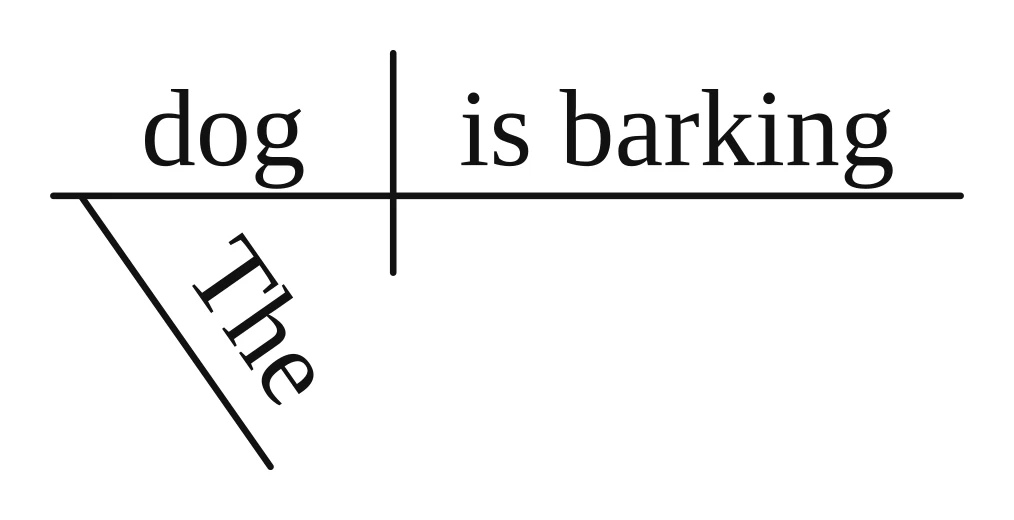
The dog is barking. · Open this sentence in the sentence diagram generator
The same test works for to: followed by a verb (to buy) it marks an infinitive; followed by a noun or pronoun (to the store) it is a preposition. See how to diagram prepositional phrases for the second kind.
Common mistakes when diagramming verbals
- Putting a gerund flat on the baseline. A gerund is a noun, but it is still a verb form; it gets the stepped line and the pedestal so its object has somewhere to go.
- Treating the gerund's object as the sentence's object. In She enjoys reading mystery novels, the object of enjoys is the whole phrase; novels belongs to reading.
- Giving every infinitive a pedestal. Only noun infinitives stand on one. An infinitive that tells which one or why hangs under the word it modifies.
- Hanging an opening participle from the verb. Smiling at the crowd describes singer, so it hangs from singer.
- Calling a progressive verb a participle. In is barking, the -ing word is the main verb; there is no verbal in that sentence.
- Dropping or doubling to. Write to once, on the slant of the infinitive. If a generated diagram shows a stray to on its own line or no to at all, compare it with the sentence word by word.
Verbals to practice
Try these eight sentences on paper first: find the verbal, decide whether it is a gerund, an infinitive or a participle, then decide which slot or word it belongs to. Compare with the answer key, or open a sentence in the generator to check it. For a whole class set, the sentence diagramming worksheets page shows how to turn up to 20 of your own sentences into a blank worksheet and an answer key.
| # | Verbal | Sentence |
|---|---|---|
| 1 | Infinitive | My brother loves to play chess. |
| 2 | Participle | The boy holding the kite laughed. |
| 3 | Gerund | Dad taught us about fixing cars. |
| 4 | Participle, opener | Excited about the trip, the kids packed early. |
| 5 | Infinitive | She saved money to buy a bike. |
| 6 | Gerund | The team celebrated winning the game. |
| 7 | Infinitive | We stopped to rest. |
| 8 | Participle, opener | Tired from the hike, we rested. |
Answer key
Each answer below is the generator's diagram for that sentence, with a note on why the verbal goes where it does.
1.
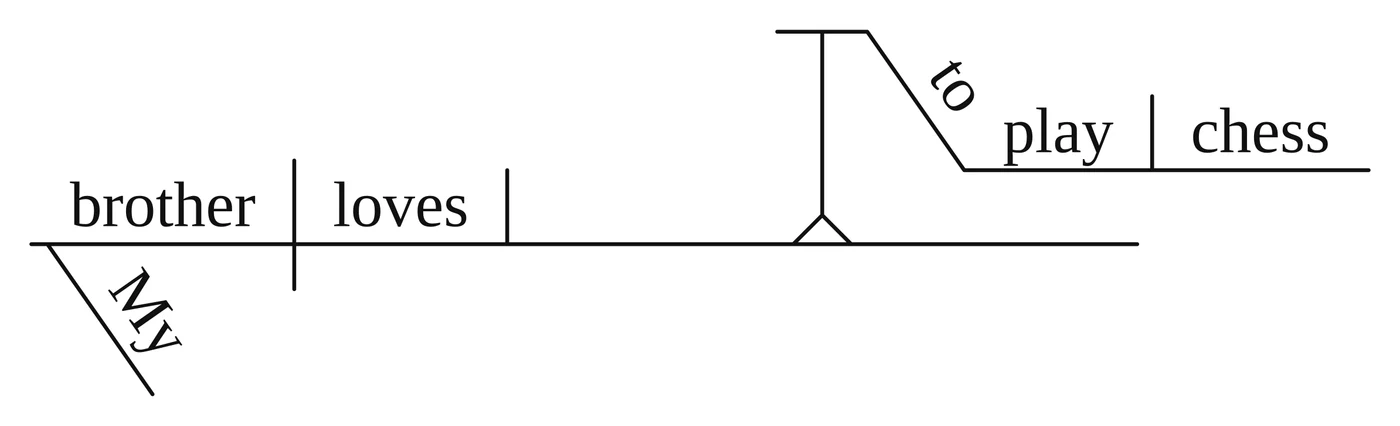
To play chess is what he loves, so it is a noun infinitive on a pedestal in the direct-object slot, with chess as its own object.
2.
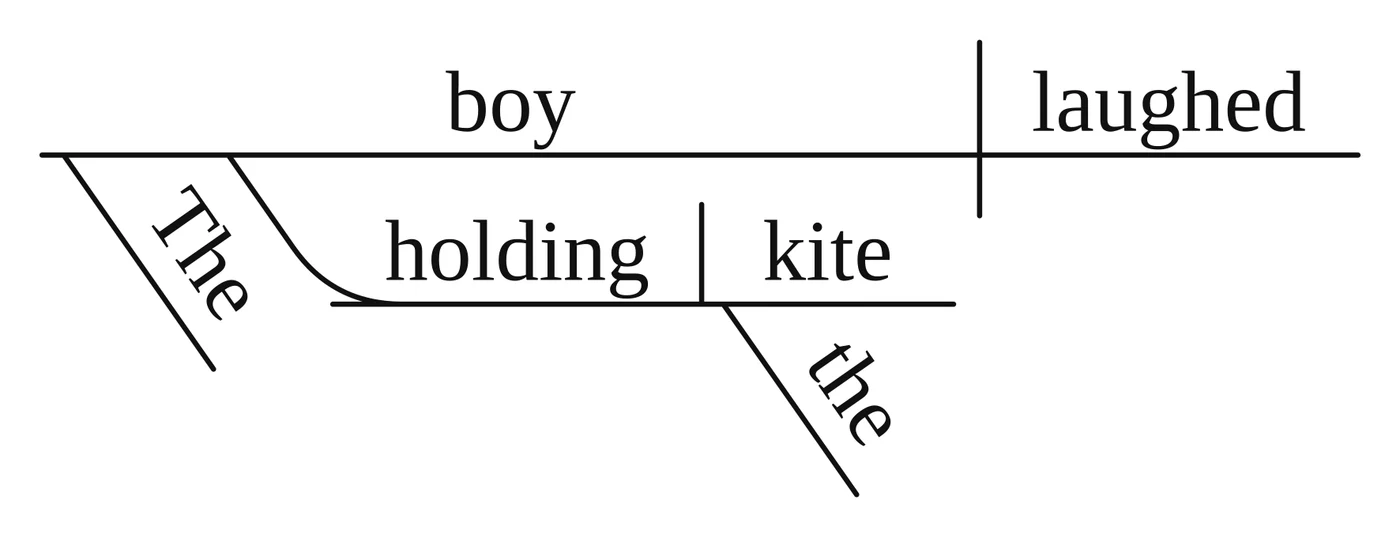
Holding the kite tells which boy, so it is a participial phrase on a bent line under boy; kite is the participle's object.
3.
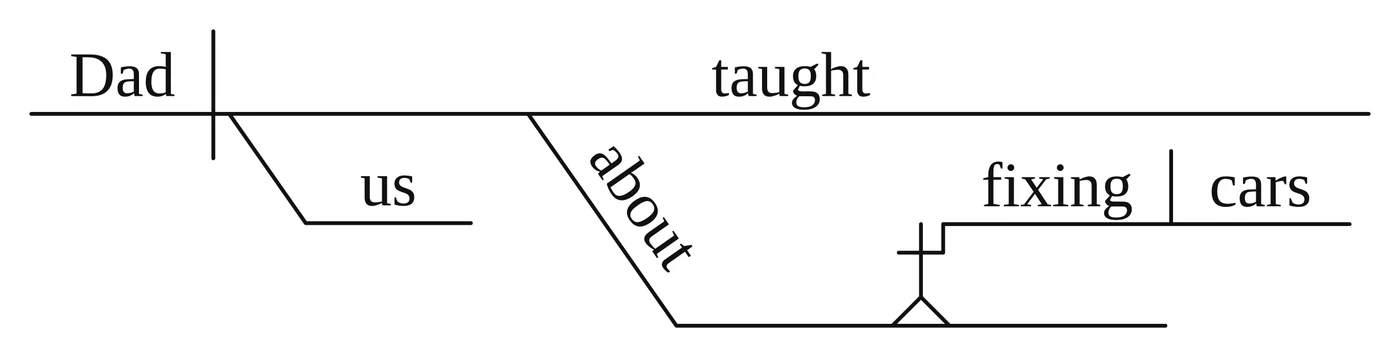
Us is the indirect object of taught. About takes the gerund phrase fixing cars as its object, so the pedestal stands on the preposition's flat line.
4.
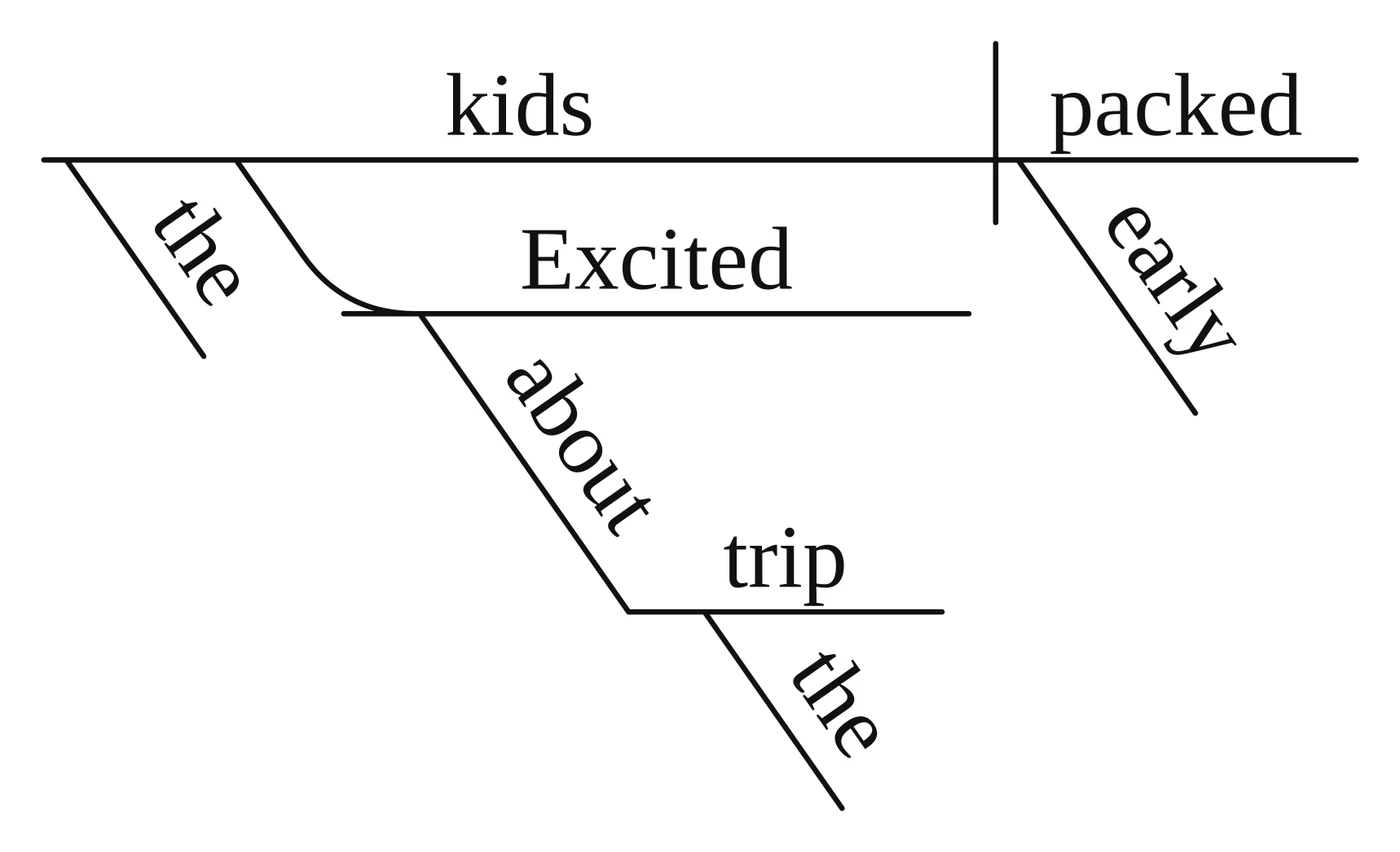
Excited is a past participle describing kids, so the bent line hangs from kids, not from packed; about the trip hangs from Excited.
5.
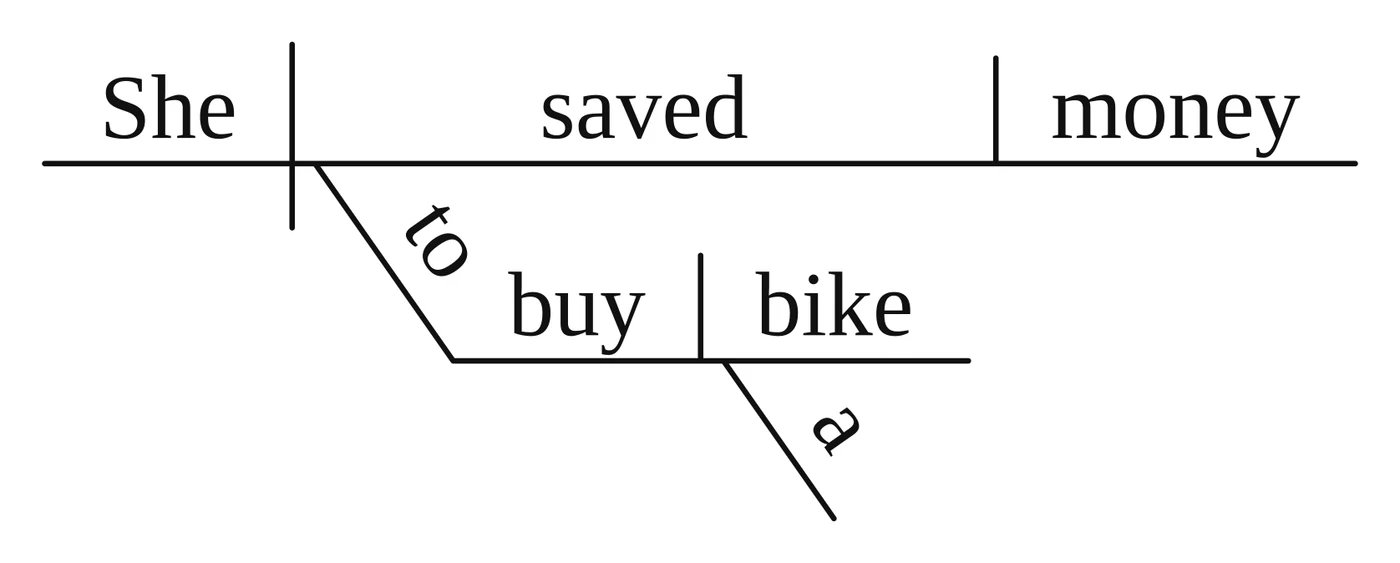
Why did she save money? To buy a bike: an adverb infinitive hanging from saved, with bike as its object.
6.
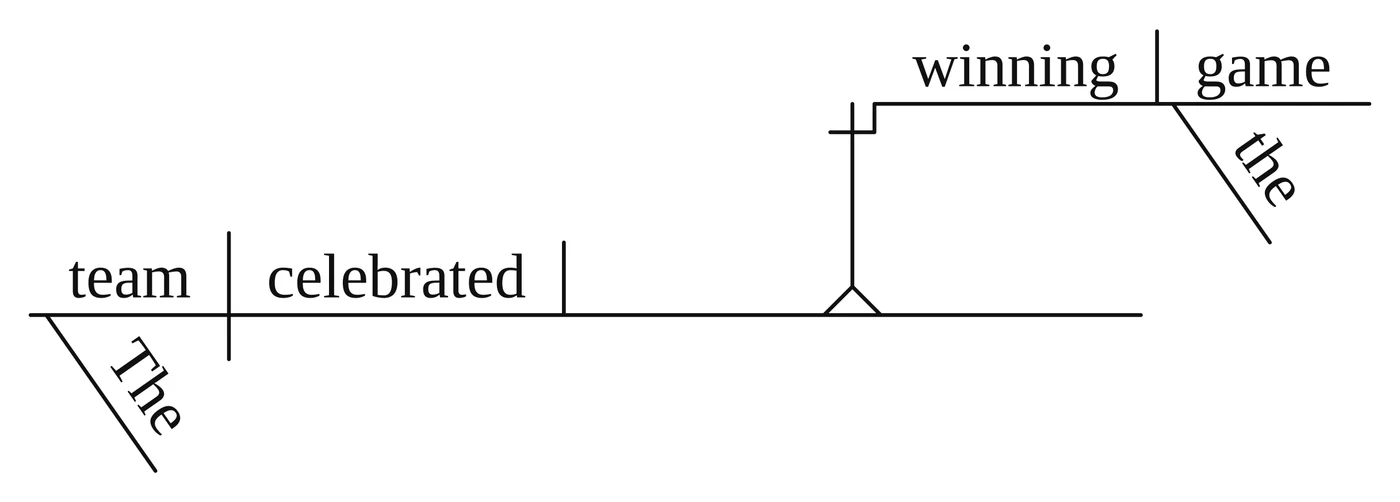
What did the team celebrate? Winning the game: a gerund phrase on a pedestal in the direct-object slot.
7.
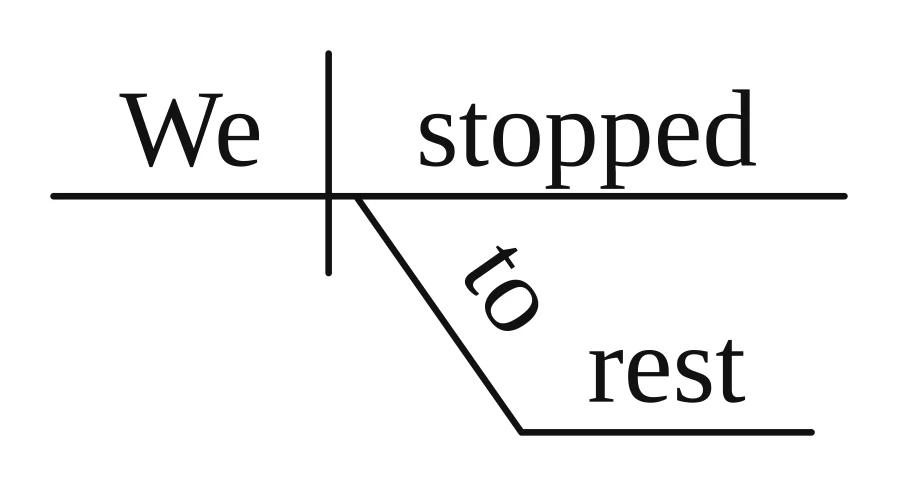
To rest tells why we stopped, so it hangs from stopped. Compare We stopped resting, where the gerund would be the direct object.
8.
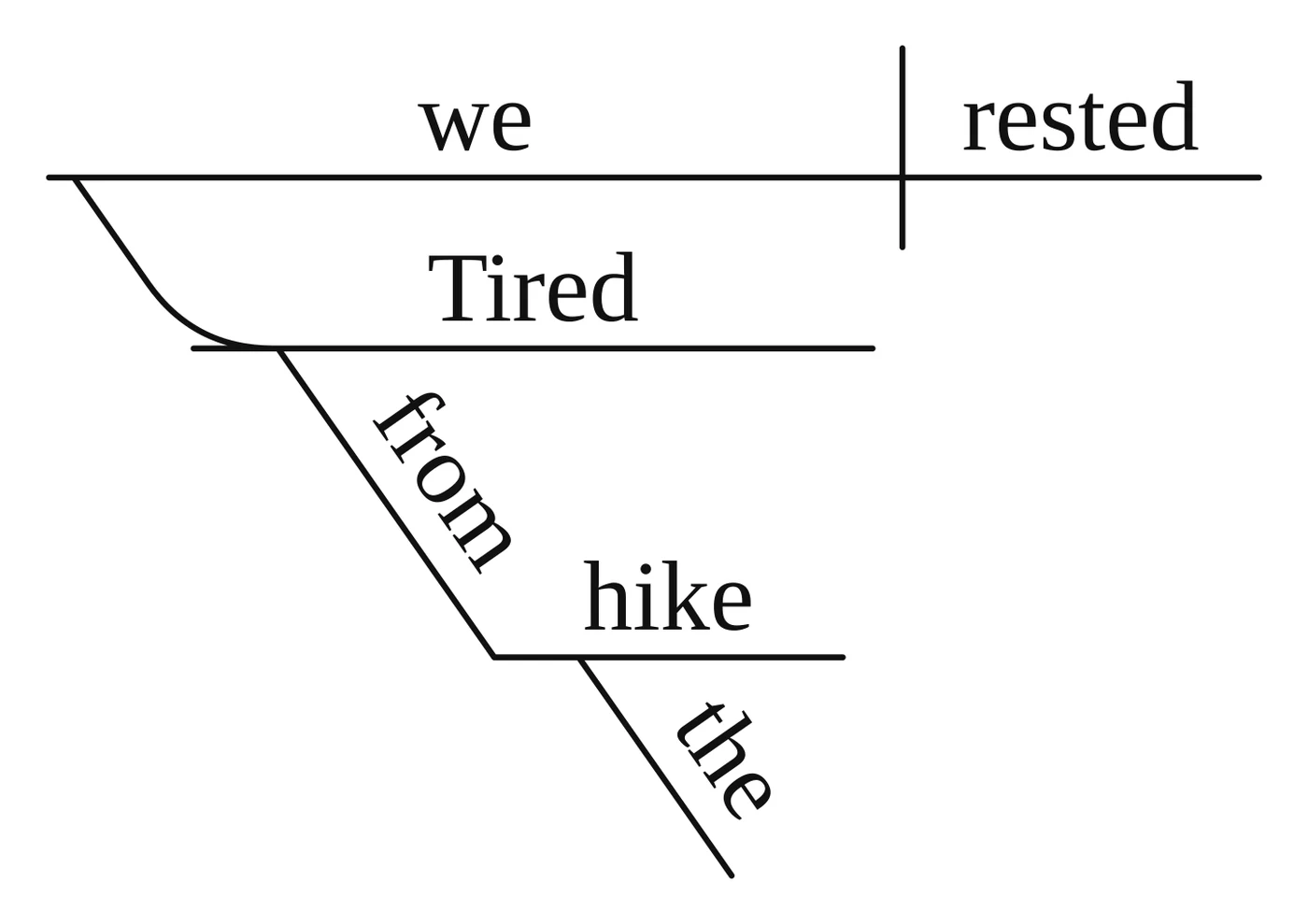
Who was tired? We, so Tired from the hike hangs from the subject, and from the hike hangs from Tired.
Frequently asked questions
How do you diagram a gerund phrase?
Put the whole phrase on a stepped line raised on a pedestal, and plant the pedestal in the noun slot the phrase fills (subject, direct object, predicate nominative or object of a preposition). The gerund's own object goes after a short vertical line on that stepped line, and its modifiers hang under it.
How do you diagram an infinitive?
If the infinitive is a noun, put it on a pedestal in that noun's slot, with "to" on a slanted piece and the verb on a flat line after it. If it works as an adjective or adverb, hang it under the word it modifies: "to" on a slanted line, the verb on a flat line at its foot.
How do you diagram participles in a sentence?
Hang the participle under the noun or pronoun it describes on a bent line, so the word sits on the flat part after the curve. A participial phrase keeps its object and modifiers on that flat part. An opening participial phrase still hangs from the subject it describes.
What is the difference between a gerund and a participle?
Both can end in -ing, but a gerund works as a noun and a participle works as an adjective. In "Swimming is fun," swimming names an activity (gerund, on a pedestal). In "the swimming children," swimming describes the children (participle, on a bent line under the noun).
Is "to" always part of an infinitive?
No. "To" followed by a verb (to buy) marks an infinitive. "To" followed by a noun or pronoun (to the store) is a preposition, and the noun after it is its object.
How do you diagram an infinitive without "to"?
After verbs such as let, make, help and see, the infinitive often drops "to": Mom made us clean the garage. Many textbooks diagram it like any infinitive and write the missing word in parentheses on the slant, (to) clean. Follow your textbook's convention.
Can I check my verbal diagrams online?
Yes. Type the sentence into the sentence diagram generator and it draws the Reed–Kellogg diagram. Downloads are free as watermarked PNGs; a watermark-free file and an editable SVG come with a plan or credit pack. A verbal can still land on the wrong line when the grammar reading is wrong, so check each diagram against the sentence word by word.
Diagram your own sentence with a gerund, infinitive or participle
Type a sentence from your worksheet and get a Reed–Kellogg diagram, or switch to Worksheet mode for up to 20 sentences with an answer key.
